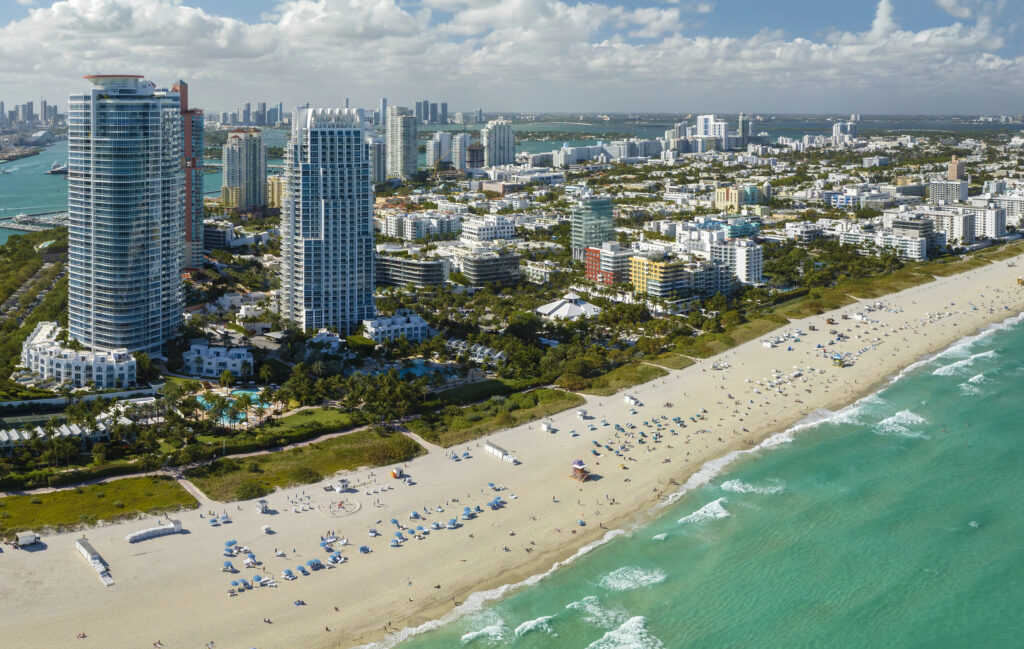
Moving from California to Florida is one of the most visible long-distance migration flows in the country. Tech workers heading to Miami’s crypto and startup scene, families drawn to Florida’s cost of living and no state income tax, retirees targeting the Gulf Coast or Central Florida master-planned communities, and remote workers chasing warm weather with lower cost. It’s also a 2,500+ mile cross-country move that requires real planning. Here’s the honest guide.
From a Southern California long-distance moving company that runs CA-to-Florida moves as a core cross-country route.
Why Californians Are Moving to Florida
- No state income tax. Florida has no state income tax. California’s top marginal rate is 13.3%. For high earners, the annual delta is substantial.
- Cost of living. Florida housing, groceries, utilities, and services are meaningfully lower than California coastal metros — though Miami and some beach communities have closed the gap.
- Growing business economy. Miami’s “Silicon Valley South” moment, financial services expansion, Orlando’s tech + healthcare + hospitality employment, Tampa’s finance + logistics base.
- Climate. Year-round warm weather. Different climate challenges from California (humidity, hurricane season, afternoon storms) but no winter.
- Retiree destination. Florida remains the #1 US retirement state — real infrastructure for retirement living, from The Villages to Sarasota to Naples.
- Property tax structure. Florida’s homestead exemption + Save Our Homes cap often produces favorable tax treatment for long-term residents.
- Family and friends network. Many California transplants find existing community networks already established in major Florida metros.
Top Florida Destinations for California Movers
Miami Metro
- Largest Florida metro. Real tech + finance + crypto employment — Blockchain.com, FTX legacy, many fintech and crypto firms relocated to Miami 2020–2024
- Diverse neighborhoods — Brickell (urban finance), Wynwood (arts + tech), Coconut Grove, Coral Gables, Edgewater, Design District
- Suburban options — Coral Gables, Pinecrest, Palmetto Bay, Doral
- International connectivity — MIA airport, cultural depth, Latin American business ties
- Highest housing costs in Florida
- Established California-transplant community
Orlando Metro
- Central Florida. Tourism anchor (Disney, Universal) + growing tech + healthcare + simulation industry (US Army, defense contractors)
- Family-friendly suburbs — Winter Park, Lake Mary, Windermere, Dr. Phillips
- Lower cost than Miami; higher than Jacksonville
- Growing remote-worker destination
Tampa Bay Metro
- West Coast Florida. Tampa + St. Petersburg + Clearwater
- Finance (Raymond James, Citi service center), healthcare, defense (MacDill AFB), logistics
- Beach lifestyle at lower cost than Miami
- Growing tech scene — Water Street Tampa, downtown revitalization
- Common landing for California retirees + remote workers
Jacksonville Metro
- Northeast Florida. Lowest housing costs of the major FL metros
- Finance (Fidelity National, Deutsche Bank operations), healthcare (Mayo Clinic campus), logistics (JaxPort), military
- Larger lots, suburban family lifestyle
- Growing but less saturated than Miami or Orlando
Other Florida Destinations
- Sarasota + Naples (Gulf Coast) — upscale retirement + beach lifestyle
- Fort Lauderdale — Miami-adjacent, slightly lower cost, boating culture
- The Villages — largest master-planned retirement community in the country
- Tallahassee — state capital, FSU, government employment
- Pensacola / Panhandle — military + beaches, low cost
Cost of Living: California vs. Florida
- Housing. Florida median home price is meaningfully below California statewide. Miami has closed the gap; other metros still well below.
- State income tax. FL: 0%. CA: up to 13.3%.
- Property tax. FL homestead exemption + Save Our Homes cap often favorable; headline rates can look high but effective rates are moderate.
- Sales tax. FL mid-single digits with local additions; CA higher statewide.
- Insurance. Florida home insurance is expensive — hurricane risk pricing. Factor into total cost of ownership.
- Auto insurance. Florida auto rates are high (PIP structure, no-fault state).
- Utilities. Summer AC bills real; electricity is generally lower than CA.
Net effect for most Californians: meaningful tax savings + housing savings, partially offset by higher insurance costs. For high earners, the net is strongly positive; for middle-income households, it depends heavily on housing choice and insurance.
Transit Routes and Timing
- Southern route (I-10). Most common CA to FL route. From SoCal through AZ, NM, TX, LA, MS, AL to FL destinations. ~2,600–2,900 mi depending on FL destination.
- SoCal to Jacksonville/Orlando/Tampa: Typically 5–8 days transit
- SoCal to Miami: Typically 6–9 days transit (farther south)
- NorCal routes: Longer typically — 7–10 days depending on destination
- Delivery window. Cross-country moves use consolidated truck logistics; expect delivery windows of 7–14 days from pickup for most households.
Timing Your CA to Florida Move
- Peak season: May–September. Highest demand, highest cost. Book 6–8 weeks in advance minimum.
- Hurricane season consideration. June–November is Atlantic hurricane season. Delivery delays possible during active storm periods. September is historically the peak storm month.
- Shoulder season: April, October. Best balance of availability and lower hurricane risk.
- Off-season: November–March. Best pricing. Southern route generally clear year-round.
- Snowbird timing. Retiree moves often target October–November arrivals (ahead of season) and April–May departures.
Cost Expectations for CA to Florida
- Studio / 1BR: Typically $3,500–$7,000
- 2BR: Typically $5,500–$10,500
- 3BR: Typically $8,000–$16,000
- 4BR+ / large households: $12,000–$25,000+
Cross-country pricing is at the high end of long-distance moving — reflects the distance, transit time, and driver overhead. Real quotes vary with volume, access, timing, insurance level, and additional services.
What to Expect From a Real Long-Distance Mover
- In-home or video survey — accurate quotes require a walk-through for cross-country scope
- Written binding or not-to-exceed estimate — protects against surprise cost inflation
- Federal licensing (USDOT + MC numbers) — verifiable at fmcsa.dot.gov
- Full-value protection recommended for cross-country moves — the $0.60/lb default is minimal
- Chain of custody documentation — inventory sheets, bill of lading, delivery documentation
- Realistic delivery window — beware of movers promising specific delivery dates on cross-country moves
- Communication throughout transit — dispatch reachable, status updates between pickup and delivery
Common Mistakes to Avoid
- Booking too late. Peak season fills up early. Book 6–8 weeks minimum for summer moves.
- Choosing the cheapest quote. Suspiciously low quotes on cross-country moves almost always inflate at delivery.
- Using a broker without knowing. Many cross-country “moving companies” are brokers. Verify who’s actually moving your goods.
- Skipping full-value protection. Default coverage on a cross-country move is minimal. Hurricane season risk makes this especially important.
- Underestimating hurricane season. June–November delivery windows can extend during active storms.
- Insurance surprise at FL arrival. Florida home insurance costs can shock Californians. Research before closing on a home.
- Missing homestead exemption deadline. File before March 1 of the year following purchase to claim Florida’s homestead benefits.
Related SouthBay Long-Distance Content
Ready to Plan Your California to Florida Move?
SouthBay Moving runs the CA to Florida route as a core cross-country service. Federal licensing, real insurance options, in-home or video surveys, binding written estimates, and honest communication throughout the extended transit. Our California to Florida moving service covers Miami, Orlando, Tampa, Jacksonville, and the rest of the state.
Request a free quote and we’ll walk your home, scope the move, and put together an honest binding estimate for your CA-to-FL cross-country relocation.