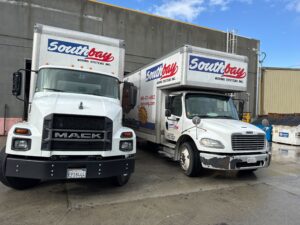

Moving from California to Oregon is one of the shortest interstate moves you can make, and one of the most popular. You trade sales tax for a higher state income tax, sunshine for a real rainy season, and coastal California home prices for something easier on the budget. Whether it is a good trade depends on where in Oregon you land and what you earn.
This guide covers the five places most Californians look at, what changes with taxes, the 30-day deadline for your license and car, and how to plan the move itself. For mileage, pricing and how we run interstate moves, see our California to Oregon movers page. If you are still choosing between states, start with our moving out of California guide.

Why Californians move to Oregon
About 31,500 people moved from California to Oregon in 2024, according to the U.S. Census Bureau state-to-state migration flows. Only Texas, Nevada, Arizona, Washington and Florida drew more Californians. The reasons people give tend to repeat:
- Housing that costs less. Most Oregon markets are well below the Bay Area, the Monterey Peninsula and coastal Southern California. Bend is the main exception.
- No sales tax. The price on the tag is what you pay, which adds up on furniture, appliances and cars.
- Being close to family. Southern Oregon is a day’s drive from the Central Coast, so a move north doesn’t mean disappearing.
- The outdoors. Mountains, rivers and the coast are close to every major Oregon city, and Bend in particular draws people for skiing and trails.
The honest trade-offs
Oregon suits a lot of Californians, but it isn’t a cheaper California with more trees. Three things surprise people most:
- Income tax can go up, not down. Oregon’s top rate is 9.9%, and the 8.75% rate starts at a low income. Many middle-income households pay about as much state tax as they did in California, or more. The numbers are in the tax section below.
- It rains. Portland International Airport averages about 37 inches of precipitation a year, according to the National Weather Service climate normals for Portland. Southern and Central Oregon are drier and sunnier.
- The job market is smaller. Portland has the biggest employers. In smaller cities, many people who move from California keep a remote job or arrive with work lined up.
Which part of Oregon fits you
Most Californians end up in one of five places. The distances below are driving miles from our home base in Salinas, from our California to Oregon route page. Drive times are rough estimates for a car without stops.
| Oregon city | Miles from Salinas | Approx. drive by car | Known for |
|---|---|---|---|
| Medford | 449 | 7 hours | Closest big city to California, lower home prices, Rogue Valley sunshine |
| Bend | 577 | 10 hours | High-desert town east of the Cascades, skiing and trails, Oregon’s priciest major market |
| Eugene | 614 | 10 hours | University of Oregon, smaller-city pace in the Willamette Valley |
| Salem | 677 | 11 hours | State capital, Willamette Valley farmland, more affordable than Portland |
| Portland | 721 | 11 to 12 hours | Largest metro, most jobs, the rainiest of the five |
Portland metro
Portland and its suburbs (Beaverton, Hillsboro, Lake Oswego, Vancouver across the river in Washington) are where most of Oregon’s jobs are. Higher earners should know that parts of the metro area add local income taxes on top of the state rate, so check your exact address before you sign a lease.
The Willamette Valley: Salem, Eugene and Corvallis
The valley runs south from Portland along I-5. Salem and Eugene are quieter and generally cheaper than Portland, with the same wet winters. It’s a common choice for families and for people who want a university town.
Central Oregon: Bend and Redmond
Bend sits on the dry side of the Cascades, so it gets far more sun than the valley and real snow in winter. It has become expensive as it has grown, and in-town housing can feel closer to California prices than anywhere else in the state.
Southern Oregon: Medford, Ashland and Grants Pass
This is the shortest move from the Central Coast and the warmest, driest part of western Oregon. Ashland is known for its theater festival, and Medford has the region’s hospitals and shopping. Many retirees from California settle here.
Oregon taxes for Californians
This section is general information from the Oregon Department of Revenue, not tax advice. A tax professional can run your own numbers.
- No general sales tax. The Oregon Department of Revenue confirms Oregon has no general sales tax. It does have a vehicle use tax and a vehicle privilege tax on new cars bought in or outside the state.
- A graduated income tax from 4.75% to 9.9%. For tax year 2025, a single filer pays 4.75% on the first $4,400 of taxable income, 6.75% up to $11,100, 8.75% up to $125,000 and 9.9% above that. Joint filers hit the same rates at $8,800, $22,200 and $250,000. Source: the Department of Revenue’s 2025 Form OR-40-N and OR-40-P instructions.
- The year you move, you file as a part-year resident. Oregon taxes all income you earn while you’re an Oregon resident, plus any Oregon-source income from before you arrived. Part-year residents file Form OR-40-P. See the Department of Revenue personal income tax page.
- California still wants its part-year return. You’ll file California Form 540NR for the year you leave. Our moving out of California guide explains what the Franchise Tax Board counts as California income after you move.
Your first 30 days in Oregon
Oregon’s deadlines are shorter than many states’. The Oregon DMV gives new residents 30 days to get an Oregon driver license and to title and register their vehicle.
- Check whether you need an emissions test. If your new address is inside the Portland-area or Medford-area boundary, your car must pass an Oregon DEQ test before it can be registered. Use DEQ’s testing boundary lookup and its new-to-Oregon page.
- Get the VIN inspected. Cars arriving with an out-of-state title need a VIN inspection, which DEQ or the DMV can do.
- Title and register the car. Oregon requires an Oregon title before registration. Bring your California title and keep your California insurance until the new policy starts.
- Transfer your license. Most people with a valid California license can transfer it without retaking the tests. Apply in person at a DMV office.
- Register to vote. The State of Oregon new-resident page lists the deadline as 21 days before an election.
Planning the move itself
When to move
Summer is the busiest season for long-distance moves, and dates near the end of the month fill first. If your timing is flexible, a mid-month, mid-week date in spring or fall is usually easier to book.
Winter adds one more thing to plan for. I-5 crosses the Siskiyou Summit just north of the California border, and winter storms there can bring chain requirements or short closures. Check ODOT TripCheck before you drive your own car north in winter, and keep chains or traction tires in the car.
How far it is and when your things arrive
From Salinas, Medford is about 449 miles and Portland about 721 miles. From San Jose, subtract roughly 55 miles. Drive time is not delivery time, though. Your delivery date depends on the route schedule, and SouthBay confirms it with you at booking. Our long-distance move prep guide covers how to plan for the days between pickup and delivery.
What it costs
Our California to Oregon route page lists a typical full-service range of about $3,200 for a studio to about $8,500 for a four-bedroom home. Your written estimate depends on your move: the weight of your shipment, stairs or long carries, packing and crating, specialty items and your dates. Our guide to long-distance moving costs explains each of those, and our guide to moving quotes shows what a clear estimate should include.
Choosing a mover
- Check the company’s USDOT number on the FMCSA Protect Your Move site. Interstate movers must be registered with the federal government.
- Ask for an in-home or video survey instead of a phone guess.
- Get the estimate type in writing: binding, non-binding or binding not-to-exceed.
- Compare at least three companies. Our guide to picking a long-distance mover has a full checklist.
California to Oregon moving checklist
6 to 8 weeks before
- Get written estimates and pick your pickup date.
- Decide which Oregon region and, if you can, which neighborhood. Check whether the address is inside a DEQ testing boundary or a Portland-area local tax district.
- Start decluttering. Long-distance moves are priced largely by weight.
2 to 4 weeks before
- Book professional packing if you want it, and storage if your Oregon home isn’t ready yet.
- File a USPS change of address and schedule utility shutoffs and start-ups.
- Gather your car title, registration and insurance cards in one folder that rides with you.
After you arrive
- Get your Oregon license and register your car within 30 days.
- Register to vote and update your address with banks and your employer.
- Keep a record of your move date for both states’ tax returns.
Moving from California to Oregon: FAQ
How much does it cost to move from California to Oregon?
A full-service move typically runs about $3,200 for a studio to about $8,500 for a four-bedroom home, according to our California to Oregon route page. Your written estimate depends on your move, so ask for an itemized quote.
How far is Oregon from California?
From Salinas, Medford is about 449 miles, Eugene about 614 miles and Portland about 721 miles by the fastest highway route. From Los Angeles, Portland is about 962 miles.
Does Oregon have sales tax?
No. Oregon has no general sales tax. It does charge a vehicle use tax or vehicle privilege tax on new cars, and it has a state income tax of 4.75% to 9.9%.
How long do I have to get an Oregon driver license?
30 days after you become a resident. The same 30-day deadline applies to titling and registering your car.
Is it worth moving from California to Oregon?
For many people, yes, especially if lower housing costs and no sales tax outweigh a similar or higher income tax bill. Run your own tax numbers, visit in winter if you can, and compare at least two regions before you commit.
Get a quote for your move to Oregon
South Bay Moving Systems has moved California families since 1991, and Oregon is one of our most common interstate routes. Request your free move estimate or see our California to Oregon movers page. Heading somewhere else? Browse all of our long-distance moving services, including California to Washington and California to Idaho.