

Moving long distance from San Francisco requires more than just picking the first company you find. We at Southbay Moving Systems know that finding the right long distance movers in San Francisco, CA means checking credentials, reading reviews, and comparing actual prices.
This guide walks you through what matters when selecting a mover and the mistakes to avoid. You’ll also learn how to prepare properly so your move goes smoothly.
What to Look for in a Long Distance Mover
Verify the Company Is Actually Licensed
Start with the Federal Motor Carrier Safety Administration database. Every legitimate long distance mover operating across state lines must have an active FMCSA registration with an MC number and DOT number. Look up these numbers on the FMCSA website to confirm the company is authorized to operate. This single step eliminates a massive chunk of fraudulent operators. Many people assume a professional website means legitimacy, but licensing verification is non-negotiable.
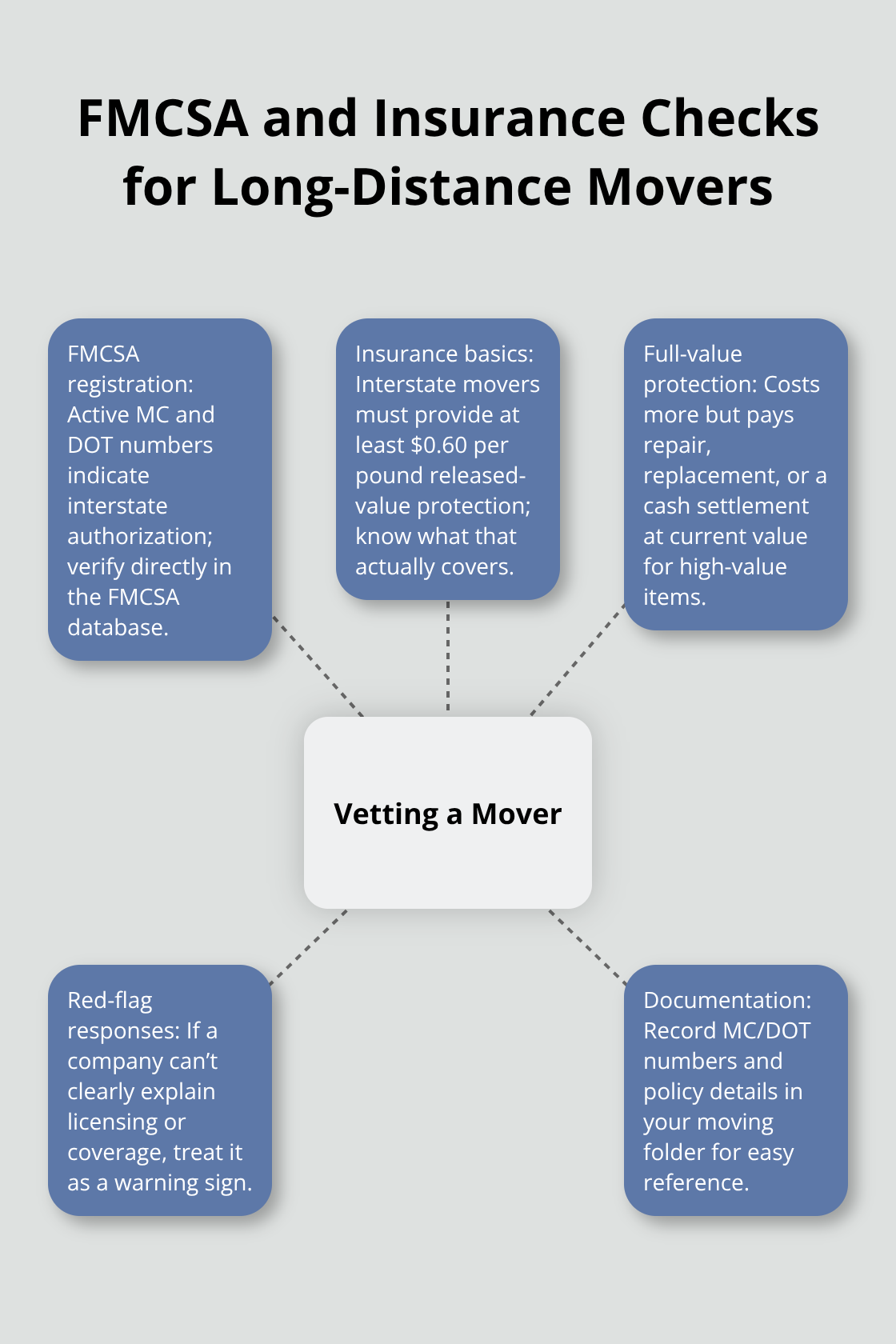
You should also check that the company carries proper insurance coverage. Interstate moves require at least $0.60 per pound in basic liability coverage. If a mover cannot clearly explain their coverage limits when you ask about it, that’s a warning sign. Full-value protection costs more but protects expensive items if damage occurs during transport.
Read Reviews From People Who Actually Moved
Generic five-star ratings tell you nothing. Instead, look for specific details in reviews about whether the mover showed up on time, handled fragile items carefully, and charged what they quoted. According to Move.org data, typical long distance quotes from San Francisco range from $7,746 to $9,250, so if a quote drastically undercuts this range, ask why. Read negative reviews specifically and see if the same problems repeat across multiple complaints. Recurring issues like surprise charges, damaged furniture, or missed delivery dates matter far more than a single bad experience. Check Google, Yelp, and the Better Business Bureau for patterns in customer feedback across reviews. When you see consistent praise for careful packing and on-time delivery, those companies deserve serious consideration.
Get Binding Estimates and Compare What’s Actually Included
Request in-home or virtual inspections from at least three movers so they can see exactly what you’re moving. Sight-unseen estimates lead to surprise charges later. When you receive quotes, compare not just the total price but what services are included. One company might include packing and unpacking while another charges separately for each service. Ask explicitly about hidden fees like stairs, long carries from the truck, fuel surcharges, or equipment rental. A transparent mover will itemize everything and provide a binding estimate if possible. If they offer a non-binding estimate, understand that the final price could increase. According to Extra Space Storage data, local moves in San Francisco by home size range from $200 for a studio to $4,000 for a five-plus bedroom home, while cross-country moves from San Francisco to major cities like Chicago average $6,433 to $14,389. This data helps you spot whether a quote is realistic or inflated. Always ask if the mover offers discounts for military, seniors, or off-season moves, and get multiple written quotes so you can request price matching if one company is competitive but not the lowest.
Watch Out for Red Flags During the Quoting Process
Movers who refuse in-home inspections or pressure you to decide immediately without time to compare options are signaling trouble ahead. A company that cannot answer questions about their insurance, licensing, or service details lacks transparency. If a mover quotes significantly lower than competitors (or significantly higher without explanation), investigate further. The goal is to find a mover whose price aligns with the market range and whose services match your actual needs. This groundwork prevents the costly mistakes that plague long distance moves from San Francisco.
Mistakes That Derail Long Distance Moves From San Francisco
Price Alone Never Tells the Real Story
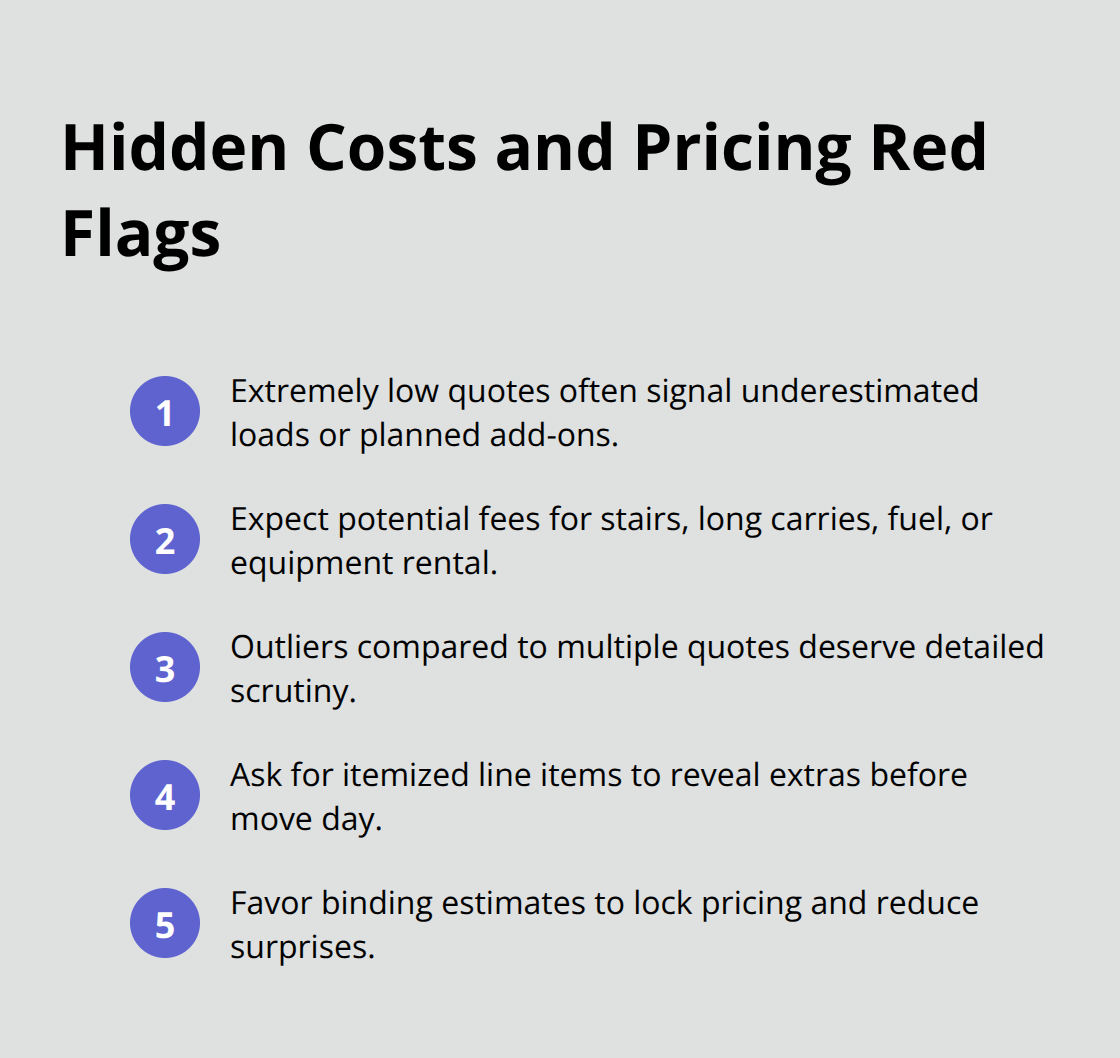
The cheapest quote rarely delivers the best move. People select a mover based solely on price, then face surprise charges, damaged belongings, or missed delivery dates that cost far more than the savings they thought they gained. A quote significantly below the market range usually signals that the mover either underestimated your load or plans to charge add-ons later. Hidden fees for stairs, long carries, fuel surcharges, or equipment rental add $500 to $2,000 to your final bill. The mover counting on you to accept these charges when the truck arrives has already won.
Multiple Quotes Reveal What One Quote Hides
Getting only one or two quotes leaves you blind to what the actual market offers. Request estimates from at least three movers so you see the full range of pricing and services. When you compare multiple quotes, patterns emerge: if two companies quote $8,500 and one quotes $6,200, that outlier demands scrutiny. Ask that low bidder exactly what services they include and what costs extra. Many people assume all movers offer the same basic package, but one company might include full packing and unpacking while another provides only loading and unloading. Without multiple quotes, you cannot spot these differences or negotiate effectively.
The Fine Print Protects the Mover, Not You
Contracts embed the terms that protect movers, not customers. Skipping the fine print is how people end up liable for damage claims they thought were covered or discover their delivery window is actually a three-week range instead of a specific date. Read every section about liability coverage, cancellation policies, payment terms, and delivery guarantees. If the contract states basic liability is $0.60 per pound, a damaged $2,000 television is worth only $60 in compensation. Full-value protection covers actual replacement value. Check whether the mover charges for cancellation and under what conditions you can cancel without penalty. Ask about delivery date guarantees: if the mover misses the promised window, what compensation applies? Some contracts include fuel surcharges that activate if fuel prices spike, which means your quoted price might increase. A mover offering a binding estimate locks in the price, while a non-binding estimate can grow before moving day. Contact the FMCSA directly if you find contract language that seems unreasonable or contradicts what the salesperson promised verbally. Your signed agreement is the only document that matters in a dispute, so every detail counts before you commit.
What Happens Next Depends on Your Preparation
The mistakes outlined above stem from rushing the selection process. Taking time to verify credentials, compare multiple quotes, and read contracts thoroughly prevents costly surprises. The next step involves preparing your home and belongings for the actual move.
How to Prepare for Your Long Distance Move
Plan six to eight weeks in advance
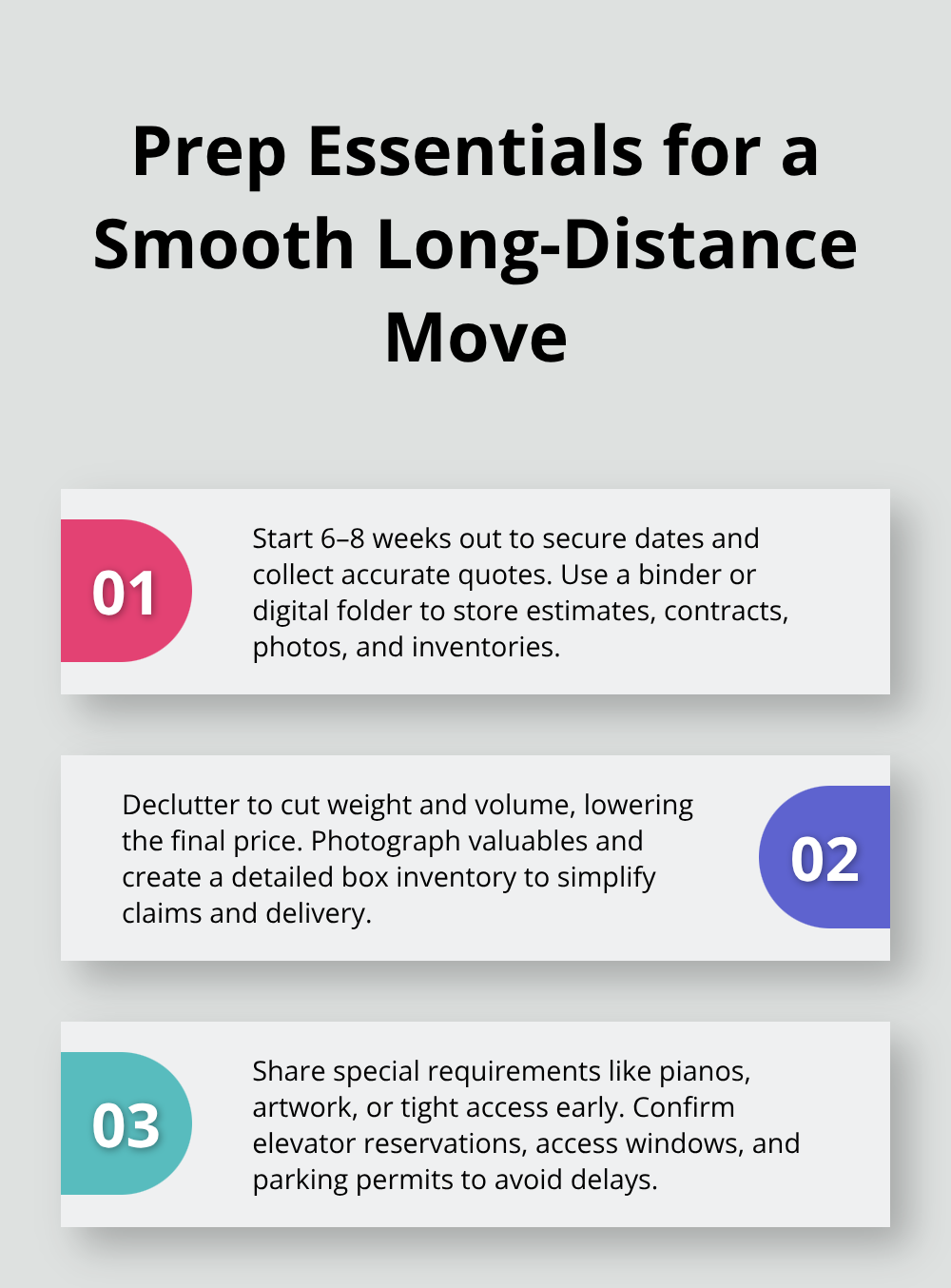
Start your preparation six to eight weeks before moving day so you can make deliberate decisions instead of rushed ones. This window matters because movers book up faster during peak season, and you need time to declutter, collect accurate quotes, and arrange logistics. Create a moving binder or digital folder where you collect all quotes, contracts, inspection photos, and inventory lists. Early planning also lets you take advantage of off-season discounts. If your timeline allows flexibility, moving costs fluctuate significantly by season, with the cheapest time typically between November and March, excluding the holiday period. Schedule a move in late fall or winter to reduce costs by hundreds of dollars. Start by notifying your current landlord or property manager about your move date, especially if you need to coordinate building access or elevator reservations. Many San Francisco buildings require advance notice and charge fees if you book elevators last-minute. Contact utility companies at least two weeks ahead to schedule disconnections at your current location and connections at your new address. Internet providers often have long wait lists, so arrange this early to avoid gaps in service.
Declutter and Document Your Belongings
Decluttering before your move directly impacts your final cost because movers charge based on the weight and volume of your belongings. Go through each room and separate items into categories: keep, sell, donate, or discard. Items you sell on Facebook Marketplace or Craigslist generate cash that offsets moving expenses, and downsizing and donating belongings reduces overall move size and cost. Photograph valuable items and document their condition before packing, which becomes critical if damage occurs during transport and you need to file a claim. Create a detailed inventory listing what goes into each box, including room destination and contents. This inventory prevents items from getting lost and gives your mover a clear picture of the load.
Communicate Special Requirements to Your Mover
When you contact your selected mover, mention any large or fragile items upfront. Pianos, artwork, antiques, and electronics require specialized handling and packing materials that cost extra but protect your valuables. Inform your mover about access constraints at your current and new locations: narrow hallways, staircases, building elevators, or lack of street parking. Reputable carriers ask about these details during inspections because they affect pricing, labor time, and delivery logistics. If your new home has building restrictions, confirm what times movers can access the building and whether you need a parking permit for the moving truck. Getting these details straight before moving day prevents delays and surprise fees.
Final Thoughts
Selecting reliable long distance movers San Francisco CA comes down to three core actions: verify credentials through the FMCSA database, compare multiple binding estimates, and read contracts thoroughly before signing. A mover with an active MC number and DOT number, clear insurance explanations, and specific service details in writing protects you from fraud and surprise charges. The quotes you collect should fall within the realistic market range of $7,746 to $9,250 for typical long distance moves from San Francisco, and any outlier requires investigation.
Your preparation determines whether the move runs smoothly or derails. Start six to eight weeks ahead so you can declutter strategically, document your belongings with photos, and communicate special requirements like fragile items or building access constraints to your mover. This advance notice prevents delays and hidden fees that catch people off guard, and organizing your quotes and contracts in one place keeps you in control throughout the process.
Moving with confidence means trusting that you’ve done the groundwork-you’ve verified the mover is legitimate, compared what different companies actually offer, and prepared your home and belongings properly. You understand what basic liability covers and what full-value protection costs, and you know the delivery window, cancellation policy, and what happens if the mover misses the promised date. Contact Southbay Moving Systems for a personalized estimate and transparent pricing that reflects exactly what your move requires.