

Military families face unique moving challenges that civilian relocations simply don’t address. From tight timelines tied to orders to navigating base housing requirements, the complexity can feel overwhelming.
At Southbay Moving Systems, we understand that military moving support in California requires specialized knowledge and genuine care for service families. This guide walks you through the real obstacles you’ll face and the concrete resources available to make your transition smoother.
What Makes Military Moves Different From Civilian Relocations
Strict Timelines That Leave No Room for Delay
Military relocations come with specific considerations that set them apart from civilian moves in fundamental ways. The Department of Defense requires service members to report to their new duty station within a specific window tied to their orders, typically 30 to 60 days after receiving them. You cannot delay packing until next month or negotiate with movers for a later date. Your transportation office assigns you a moving date range, and missing that window creates cascading problems with your pay, housing, and duty station arrival. Most service members relocate roughly every 40 months, so military families move far more frequently than civilian counterparts. The pressure intensifies when your current home sale falls through or your new base housing isn’t ready on arrival day.
Base Housing Rules That Standard Movers Don’t Understand
Base housing requirements add another layer of complexity that civilian movers simply don’t understand. Military bases maintain strict weight allowances based on the service member’s rank and number of dependents, along with appliance specifications and furniture dimensions. Some bases prohibit certain types of flooring damage or require specific cable management systems.
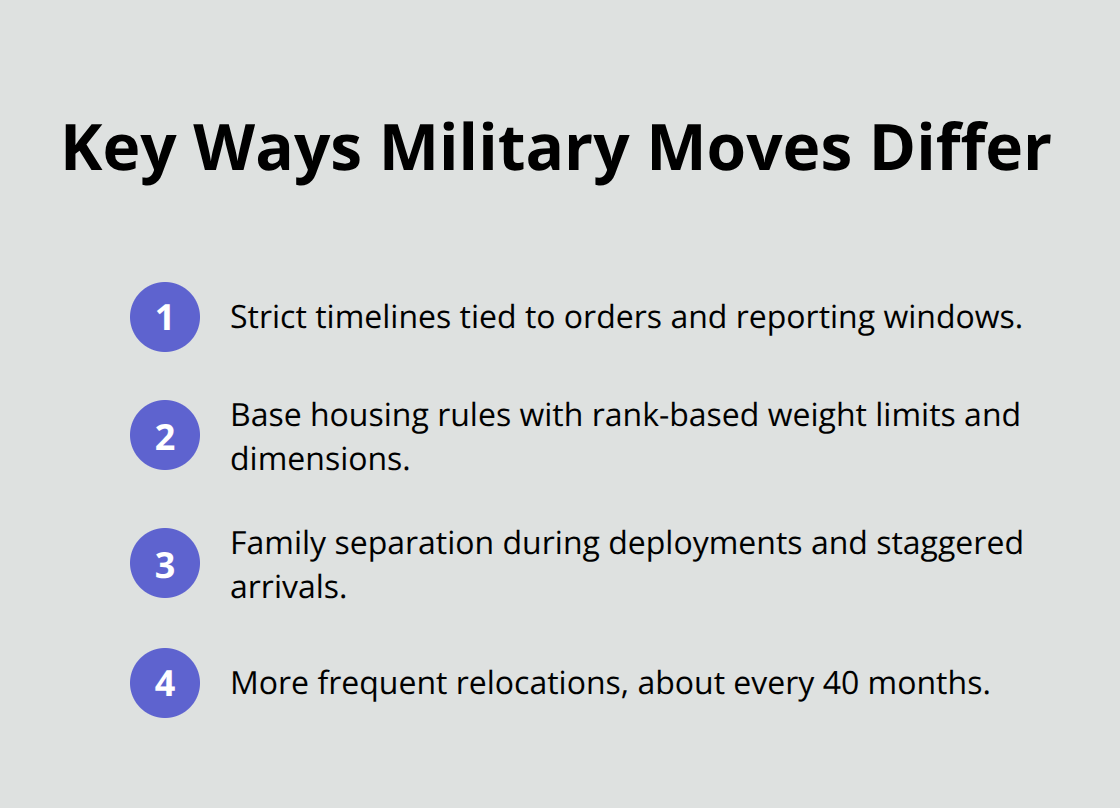
If your household goods arrive at base housing and items don’t fit or violate regulations, you face storage fees, delayed access to your quarters, and potential out-of-pocket costs. Movers experienced with military relocations know these requirements and pack accordingly, while standard moving companies often miss these details entirely.
Family Separation During Transitions
Family separation hits hardest when a service member deploys or arrives at a new base weeks before dependents can join them. You might pack your home while your spouse manages the children alone, then live in temporary lodging for months while waiting for permanent housing. The California Military Family Relief Fund recognizes this hardship, offering short-term cash grants to California National Guard members. Eligibility requires membership in the California Military Department, California residency, and submission of your request within the specified timeframe. These overlapping pressures demand movers who grasp military logistics, not just standard household relocations-which is why understanding your support options becomes your next critical step.
What Financial Support and Professional Help Are Available
Ten Government Reimbursement Programs You Likely Aren’t Using
The Department of Defense provides ten distinct reimbursement programs designed to offset military move costs, yet most service families use only two or three of them. Dislocation Allowance (DLA) delivers a one-time, tax-free payment to cover miscellaneous expenses during your PCS, while Temporary Lodging Allowance (TLA) covers lodging and meals while you wait for permanent housing. Monetary Allowance in Lieu of Transportation (MALT) pays 16 cents per mile for a single vehicle or 18 cents per mile if you’re moving multiple cars, which adds real dollars to your relocation budget. Per Diem allowances cover meals and lodging during travel to your new duty station, making multi-day road trips more manageable financially.
Temporary Lodging Expense (TLE) provides up to roughly $290 per day for temporary housing, a critical safety net when your permanent quarters aren’t ready on arrival. Advance Basic Pay offers interest-free loans secured against your military salary and repaid over 12 months, giving you cash upfront when you need it most. The key mistake service families make is failing to apply for all programs they qualify for, leaving thousands of dollars on the table.
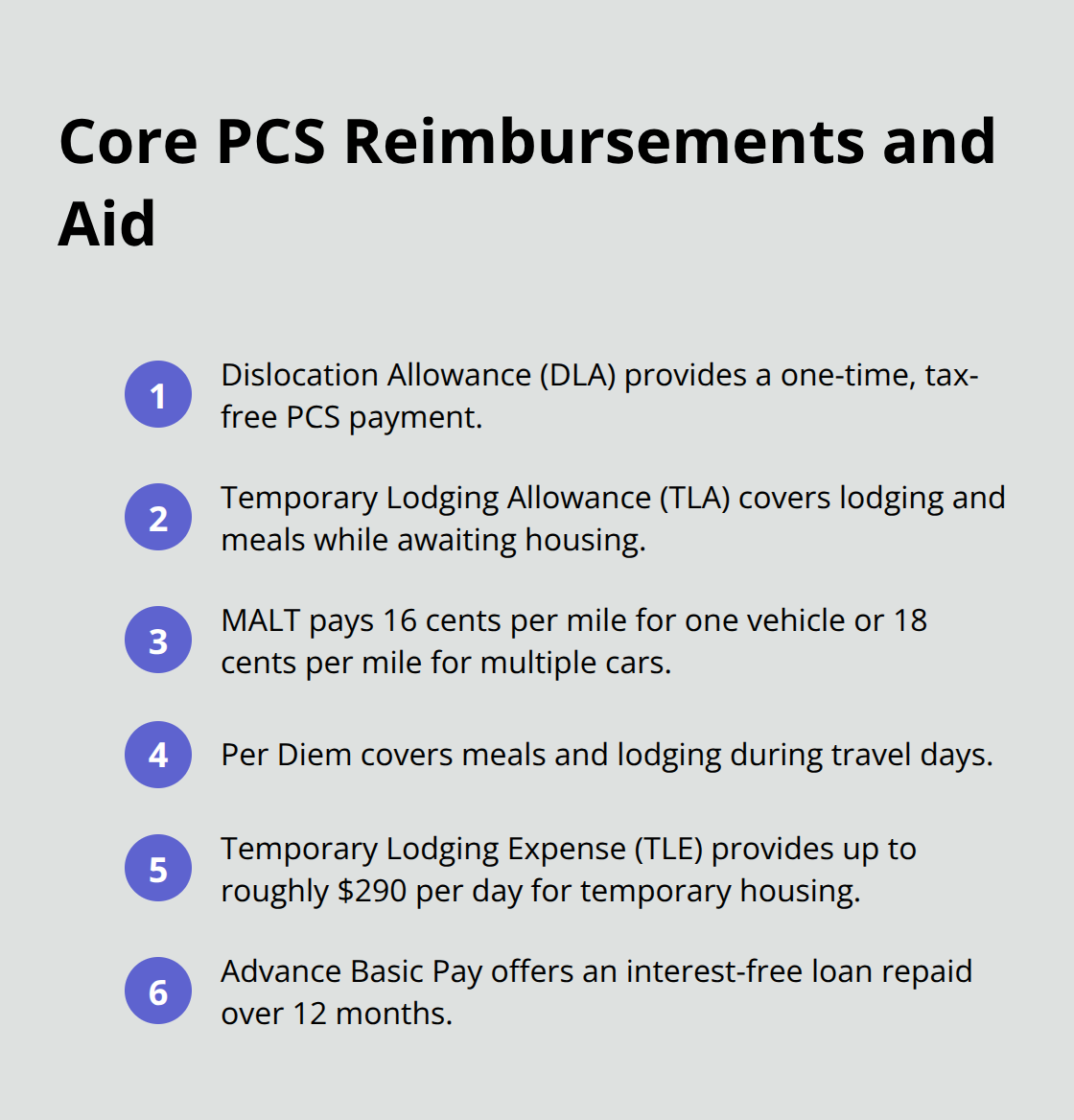
Contact your military transportation office and review Move.mil, which outlines every reimbursement option tied to your specific move type and circumstances.
Why Military-Experienced Movers Matter
Military-experienced movers understand weight allowances, base housing specifications, and delivery timelines in ways standard moving companies simply cannot match. Military movers pack your household goods to fit base housing dimensions, respect rank-based weight limits, and coordinate with transportation offices to meet strict arrival windows. Standard moving companies lack this specialized knowledge and often create costly problems when items arrive at base housing that don’t meet regulations or fit your quarters. Your transportation office can recommend military-certified movers, and vetting their experience with your specific branch and base prevents delays and out-of-pocket expenses.
Military Family Support Organizations Fill Critical Gaps
The Veterans of Foreign Wars (VFW) offers the Unmet Needs program, which covers mortgage or rent, home and auto repairs, utilities, food, and clothing costs tied to deployment hardships. Operation Uplink provides two days per month of free phone time for active-duty personnel to call the United States, Germany, and Italy. The American Legion Temporary Financial Assistance program delivers short-term financial help to eligible veterans and families, with providers searchable by ZIP code on Legion.org. ThanksUSA provides need-based scholarships for children and spouses of active-duty service members, including activated reserves and National Guard members under age 24, with recipients selected based on financial need, academic performance, leadership, and community service. The Coalition to Salute America’s Heroes connects disabled veterans returning from overseas operations with resources and a support network.
Combining Resources Creates Your Complete Safety Net
Government reimbursement programs, military-experienced movers, and family support organizations work together to transform an overwhelming transition into a manageable one. You access multiple funding streams simultaneously (DLA, TLA, MALT, and Per Diem), hire movers who understand military logistics, and tap into family support programs that address hardships beyond moving costs. This layered approach means you’re not choosing between paying for movers or covering temporary housing-you’re funding both through different programs designed for exactly this purpose. With these resources in place, you’re ready to tackle the practical steps that turn military orders into a successful relocation.
How to Execute a Military Move Within Your Orders and Timeline
Upload Orders and Confirm Your Pack-Out Window
Start the moment your orders arrive by logging into the Defense Personal Property System and uploading them to create your shipment. Your transportation office assigns you a specific pack-out window, typically a seven-day spread during which movers must arrive and complete packing. Missing this window triggers automatic delays that cascade into your arrival date at the new duty station, affecting housing access and pay adjustments. Contact your transportation service provider immediately after uploading orders to confirm exact dates, especially if you’re moving during peak season when movers book weeks in advance.
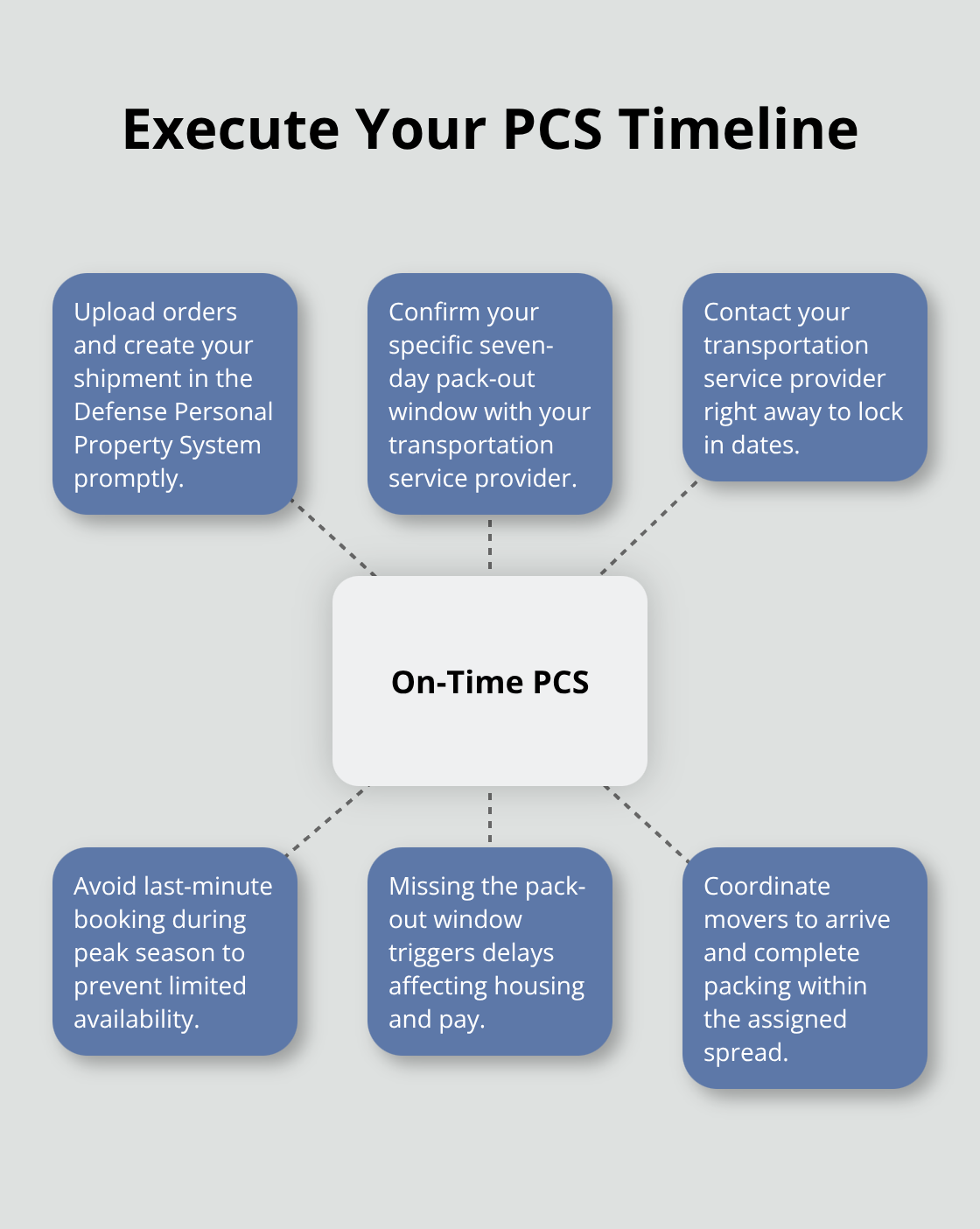
Many service members wait until two weeks before their pack-out date to schedule movers, which often results in limited availability and rushed logistics.
Prepare Your Household Details and Do Not Pack Room
The Defense Personal Property System requires you to input your new address, estimated household weight based on your rank and dependents, and any fragile items needing special handling before movers arrive. Create a separate Do Not Pack room in your home containing military orders, house keys, travel clothes, computers, and toiletries so movers understand these items stay with you during transport. Your household goods will be weighed after packing, and weight allowances vary significantly by rank and family size, so understanding your specific limit prevents storage fees or reimbursement complications at your destination.
Document and Inventory Your Household Goods
Document every item in your household before movers arrive by photographing rooms, creating a detailed inventory list, and noting the condition of valuable pieces. The movers will create their own inventory during packing, and you must review and sign off on their list before they leave your home, flagging any discrepancies immediately rather than discovering problems after delivery. Once your items reach the destination base, delivery typically occurs within a standard timeframe, but delays happen when permanent housing isn’t ready or storage is needed.
Select Movers with Military Expertise
Request military-experienced movers familiar with your specific branch requirements and base housing specifications, as they understand weight limits, appliance standards, and furniture dimension restrictions that protect you from out-of-pocket costs when items arrive. Arrange childcare or pet care on moving day so you can focus on monitoring the packing process room-by-room and maintaining your independent inventory.
Verify Items and Document Damage on Delivery Day
On delivery day, unload your items systematically, verify against your inventory list, and photograph any damage immediately so claims can be processed quickly if movers caused the damage during transport or handling.
Final Thoughts
Military moving support in California succeeds when you combine government reimbursement programs, military-experienced movers, and family support organizations into one coordinated strategy. You’ve learned that ten distinct reimbursement programs fund your move, that base housing requirements demand movers who understand military logistics, and that organizations like the VFW and American Legion provide financial assistance beyond moving costs. Upload your orders immediately, confirm your pack-out window with your transportation service provider, and document every household item before movers arrive.
Select movers with military expertise who understand your branch’s weight allowances and base housing specifications, then verify your inventory on delivery day and photograph any damage so claims process quickly. These actions transform military orders from an overwhelming deadline into a manageable transition. At Southbay Moving Systems, we’ve spent over 30 years helping service families relocate across Central California with the expertise and care this transition deserves.
We understand military timelines, base requirements, and the real pressures your family faces during a PCS. Contact us for a personalized quote and let our military-experienced team handle the logistics while you focus on your family’s transition.