

Moving an entire office is fundamentally different from a residential move. The stakes are higher, the timeline is tighter, and the cost of getting it wrong directly impacts your business.
At Southbay Moving Systems, we’ve handled hundreds of office relocation services, and we know that professional coordination is the only way to minimize downtime and protect your equipment and data. This guide walks you through what to expect and how to plan a move that keeps your team productive.
Why Professional Movers Are Non-Negotiable
Office relocations fail when companies underestimate the operational complexity involved. Moving a workspace requires coordinating IT infrastructure, furniture systems, sensitive records, and employee workflows simultaneously. According to CBRE Americas Consulting, 2025 saw higher HQ relocation activity than 2024, with companies pursuing strategic, high-investment moves. Many of these relocations involve downsizing footprint and adopting desk sharing and flexible floors, often at a fraction of pre-pandemic space. This shift demands precision because a single miscalculation-a delayed IT setup, mislabeled equipment, or lost files-can halt productivity for days. Every hour your team spends settling into a new office is an hour they’re not working on revenue-generating tasks. The cost of downtime adds up fast. A 50-person team losing four hours of productivity costs roughly $2,000 to $4,000 depending on industry and wage levels. Larger teams face exponentially higher losses. Professional movers eliminate guesswork through structured processes, specialized equipment, and experienced personnel who sequence moves to minimize disruption.
Operational Complexity Demands Structured Coordination
Office moves involve simultaneous coordination across multiple departments and systems. IT teams need to disconnect and reconnect servers and workstations without data loss. Facilities staff must ensure furniture placement matches the new floor plan. HR needs to communicate address changes to employees and vendors. Finance tracks equipment inventory and reconciles costs.
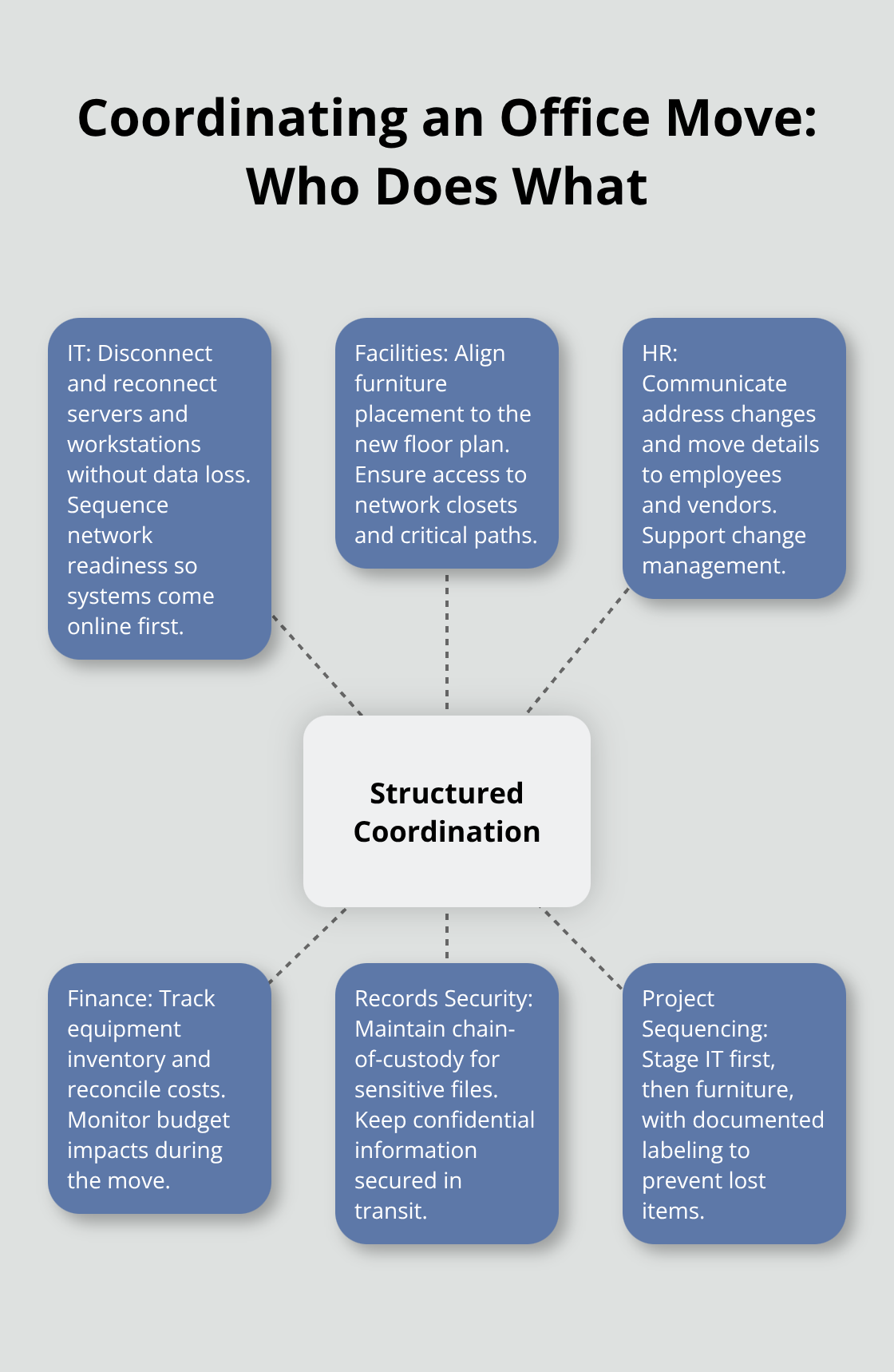
When companies attempt moves without professional coordination, these tasks overlap chaotically. Equipment arrives before IT infrastructure is ready. Furniture blocks access to network closets. Files get mislabeled and lost in the shuffle. Professional moving companies bring project management expertise that sequences these tasks logically, ensuring IT infrastructure arrives first, furniture placement follows, and sensitive records stay secure throughout.
Protecting Equipment and Data Requires Specialized Handling
Office moves involve far more than boxes. Servers, workstations, network equipment, and confidential filing systems need careful handling and proper reconnection. Mishandling IT equipment can corrupt data or damage hardware worth tens of thousands of dollars. Professional moving companies have the right tools-climate-controlled trucks, proper padding, and equipment-specific protocols-to protect these assets. They also understand that some items demand white-glove treatment. Sensitive client records, financial documents, and proprietary files need secure handling and chain-of-custody documentation. Without professional oversight, equipment often arrives damaged, data gets lost, or worse, confidential information ends up unsecured during transit. The liability and operational disruption from these failures far exceed the cost of hiring experienced movers from the start.
Why Downtime Costs More Than Professional Services
The financial impact of a poorly executed move extends beyond moving expenses. When IT systems go down, customer service teams can’t respond to inquiries. Sales staff can’t access client databases. Accounting can’t process invoices. A single day of disruption across a 100-person company can cost $8,000 to $16,000 in lost productivity. Professional movers compress the moving timeline and minimize the window when systems are offline. They coordinate with your IT team to maintain connectivity during the transition. They label equipment clearly so reconnection happens quickly. They handle furniture placement efficiently so workstations become operational within hours rather than days. This speed and precision directly protect your bottom line.
The Risk of Handling Sensitive Information Yourself
Confidential information requires more than careful packing. Client data, financial records, and proprietary documents need documented chain-of-custody throughout the move. Professional moving companies maintain secure transport, verify receipt at the new location, and provide documentation that satisfies compliance requirements. If your company operates under regulations like HIPAA, GDPR, or industry-specific data protection standards, improper handling during a move can trigger legal liability. A data breach during transit-even an accidental one-can result in fines, client notification costs, and reputational damage that far exceeds moving expenses. Professional movers understand these requirements and build security protocols into their process.
Now that you understand why professional coordination matters, the next step is planning your move strategically to maximize efficiency and minimize disruption to your team.
How to Plan Your Office Move Before Moving Day
Start with a Realistic Budget and Timeline
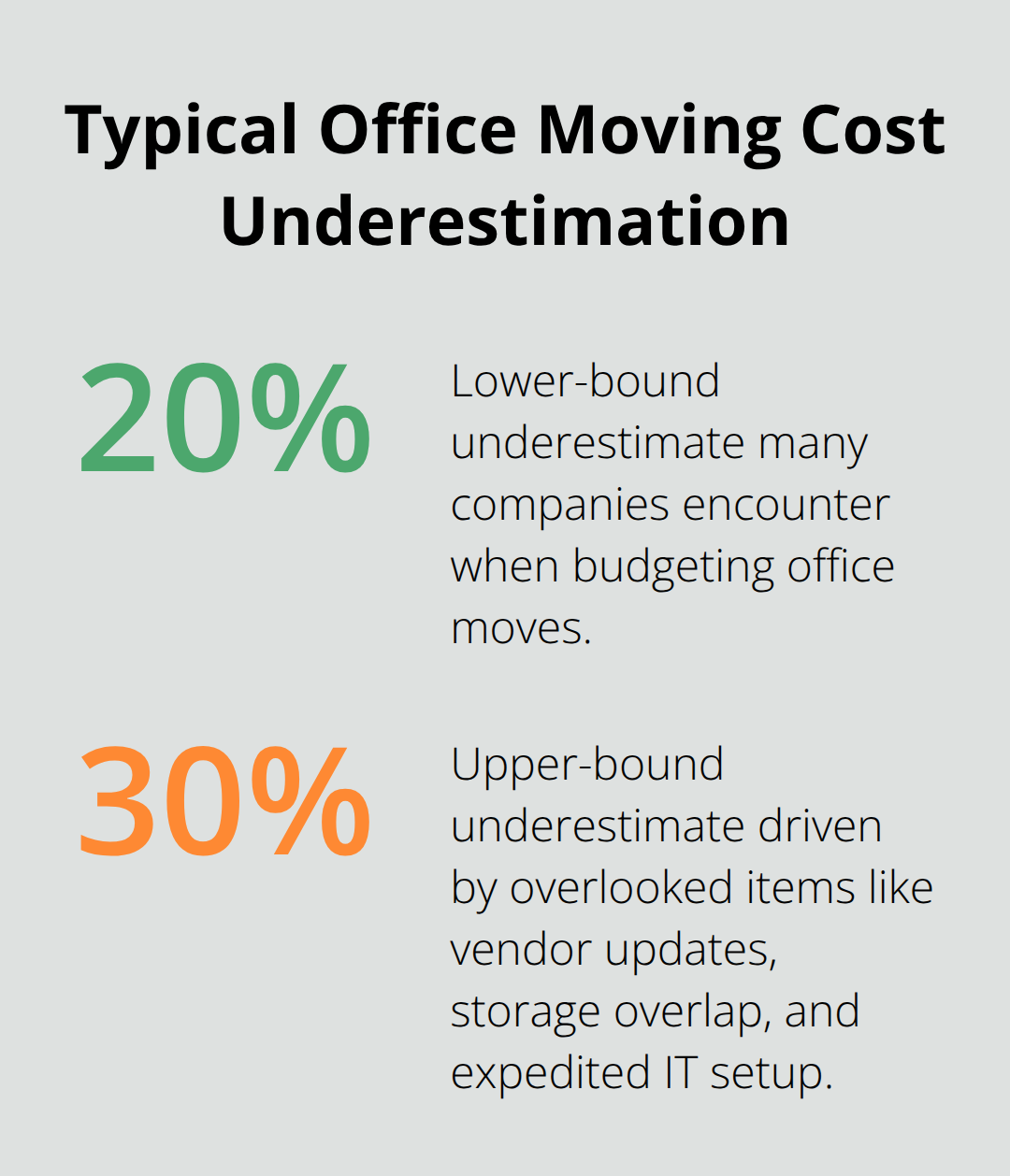
Planning an office relocation six to twelve months in advance gives you time to build a realistic plan instead of improvising under pressure. Define your budget comprehensively to account for new space costs, floor plan design, professional moving services, furniture, IT equipment, and a contingency fund for unexpected expenses. Most companies underestimate moving costs by 20 to 30 percent because they overlook items like address updates to vendors, temporary storage if overlap is needed, or expedited IT setup. Once you have a budget, create a detailed timeline that works backward from your move date.
Assign specific responsibilities to department heads rather than leaving tasks vague. IT needs a deadline for equipment inventory and infrastructure planning. Facilities needs a deadline for floor plan finalization and furniture procurement. HR needs a deadline for employee communication and vendor notifications. Finance needs a deadline for cost tracking and equipment reconciliation. Without these specific ownership points, tasks slip and critical deadlines get missed.
Communicate Early and Verify Your New Space
Notify your employees early about the move and share the new address at least eight weeks before moving day. Early communication builds buy-in and gives people time to adjust. Research your new office location carefully before signing a lease. Verify that the space has adequate power outlets, network infrastructure, and climate control for your equipment. Many companies discover too late that their new office lacks sufficient IT capacity or has poor connectivity. Visit the space multiple times and walk through your workflow to identify potential bottlenecks.
Establish Clear Roles and Coordination Structures
Create a moving committee with clearly defined roles and a designated move manager who owns the entire project. This person should have authority to make decisions and resolve conflicts quickly. Schedule regular coordination meetings with department heads starting three months before the move. These meetings should focus on sequencing, not just planning. IT infrastructure must go in first, before furniture arrives. Workstations need IT connectivity before employees can set up. Sensitive records need secure transport with documented chain-of-custody. Your move manager should create a detailed moving-day plan that specifies exactly when each department moves, which equipment goes first, and who supervises each phase. Assign move captains within each department to manage their own area and communicate with the central move manager.
Implement a Packing and Labeling System
Establish a system that works across your entire organization for packing and labeling. Color-code boxes by department. Label IT equipment with both the old and new location identifiers. Create a centralized inventory database that tracks what’s being moved, where it’s going, and its current status. This database becomes invaluable when something goes missing or needs to be located quickly after the move. Professional moving services for office relocations bring the right equipment, understand how to handle sensitive items, and coordinate with your IT team to maintain business continuity during the transition.
With your internal planning complete, the next step is selecting the right professional moving partner who can execute your plan flawlessly and keep your team productive throughout the transition.
What Professional Movers Actually Deliver
We at Southbay Moving Systems know that companies selecting a moving partner need to understand exactly what separates a professional relocation service from a basic transportation vendor. The difference lies in three operational areas: how movers customize solutions to your specific business structure, how they handle high-value and sensitive assets, and how they maintain transparent communication and pricing throughout the entire project. A professional moving company does not treat your office move like a standard residential job. They conduct a detailed site assessment at both your current and new locations to identify potential obstacles before moving day arrives.
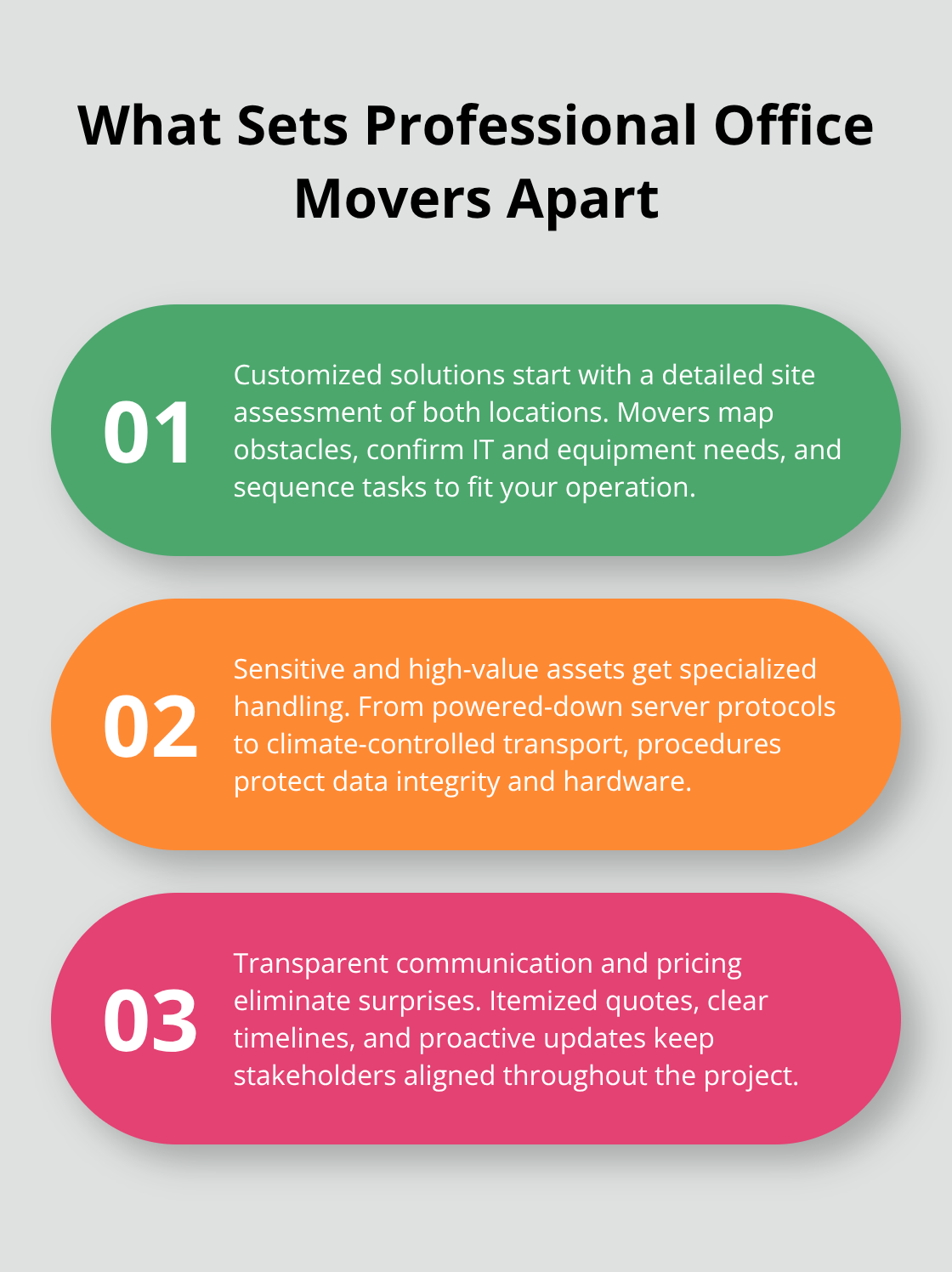
They ask specific questions about your IT infrastructure, equipment weight and dimensions, floor plan constraints, and timeline requirements. This assessment becomes the foundation for a customized moving plan that sequences tasks logically and accounts for your business’s unique needs. For example, if your company operates a data center or server room, professional movers understand that these systems require powered-down periods, climate-controlled transport, and immediate reconnection protocols. If your office includes manufacturing equipment or specialized machinery, they know how to safely disconnect, transport, and reinstall these assets without damaging sensitive components. If you handle confidential client information, they implement secure chain-of-custody procedures that satisfy compliance requirements. Generic moving companies skip these considerations and treat everything as boxes to load and unload.
Professional Equipment Protects Your Assets
The tools and vehicles a moving company uses directly impact whether your equipment arrives undamaged and your systems come online quickly. Professional office movers deploy climate-controlled trucks that protect sensitive electronics from temperature fluctuations during transit. They carry specialized equipment like lift gates for heavy furniture, dollies designed for server racks, and padding systems that prevent damage to valuable assets. A standard moving blanket will not protect sensitive equipment from impact damage during transport. This specialized equipment costs money, which is why the cheapest moving quote often reflects a company that cuts corners on protection. A transparent moving company provides detailed quotes that show you their equipment, explains their handling protocols, and provides insurance coverage that matches your asset values.
Experienced Personnel Handle Your Infrastructure
Professional movers assign experienced personnel who understand how to disconnect and reconnect IT infrastructure without data loss, how to safely move filing systems without losing document organization, and how to position furniture in ways that support your workflow. Your move manager remains your single point of contact throughout the entire process, responding to questions and resolving issues immediately rather than passing you between different departments. This continuity prevents miscommunications and keeps your move on schedule. When your IT team needs clarification on equipment sequencing or your facilities manager needs to confirm furniture placement, they contact one person who owns the entire project and has authority to make decisions quickly.
Transparent Pricing Prevents Budget Surprises
A professional moving company provides a detailed, itemized quote that breaks down labor costs, equipment charges, materials, and potential surcharges before you sign anything. They identify potential cost drivers upfront: elevator access fees, high-rise building surcharges, overtime requirements if your timeline is compressed, or special handling for fragile items. They explain exactly what’s included in their base price and what triggers additional charges. This transparency prevents the common scenario where a company accepts a low quote only to face surprise costs during the move. Hidden fees destroy trust and create unnecessary stress when a move is already demanding. A professional mover also provides a timeline that shows when different phases occur, what happens if delays occur, and how they will communicate status updates. They schedule regular check-ins before moving day to confirm details and address any changes to your plan. After the move completes, they conduct a final walkthrough with you to confirm that everything arrived safely and is positioned correctly before they leave your site. This post-move verification ensures accountability and gives you confidence that the job was done right.
Final Thoughts
Office relocation services succeed when companies treat the move as a strategic business project rather than a logistics problem. The difference between a smooth transition and operational chaos comes down to planning, professional coordination, and transparent communication from start to finish. We at Southbay Moving Systems have spent over 30 years managing relocations across Central California, and we’ve learned that companies which invest in professional movers recover their costs within weeks through reduced downtime and protected assets.
Your team’s productivity depends on how quickly systems come online at your new location. Professional movers compress this timeline by sequencing tasks logically, handling equipment with specialized protocols, and maintaining clear communication throughout the entire process. When IT infrastructure arrives first, furniture placement follows, and sensitive records stay secure, your employees focus on work instead of settling logistics (this operational continuity directly protects your bottom line).
A single day of downtime costs thousands in lost productivity, equipment damage costs tens of thousands to replace, and data breaches during transit trigger compliance violations and reputational damage. Professional movers eliminate these risks through structured processes, proper equipment, and experienced personnel who understand your business needs. When you’re ready to select a moving partner, contact Southbay Moving Systems for a customized quote and discover how we deliver the professional coordination your business deserves.