
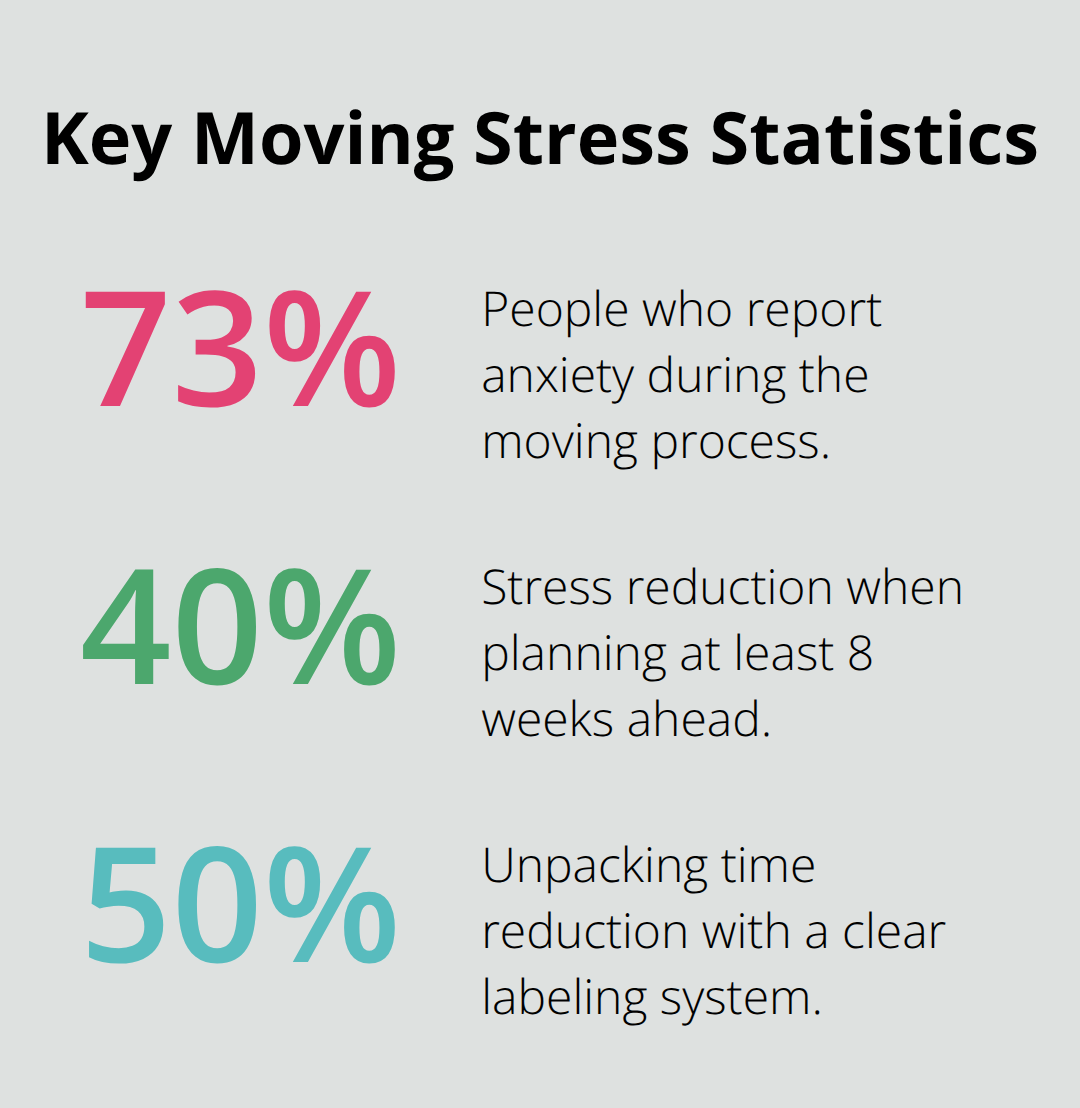
Moving house ranks among life’s most stressful experiences, with 73% of people reporting anxiety during the process. Poor planning turns what should be exciting into overwhelming chaos.
We at Southbay Moving Systems have guided thousands through successful relocations. The right moving house advice transforms your experience from stressful to smooth.
Planning Your Move Timeline and Budget
Start Your Move Planning 8-12 Weeks Early
You must start your move planning 8-12 weeks ahead to separate successful relocations from moving disasters. The American Moving & Storage Association reports that people who begin planning at least 8 weeks early experience 40% less stress and save an average of $800 compared to last-minute movers. Your timeline should include booking movers by week 8, starting declutter activities by week 6, and beginning serious packing by week 3.
Calculate Hidden Moving Expenses
Moving costs extend far beyond the moving truck. Hidden expenses add 25-30% to your total bill according to industry data. Factor in packing supplies (which average $150-300 per household), utility deposits that range from $100-500, and storage fees if timing doesn’t align perfectly. Include cleaning supplies for both homes, temporary lodging if needed, and tip money for movers. Professional movers typically charge $25-50 per hour per mover for local moves, while long-distance relocations average $2,500-5,000 depending on distance and weight.
Book Professional Movers Immediately
Summer months see moving costs spike 20-40% due to demand, with July being peak season. Professional moving companies book solid 6-8 weeks ahead during busy periods. Get written estimates from three companies minimum, but focus on licensed, insured movers with strong Better Business Bureau ratings. Companies with 4+ star ratings and 100+ reviews typically deliver superior service. Early booking also secures better rates and your preferred moving date, which prevents the stress of settling for whatever company has availability.
Once you establish your timeline and budget, the next step involves smart packing strategies that will save you time and protect your belongings during the move.
Packing Strategies and Organization
Decluttering before packing reduces moving costs by 30% according to moving industry data, yet most people skip this step. Start decluttering 6 weeks before your move and apply the one-year rule: donate items you haven’t used in 12 months. The National Association of Senior Move Managers found that families who declutter properly move 25% fewer boxes and save $600-900 on moving costs.
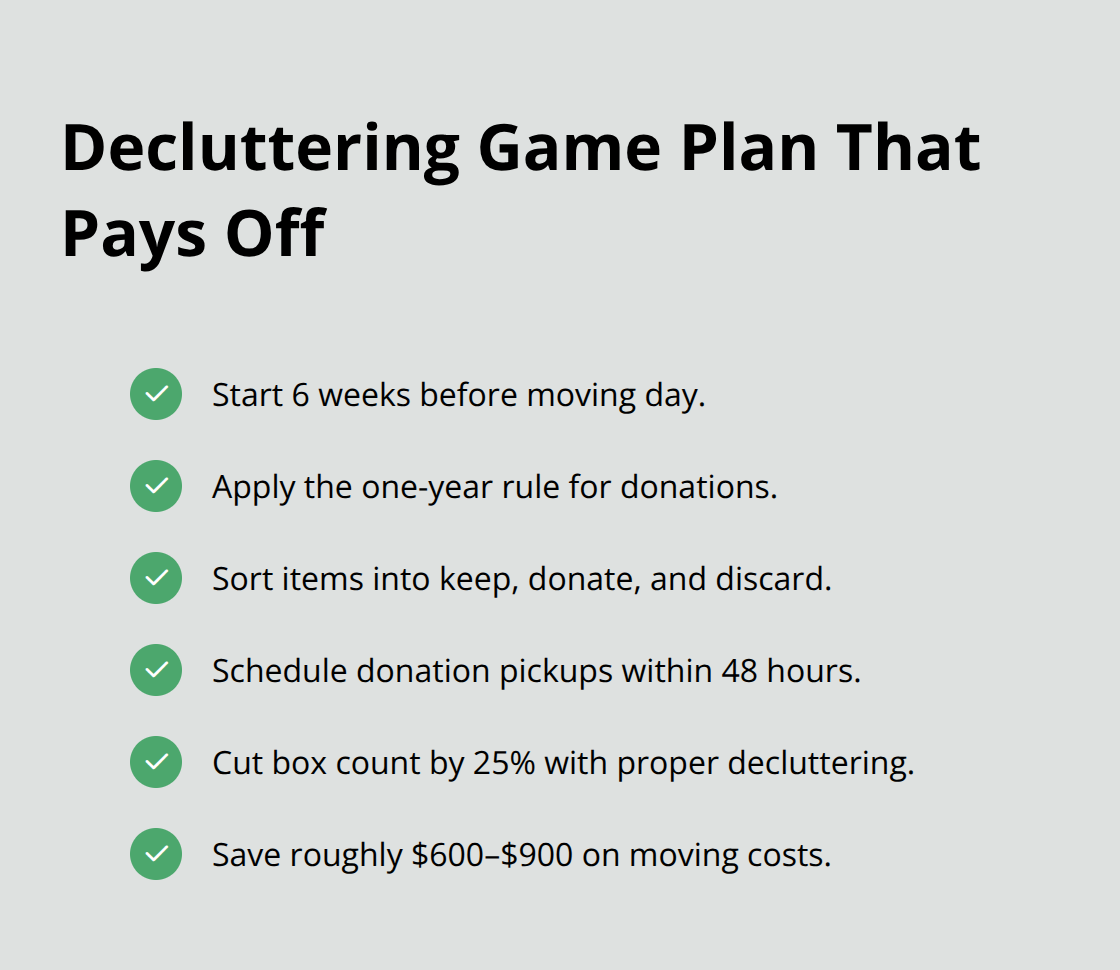
Sort items into three categories immediately – keep, donate, and discard. Schedule donation pickups within 48 hours to prevent second-guessing decisions.
Choose Professional-Grade Packing Materials
Quality packing materials prevent damage during moves, as damage occurs in all supply chain components. Invest in new boxes rated for 32 ECT strength, which costs $2-4 per box but protects contents during transport. Use bubble wrap for fragile items and packing paper for dishes – never use newspaper which stains everything. Pack books in small boxes with maximum 30 pounds to prevent box failure and back injuries. Fill empty spaces with packing paper to prevent shifting during transport. Professional movers report that properly packed boxes experience significantly less damage than DIY packing with cheap materials.
Pack Room by Room for Maximum Efficiency
Pack one room at a time to maintain organization and reduce overwhelm. Start with rooms you use least (guest bedrooms, storage areas) and finish with daily essentials like kitchens and bathrooms. This method keeps frequently used items accessible until moving day while maintaining steady progress. Pack similar items together and avoid mixing room contents in single boxes. Complete each room fully before moving to the next area.
Master the Color-Coded Labeling System
Clear labeling systems reduce unpacking time by 50% and prevent movers from placing boxes in wrong rooms. Use colored labels or markers for each room – red for kitchen, blue for bedrooms, green for living areas. Write contents and destination room on two sides of each box with permanent markers (this prevents confusion when boxes stack). Add FRAGILE stamps to delicate items and mark TOP and BOTTOM arrows on boxes containing electronics. Number each box and maintain an inventory list on your phone. This system allows you to locate essential items immediately and helps movers place boxes correctly on the first attempt.
With your belongings properly packed and organized, moving day logistics become the final piece that determines whether your relocation runs smoothly or turns chaotic.
How Do You Handle Moving Day Like a Pro
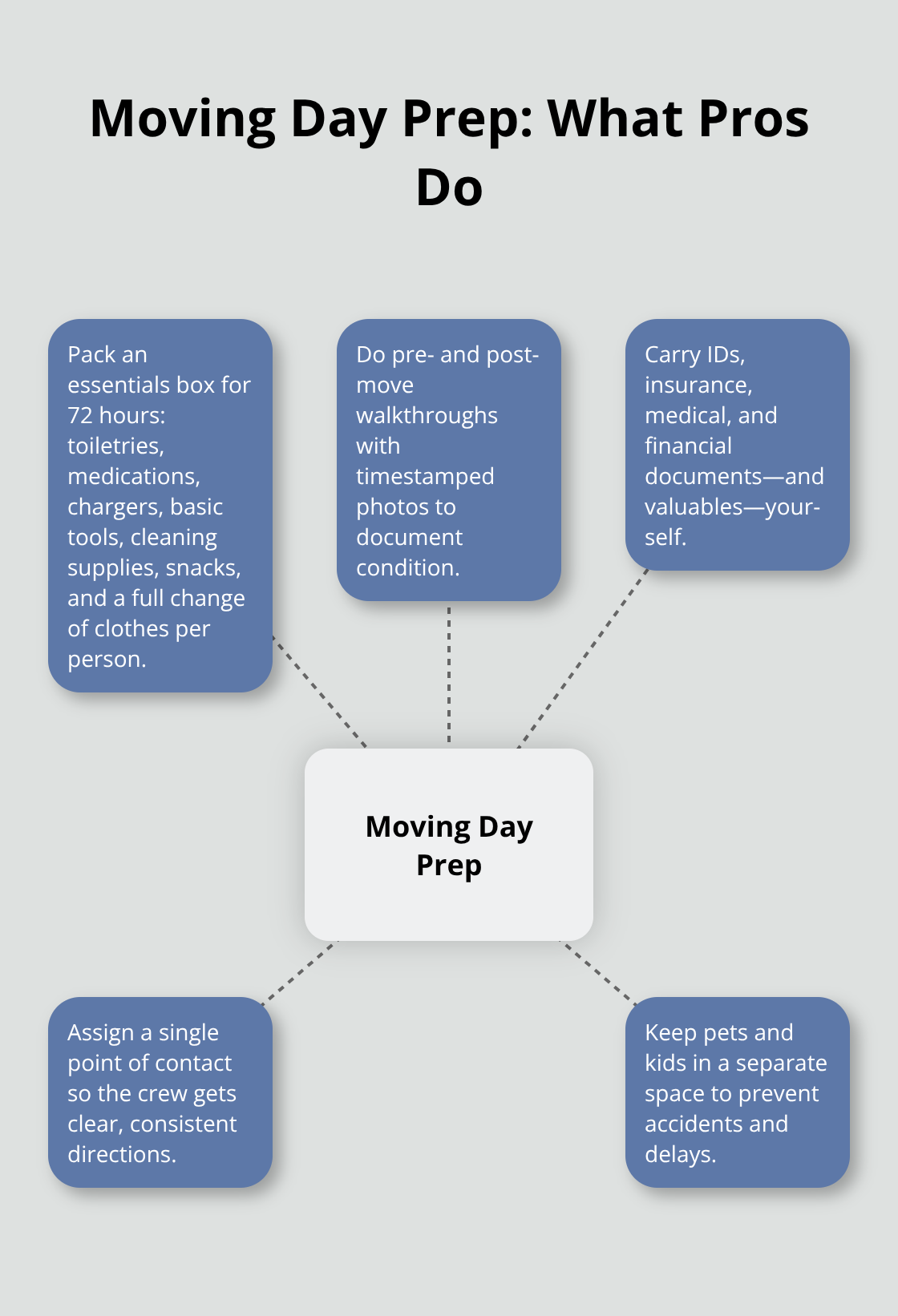
Moving day success depends on three non-negotiable preparations that separate smooth relocations from complete disasters. Moving day problems often stem from inadequate preparation, not moving company errors. Your essentials box must contain items for 72 hours minimum – toiletries, medications, phone chargers, basic tools, cleaning supplies, snacks, and complete change of clothes for each family member. Pack this box yourself and transport it in your personal vehicle, never on the moving truck.
Include cash for tips, as professional movers expect $20-40 per mover for local moves and $40-80 for long-distance relocations according to industry standards.
Start Moving Day with Professional Walkthrough Inspections
Conduct detailed walkthrough inspections before movers touch anything and again after they complete the load. Document existing damage to furniture and walls with photos that include timestamps. The Better Business Bureau reports that customers who skip pre-move inspections file damage claims 3x more often than those who document everything upfront. Walk through each room with the moving foreman and point out fragile items, valuable pieces, and any existing damage. Take inventory photos of electronics serial numbers and jewelry before you pack them. After the crew loads everything, inspect your old home completely for forgotten items and damage to walls or floors. This documentation protects you financially and holds movers accountable for professional handling.
Secure Critical Documents and Valuables Personally
Never pack important documents or valuable items with household goods – transport these personally regardless of distance. Keep birth certificates, passports, insurance policies, medical records, and financial documents in a dedicated folder that stays with you throughout the move. Carry jewelry, family heirlooms, and electronics worth over $500 separately from moving trucks (professional movers cannot verify or access these items during transport). Create digital copies of all documents and store them in cloud services as backup protection against loss during the chaos.
Coordinate with Your Moving Team Effectively
Designate one family member as the primary contact person who stays available to answer questions and provide directions. Professional movers work most efficiently when they receive clear, consistent instructions from a single source rather than multiple family members. Stay present during the entire process but avoid micromanaging – experienced crews know their procedures. Point out any special handling requirements for antiques or electronics at the start of the day. Keep pets and small children in a separate room or with friends to prevent accidents and allow movers to work without distractions (this also reduces liability concerns for both parties).
Final Thoughts
Your house move changes from overwhelming chaos into organized success when you follow proven strategies. Start your timeline 8-12 weeks early, declutter systematically, and use professional-grade packing materials to create the foundation for stress-free relocation. Moving day preparation with essentials boxes, thorough inspections, and clear communication with your crew prevents last-minute disasters.
Professional movers deliver expertise that saves time, money, and stress during your relocation. Southbay Moving Systems provides Central California residents with customized residential and commercial services for local and long-distance moves. Their experienced team handles the logistics while you focus on settling into your new home.
The best moving house advice centers on preparation and professional support rather than attempting everything yourself. Once you arrive at your new home, unpack room by room and start with essentials like bedrooms and kitchens. Update your address with banks, utilities, and subscription services within the first week (this prevents service interruptions and missed deliveries). Smart planning combined with experienced movers turns your relocation into the exciting fresh start it should be.