

Moving company quotes can vary wildly, and most people don’t know why. The difference between an accurate estimate and a wildly inflated one often comes down to the information you provide upfront.
At Southbay Moving Systems, we’ve seen countless customers shocked by final bills that don’t match their initial quotes. This guide walks you through exactly what movers need to know, the mistakes that tank your accuracy, and how to spot a trustworthy quote.
What Movers Need From You to Quote Accurately
The On-Site Survey: Non-Negotiable for Real Quotes
An on-site survey is the only way to get a real quote. Written estimates are required for all charges, and this matters because phone estimates or online calculators miss critical details that drive costs. When a moving specialist walks through your home, they measure doorways, note tight corners, count stairs, and identify accessibility problems that affect labor time. They spot items you might forget to mention-the upright piano in the living room, the vintage dresser that needs special handling, or the wall-mounted TV requiring careful disconnection. Without this physical assessment, movers either lowball the estimate to win your business or pad it with contingency costs to protect themselves.
Your Home Layout and Logistics Details
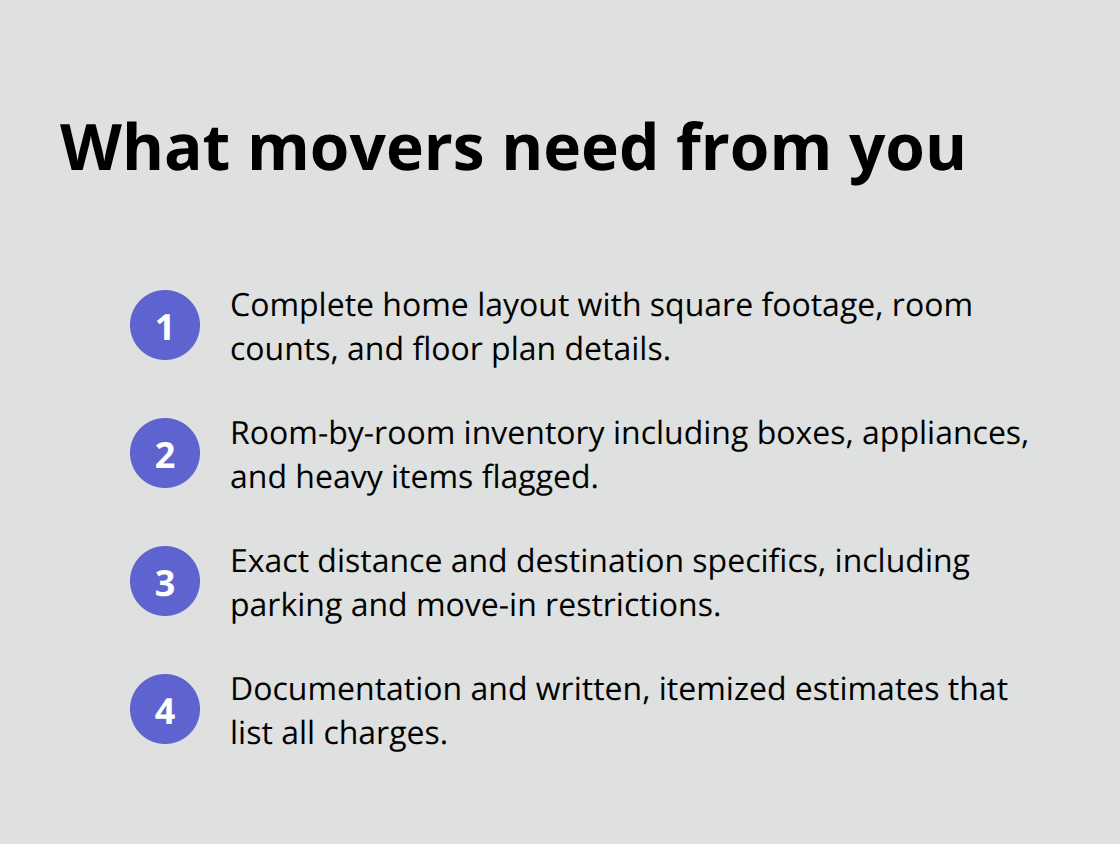
You need to provide a complete home layout including square footage, number of rooms, and floor plan details. Mention if you have basement access, exterior stairs, or a second story. Disclose parking limitations on your street and at your destination. These logistics directly impact how many movers show up and how long the job takes. Providing detailed information about your household goods helps movers prepare appropriately.
Creating a Complete Room-by-Room Inventory
Create a room-by-room list of everything being moved-not just furniture but also boxes, appliances, storage units, and outdoor equipment. Heavy items like safes, hot tubs, or weightlifting equipment should be flagged specifically because they require specialized equipment and additional labor. If you move fragile goods, collectibles, or high-value items, tell the mover upfront so they can calculate appropriate insurance and packing costs.
Distance and Destination Information
Distance matters enormously because it drives fuel costs, crew meals, and hotel stays. The longer the move, the more transparent movers need to be about travel-related charges. You must provide your exact destination address, not just a city or zip code, because factors like narrow rural roads versus interstate access change fuel consumption and routing. If you move to a building with specific move-in restrictions-like scheduled move windows, elevator availability, or parking permits-disclose this immediately. Some buildings require deposits or have weight limits that movers need to know about.
Documentation and Written Estimates
Document your current home’s condition with photos and list any items that won’t be moved. This prevents scope creep where the final bill jumps because the mover assumed more items than originally quoted. Demand a binding estimate in writing that itemizes the base price, packing materials, labor, fuel surcharge, stairs or elevator fees, and any specialty handling charges. If the mover provides only a phone estimate without seeing your home, that quote is essentially worthless and nearly always increases at delivery. With accurate information in hand, you’re ready to spot the mistakes that tank quote accuracy.
Common Mistakes That Lead to Inaccurate Moving Quotes
Underestimating the Volume of Your Belongings
Most people underestimate how much they own until a mover walks through their home. Weight-based pricing drives most moving costs, and when customers lowball their inventory during phone estimates, the final bill jumps significantly. You might think you have three bedrooms worth of furniture, but you also have a garage full of tools, a basement storage area, a guest closet packed with seasonal items, and boxes stacked in the attic. Each room typically contains far more than people remember.
Heavy items create the biggest surprises. A grand piano weighs 500 to 900 pounds depending on the model, a hot tub can exceed 2,000 pounds when filled, and a gun safe often tips the scale at 500 to 1,200 pounds. If you fail to mention these items during the quoting phase, the mover either underprices the job or charges unexpected fees when they arrive and discover the true scope. Count everything, measure the bulky stuff, and report it all upfront.
Failing to Disclose Special Items and Fragile Goods
Special items and fragile goods demand explicit disclosure because they require different packing materials, handling techniques, and insurance coverage. Antiques, collectibles, artwork, and vintage furniture need specialized handling that standard moves don’t include. If you own a 1920s chandelier, a collection of oil paintings, or heirloom china, tell the mover immediately so they can price specialty handling correctly.
High-value items often require separate valuation or additional protection beyond standard coverage. The mover needs this information upfront to calculate appropriate insurance and packing costs accurately. Hiding these details guarantees a quote that won’t match your final bill.
Overlooking Accessibility Challenges
Accessibility issues at either location-narrow staircases, tight doorways, basement egress only, or limited parking-add labor hours and potentially require equipment like dollies or stair lifts. A three-story walkup in a city center costs substantially more than a single-story suburban home because movers spend extra time navigating stairs and managing street-level logistics.
Disclose your home’s layout, access constraints, and any building restrictions immediately. If your destination has scheduled move-in windows, elevator availability limits, or parking permits, the mover needs to know. These details directly affect labor time and equipment requirements, which means they directly affect your quote accuracy. Provide complete transparency about what movers will face, and you’ll receive an estimate that actually matches your final bill-which sets you up to spot the red flags that separate trustworthy quotes from inflated ones.
How to Compare Moving Quotes and Spot Red Flags
Request Quotes from Multiple Moving Companies
Collect three or more written estimates from different movers-the FMCSA requires movers to provide written estimates of all charges. When you gather multiple quotes, you spot outliers that signal trouble immediately. If one mover quotes $3,500 and another quotes $8,200 for the same move, the low estimate almost certainly lacks detail or the high estimate pads contingencies excessively. The real price clusters within a reasonable range once all movers assess the same inventory and logistics.
Demand that each quote breaks down charges identically: base labor, packing materials, fuel surcharge, stairs or elevator fees, long-carry charges, and specialty handling costs. This line-item format lets you compare apples to apples instead of guessing what’s included. A mover who refuses to itemize their estimate hides something, and you should move on immediately.
Verify On-Site Surveys and Written Documentation
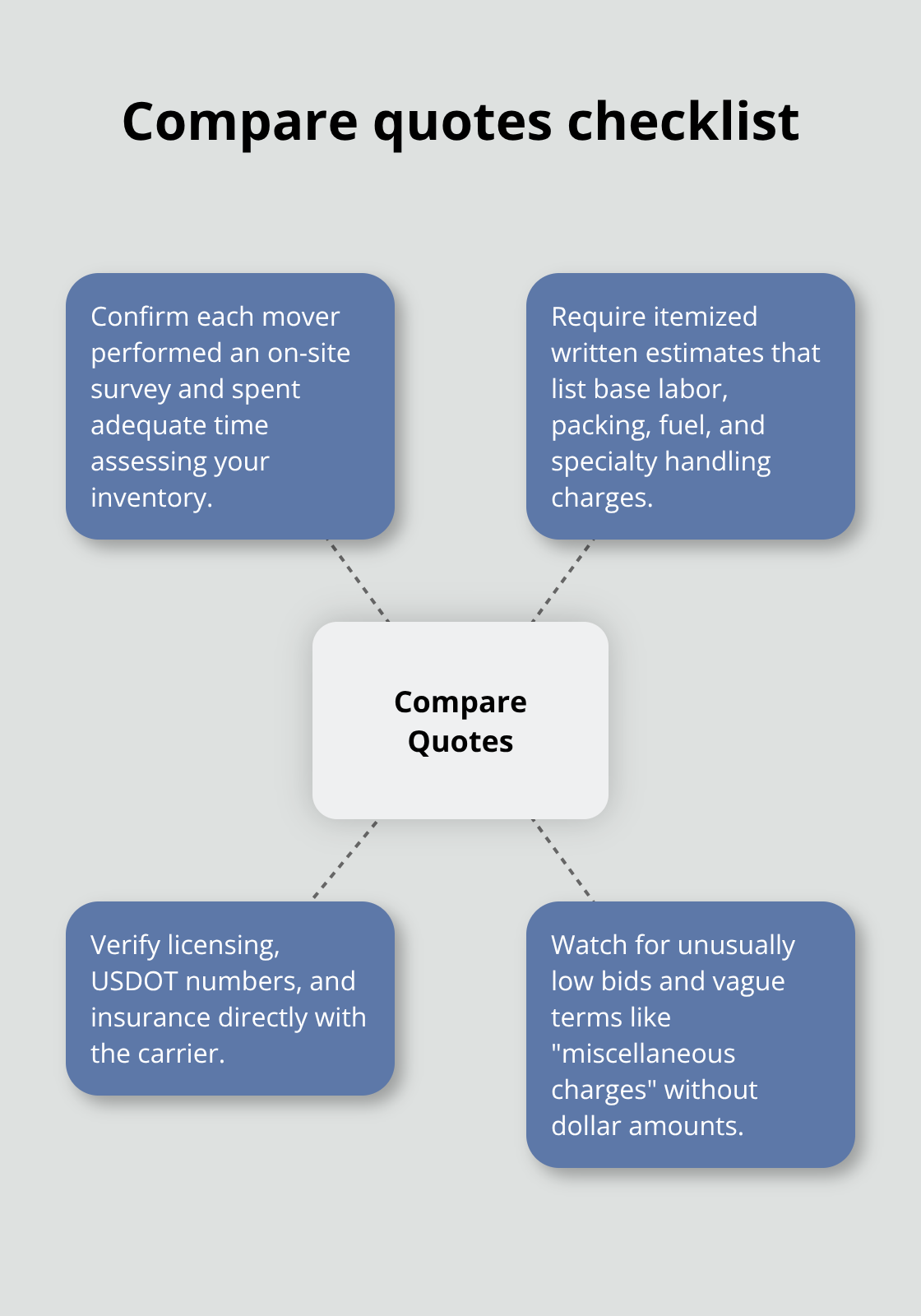
Verify that every mover assessed your home in person, not over the phone or through an online calculator. An on-site survey takes 30 to 60 minutes and costs the mover money, so some will pressure you to accept a phone estimate to speed the process. Reject this approach entirely because phone estimates miss critical details and nearly always increase at delivery.
Request a certificate of insurance directly from the carrier, not just a photocopy the mover provides. This protects you and confirms the mover carries proper liability coverage for interstate moves. A transparent quote lists every anticipated charge with specific dollar amounts, not percentages or ranges. If a mover won’t commit to a not-to-exceed price or binding estimate, walk away because you have no protection against surprise charges at delivery.
Verify Licensing and Insurance Information
The FMCSA maintains a database where you can search a mover’s USDOT number to confirm registration, safety history, and complaint records. Look up each mover’s number before accepting any quote. Interstate movers must carry proper liability insurance, and you should verify this information directly with the carrier.
Check the Better Business Bureau for complaint histories and resolution patterns. A mover with 50 complaints but strong resolution rates differs significantly from one with 50 unresolved complaints. This distinction reveals whether the company stands behind its work or ignores customer problems.
Watch Out for Unusually Low Estimates and Hidden Fees
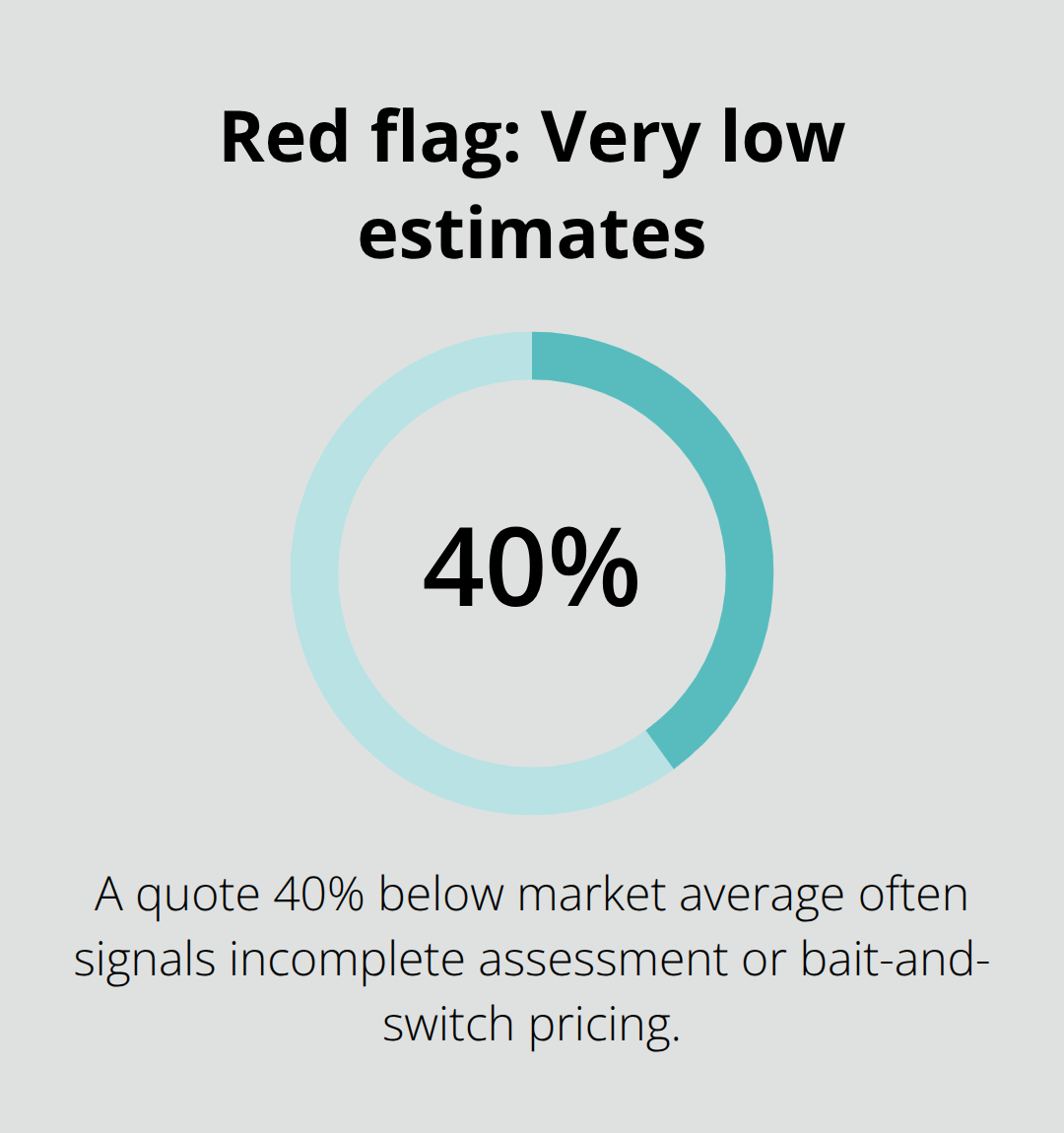
Unusually low estimates deserve deep skepticism because they typically signal incomplete assessments or bait-and-switch pricing where costs explode on moving day. If a mover quotes 40 percent below the market average for your move size and distance, ask specific questions about what’s excluded.
Are they including packing materials? Do they charge separately for stairs or long carries? Are fuel surcharges built in or added later?
The mover’s answers expose whether they’re genuinely competitive or setting a trap. Watch for vague language in quotes like “miscellaneous charges,” “additional fees,” or “contingencies” without dollar amounts attached. These phrases hide costs that appear on your final bill. Vague estimates protect the mover’s margin at your expense, so demand specificity before you sign anything.
Final Thoughts
Accurate moving company quotes require your transparency and active participation from the start. Movers who conduct on-site surveys, provide itemized written estimates, and answer specific questions about charges deliver quotes that match your final bill. When a mover commits to a binding estimate with every charge itemized, you know exactly what you’ll pay-and when they refuse to itemize or pressure you into phone estimates, they protect their margin at your expense.
We at Southbay Moving Systems conduct thorough on-site surveys and provide detailed written estimates that break down every charge before you commit. Contact three or more movers, request on-site surveys from each, and collect written estimates that itemize labor, packing materials, fuel surcharges, and specialty handling costs. Verify licensing through the FMCSA database, check complaint histories with the Better Business Bureau, and compare these moving company quotes line by line to spot red flags.
When you’re ready to move forward with confidence, contact Southbay Moving Systems for a free, no-obligation quote that reflects the true scope of your move.