

Finding the lowest price moving company requires more than just comparing quotes. Smart consumers know that rock-bottom prices often hide expensive surprises.
We at Southbay Moving Systems see customers fall for these traps daily. The cheapest estimate rarely equals the final bill, and poor service can cost you far more than you save.
How to Research and Compare Moving Companies
Start with the Federal Motor Carrier Safety Administration database to verify every mover’s DOT number and license status. Cross-reference ratings from the Better Business Bureau, Google Reviews, and ConsumerAffairs to spot patterns. Companies with consistent 4.5-star ratings across platforms show reliability, while those with scattered reviews often hide problems.
Get Multiple Written Estimates from Licensed Movers
Request in-home estimates from at least three licensed companies to compare accurately. Phone quotes miss 60% of actual weight according to industry data. Written estimates protect you from surprise charges, while verbal quotes can increase by 10% or more on move day. Ask each estimator to walk through your entire home (basements, attics, and garages included).

Reputable movers provide detailed written estimates within 24 hours that itemize services, dates, and total costs.
Check Online Reviews and Better Business Bureau Ratings
Search the Better Business Bureau database for complaint patterns and resolution rates. Companies with A+ ratings typically resolve 95% of customer issues within 30 days. Check how long the company has operated from the same address, as fly-by-night operations frequently change locations. Look for membership in professional associations like the American Moving & Storage Association, which requires background checks and ongoing compliance checks. Finding reliable reviews requires checking multiple platforms to verify company credibility.
Verify Insurance Coverage and License Requirements
Check each company’s insurance coverage beyond basic liability protection. Standard coverage pays only 60 cents per pound for damaged items, which means your $1,000 television gets $30 if broken. Full-value protection costs more but covers actual replacement value. Request proof of current licenses and insurance certificates directly from the mover. Companies that operate without proper credentials face federal penalties and cannot legally transport your belongings across state lines.
These research steps help you identify legitimate movers, but scammers use sophisticated tactics to appear trustworthy.
Red Flags to Avoid When Choosing Moving Companies
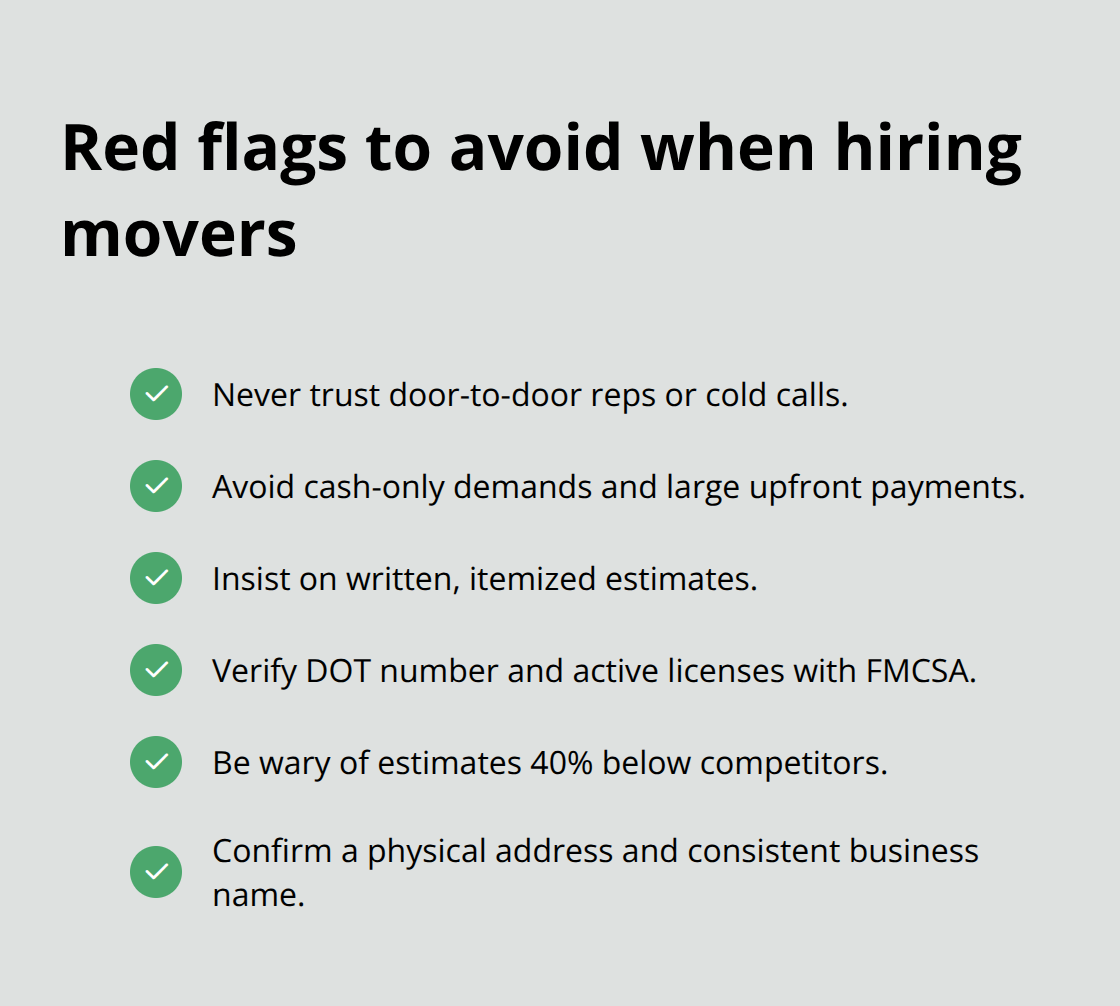
Moving scams have already cost Americans an estimated $543,000 in the first five months of 2023, and fraudulent companies use predictable tactics to target unsuspecting customers. Door-to-door sales representatives who show up unannounced represent the biggest red flag in the moving industry. Legitimate companies never cold-call or knock on doors to drum up business.
These tactics typically precede bait-and-switch schemes where initial estimates double or triple on moving day. Companies that demand large upfront payments or cash-only transactions operate outside industry standards and federal regulations. Reputable movers collect payment upon delivery, not before they load your belongings.
Extremely Low Estimates or Door-to-Door Sales Tactics
The American Moving & Storage Association reports that honest companies accept credit cards and provide detailed receipts, while scammers prefer untraceable cash payments that leave customers with zero recourse. Watch for estimates that seem 40% lower than competitors, as these lowball quotes almost always increase dramatically once your items are loaded on the truck.
Professional movers schedule estimates at your convenience and allow time for questions and comparisons. They never pressure you into immediate decisions or refuse to provide written documentation of their services and pricing structure.
Requests for Large Upfront Payments or Cash-Only Transactions
Moving companies without physical business addresses or proper documentation cannot legally operate interstate moves, yet they continue to target customers through online advertisements and phone solicitations. Federal regulations require moving companies to provide written estimates and explain your rights as a consumer.
Companies that refuse to provide documentation or rush you into contracts immediately use high-pressure tactics to prevent you from researching their credentials. Legitimate moving estimates require in-person inspections of your belongings (not phone quotes or online forms without actual inventory assessment).
Companies Without Physical Address or Proper Licensing
Check every moving company’s DOT number through the FMCSA database before you sign contracts. Companies that operate without proper licenses face federal prosecution and cannot legally transport household goods across state lines. Fly-by-night operations frequently change business names and locations to avoid regulatory oversight and customer complaints.
Verify that the company name on your contract matches their official registration documents exactly, as slight variations often indicate fraudulent operations that attempt to confuse customers and authorities. These verification steps protect you from scams, but smart consumers also focus on proven strategies to reduce their overall costs.
Money-Saving Strategies for Your Move
Professional packing services cost between $500 and $1,500 according to the American Moving & Storage Association, but you can reduce your total bill by 30% to 50% when you pack yourself. Start decluttering eight weeks before your move because every pound you eliminate saves money on long-distance moves. Donate items worth less than $50 rather than pay to transport them, and sell valuable electronics or furniture through Facebook Marketplace. The average household eliminates 2,000 pounds of belongings during pre-move preparation, which translates to $400-800 in savings on interstate moves.
Pack Your Own Items and Declutter Before Moving
Focus on high-value items first when you decide what to keep or discard. Electronics lose value quickly, so sell older televisions and computers locally instead of paying transport costs. Furniture that costs less than $200 to replace often costs more to move than its actual worth (especially on cross-country relocations). Create three piles: keep, donate, and sell. Items in the sell pile should generate at least $25 each to justify the effort, while donation items provide tax deductions that offset moving expenses.
Choose Off-Peak Moving Dates and Times
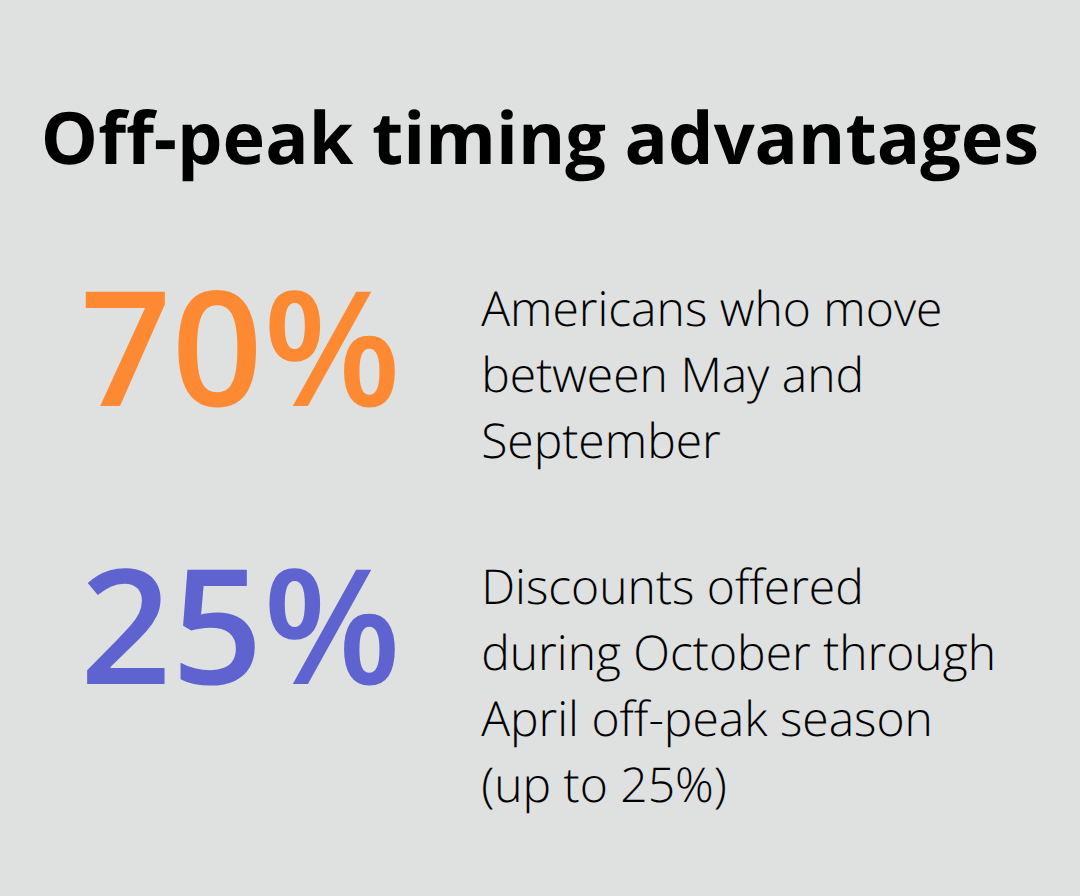
Summer moves cost 20% to 30% more than winter relocations because 70% of Americans move between May and September. Schedule your move for Tuesday through Thursday to avoid weekend premiums that add $200-500 to your bill. October through April represents the industry’s off-peak season when companies offer discounts up to 25% to fill their schedules. Book eight weeks ahead during off-peak months to secure the lowest rates, as last-minute reservations during slow periods still cost more than advance bookings.
Compare Full-Service vs Self-Service Moving Options
Full-service movers charge $80-120 per hour for local moves while labor-only services cost $40-60 per hour according to industry data. Rent your own truck and hire labor separately to save 40% on local relocations under 100 miles. Self-service options like PODS or U-Pack containers can cost significantly more than initially expected for cross-country moves compared to $4,000-8,000 for full-service relocations. Hybrid approaches work best: pack yourself, rent professional help for loading, and drive the truck to your destination. This strategy works particularly well for moves under 500 miles where you can complete the drive in one day without hotel expenses.
Final Thoughts
Smart consumers collect written estimates from at least three licensed movers, verify credentials through the FMCSA database, and check Better Business Bureau ratings. Companies that demand large upfront payments, provide estimates 40% below competitors, or lack proper documentation should raise immediate red flags. The lowest price moving company often becomes the most expensive when hidden fees inflate your final bill by 50% or more.
Strategic planning saves more money than risky bargain hunters. Pack your belongings yourself to cut labor costs by 30-50%, schedule moves during off-peak months for 20-30% discounts, and declutter before the move to reduce weight-based charges (booking eight weeks ahead secures better rates). Quality service and competitive rates work together when you choose reputable companies with transparent pricing.
We at Southbay Moving Systems help Central California residents balance affordability with reliability. Our transparent pricing protects your belongings and your budget. Smart consumers focus on value rather than just the lowest advertised price.