
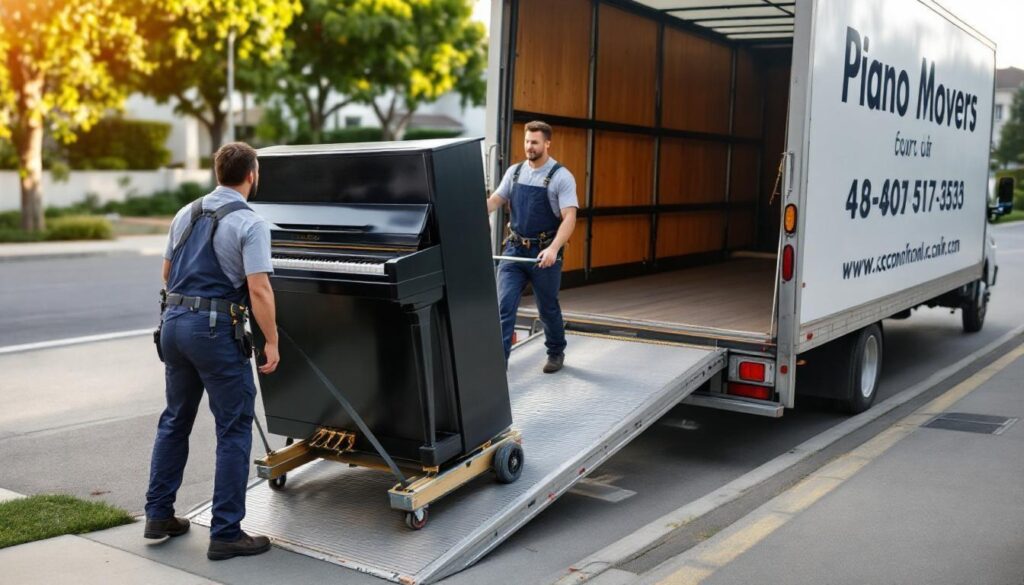
Moving a piano across California requires more than a standard moving truck and basic equipment. Most piano owners don’t realize that one wrong move can cost thousands in repairs or permanent damage to their instrument.
At Southbay Moving Systems, we’ve seen too many pianos damaged by movers who lacked specialized training. Finding qualified piano movers in California means knowing exactly what to look for and what questions to ask.
Why Pianos Need Specialists, Not General Movers
The Complexity of Piano Construction
Pianos weigh between 300 and 1,200 pounds depending on type, and their internal mechanisms contain thousands of precisely calibrated parts. A grand piano’s action alone contains over 9,000 individual components that must remain perfectly aligned. Standard moving crews often tilt pianos at angles that cause internal strings to slip, hammers to misalign, and soundboards to crack. This damage can cost $3,000 to $8,000 in repairs-sometimes more than the cost of hiring professional piano movers in the first place.
Why Standard Movers Fall Short
General moving companies lack the equipment designed specifically for pianos: custom piano dollies with felt padding, specialized straps that distribute weight evenly, and platform lift gates that prevent jarring movements. Moving a piano up a staircase or through a narrow hallway demands techniques that take years to master. A piano that arrives at its destination looking undamaged may have internal damage that doesn’t surface until the owner attempts to play it. The strings might be out of tune by several semitones, the action might stick or feel unresponsive, or the soundboard could have hairline fractures that worsen over time.
Insurance Coverage Separates Professionals from Amateurs
Most standard moving companies’ policies explicitly exclude pianos or cap coverage at $500 to $1,000-amounts that barely cover a piano’s tuning after damage. Professional piano movers carry specialized moving insurance that covers full replacement value. California state licensing requirements mandate that piano movers hold specific credentials: a Motor Carrier number and a Public Utilities Commission permit that demonstrates they’ve been vetted for this specialized work.
The Cost of Accountability
When you hire a company without proper credentials, you take on the liability yourself. If the piano is damaged and the mover lacks insurance or licensing, you cannot recover your losses through the moving company or through California’s consumer protection channels. Licensed piano movers must maintain detailed records of each move, document the piano’s condition before and after transport, and carry bonding that protects customers. The difference between a $300 general moving quote and a $1,500 professional piano moving quote reflects the cost of proper training, equipment, insurance, and legal compliance.
What This Means for Your Search
Understanding these differences prepares you to evaluate piano movers effectively. The next step involves identifying which specific qualities separate trustworthy companies from those that cut corners.
What to Look for in a Piano Moving Company
Verify credentials and specialization
Decades of experience in piano moving reveal that the companies worth hiring share specific, verifiable credentials that go far beyond online ratings. High review counts often reflect general moving work, not piano expertise. A mover with 4.9 stars from 500 reviews may have never moved a piano. The movers who consistently deliver pianos in perfect condition hold Motor Carrier numbers issued by California’s Department of Transportation and maintain Public Utilities Commission permits specifically for piano moving. Ask directly: How many pianos did you move last year?

A legitimate piano specialist moves at least 50 to 100 pianos annually. Companies moving fewer than 20 pianos per year lack the repetition needed to develop true mastery.
Confirm Insurance Coverage
Insurance matters more than reputation. Professional piano movers carry full-replacement-value coverage, which typically ranges from $25,000 to $100,000 per move. Standard moving insurance caps piano coverage at $500 to $1,000, making it essentially worthless. Request the mover’s Certificate of Insurance and verify it lists pianos by name, not buried under generic “household goods.” California law requires piano movers to display their PUC permit number on all advertising and vehicles. If you cannot find this number on their website, business cards, or truck, they likely lack proper credentials.
Evaluate Transparent Pricing
Transparent pricing separates professional operators from companies that surprise you with hidden fees. Reputable piano movers provide written estimates that itemize equipment costs, labor hours, travel distance, and any additional services like disassembly or climate-controlled storage. The estimate should specify whether the quoted price includes stairs, narrow hallways, or elevator access. Many piano movers charge extra for these complications, and a detailed estimate prevents disputes later.
Request at least three written quotes to establish a realistic price range for your specific move. How much it costs to ship a piano typically ranges from $800 to $3,000 for local California moves, depending on piano type and destination complexity. If one quote is drastically lower than others, investigate why. Companies undercutting the market often cut corners on equipment quality, staff training, or insurance coverage.
Understand Payment Terms and Guarantees
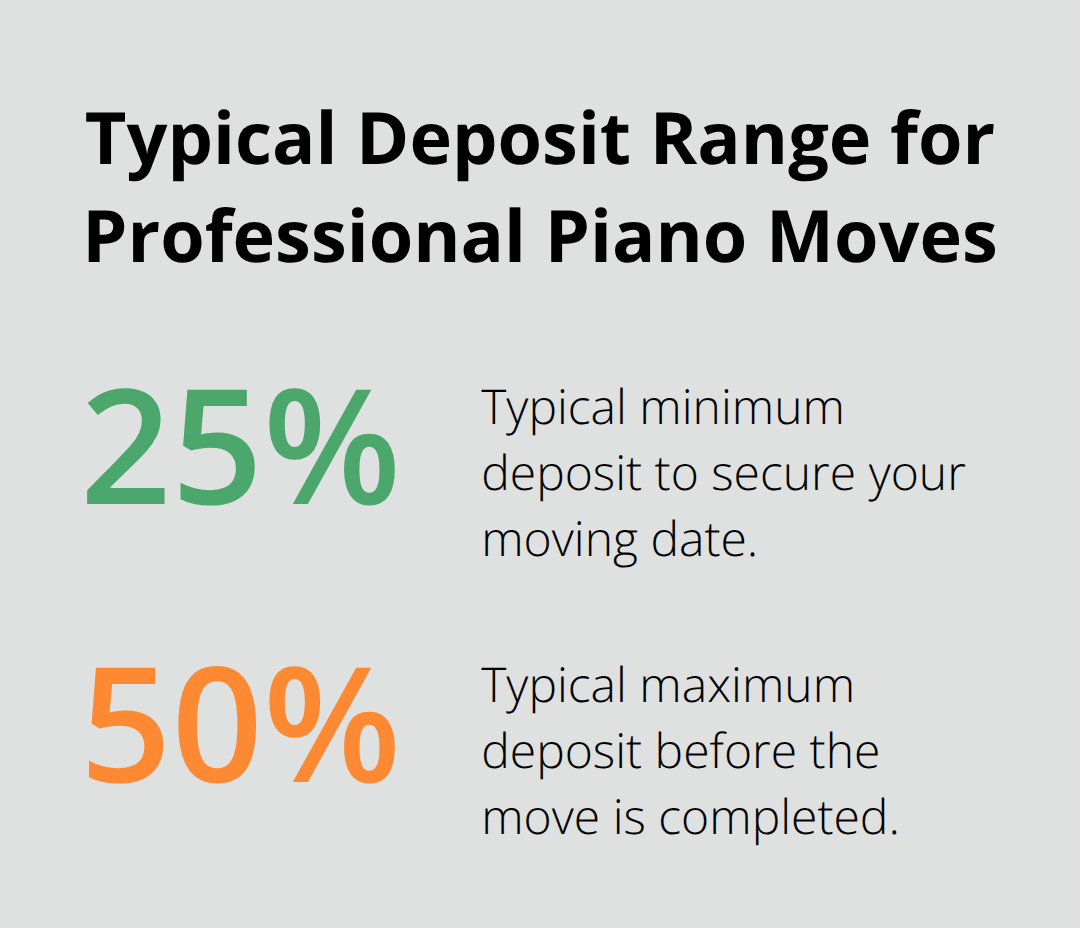
Ask whether the mover offers a binding estimate or if the final price could increase. Binding estimates protect you from surprise charges, while non-binding estimates give movers flexibility to adjust pricing if complications arise during the move. The company should also explain their cancellation policy and whether they charge deposits. Professional movers typically require 25 to 50 percent down to secure your moving date, with the balance due upon completion.
These credentials and transparent practices form the foundation of a trustworthy piano mover. The next step involves asking the right questions directly to the companies you’re considering.
Questions That Separate Professional Movers from the Rest
Experience Volume Reveals True Expertise
Start by asking how many pianos the company moved in the past 12 months. Companies that move fewer than 30 pianos annually lack sufficient repetition to master the craft. A mover handling 100+ pianos per year has encountered nearly every complication: staircases at odd angles, doorways that require creative disassembly strategies, buildings with weight restrictions on elevators, and climate conditions that affect piano stability. When they answer, ask for the breakdown by piano type. A company moving 80 uprights and 5 grands has depth in one category but limited experience with the other. Grand pianos typically range from 500 to 1,300 pounds and require different techniques than uprights because their weight distributes differently and their lids create unique handling challenges. Ask specifically about local moves they’ve completed in your city or neighborhood. Moving a piano in San Francisco’s steep Victorian neighborhoods differs dramatically from relocating one in flat areas of Central Valley. Movers familiar with your specific region understand building access constraints, parking limitations, and staircase configurations that affect pricing and logistics.
References and Online Verification Build Trust
Request at least three references from piano moves completed within the past six months. This timeframe matters because old references may not reflect current staff training or equipment quality. When you contact references, ask specific questions about the condition of the piano upon delivery, whether the mover arrived on schedule, and whether any unexpected costs appeared in the final bill. Ask if the reference would hire the same company again. A hesitant answer signals problems. Professional movers should also provide before-and-after photographs from recent moves, proving they document condition changes. Check online reviews across multiple platforms, not just one site. A mover with 4.9 stars from 18 reviews carries less weight than one with 4.7 stars from 200 reviews. High volume with slightly lower ratings often indicates honest feedback rather than curated testimonials. Look for specific details in reviews mentioning piano care. Comments like smooth handling, careful staircase navigation, and timely delivery indicate technical competence. Avoid movers with reviews mentioning delays, equipment damage, or staff unprofessionalism. California’s Department of Transportation maintains a public database where you can verify a mover’s Motor Carrier number and check complaint history. This database reveals whether the company has faced safety violations or customer disputes.
Equipment and Transport Methods Protect Your Instrument
Ask what specific equipment the mover uses for piano transport. The answer should include custom piano dollies with felt padding, never metal casters that vibrate pianos during movement. They should describe using heavy-duty straps that distribute weight across the piano’s frame rather than concentrating pressure on legs or corners. Request details about how they protect the piano during loading and unloading. Professional movers use ramps with non-slip surfaces and platform lift gates on their trucks to avoid jarring drops. Ask how they handle stairs. The answer should specify using piano boards, which are padded platforms that allow controlled sliding rather than lifting, reducing stress on internal mechanisms.

For moves involving narrow hallways or tight doorways, ask whether they disassemble the piano. Grand pianos can have legs removed, and uprights can have panels taken off. Disassembly requires specialized knowledge because reassembly must maintain perfect alignment.
Climate Control and Contingency Planning Matter
Ask about climate control during transport. Pianos expand and contract with temperature and humidity changes. A move during extreme heat or cold, or into a climate-controlled storage facility, requires different handling than a straightforward same-day delivery. Professional movers discuss these variables upfront. Ask about their contingency plan if complications arise during the move. Weather delays, access issues, or structural surprises happen. Companies with experience explain how they adapt without charging surprise fees or abandoning the job mid-way. This forward-thinking approach separates operators who anticipate problems from those who react to them after damage occurs.
Final Thoughts
Finding reliable piano movers in California requires you to verify three core elements: specialized credentials, transparent pricing, and proven experience with pianos specifically. A company’s Motor Carrier number and PUC permit matter far more than online star ratings, and insurance coverage that names pianos explicitly protects your investment in ways that generic moving policies never will. The questions you ask directly to movers reveal whether they understand piano construction, anticipate complications, and plan accordingly.
Vetting companies thoroughly takes time, but it prevents thousands in damage costs and the frustration of hiring movers who lack the expertise your instrument demands. Request written estimates from at least three companies, verify their credentials through California’s Department of Transportation database, and contact recent references who can speak to actual results. Ask about annual piano volume, equipment specifics, and how they handle stairs and tight spaces-a mover who answers these questions with confidence and detail has earned the right to handle your piano.
We at Southbay Moving Systems specialize in piano moves across Central California with full licensing and transparent pricing so you know exactly what to expect. When you’re ready to move your piano, contact Southbay Moving Systems for a personalized quote and the peace of mind that comes with hiring specialists who treat your instrument as if it were their own.