

Moving costs can quickly spiral out of control without proper planning. The average American household spends $1,400 on local moves and $5,000 on long-distance relocations.
We at Southbay Moving Systems know that finding an inexpensive moving company requires smart research and strategic timing. The right approach can cut your moving expenses by 30-50% while maintaining quality service.
How Do You Research Moving Companies Properly
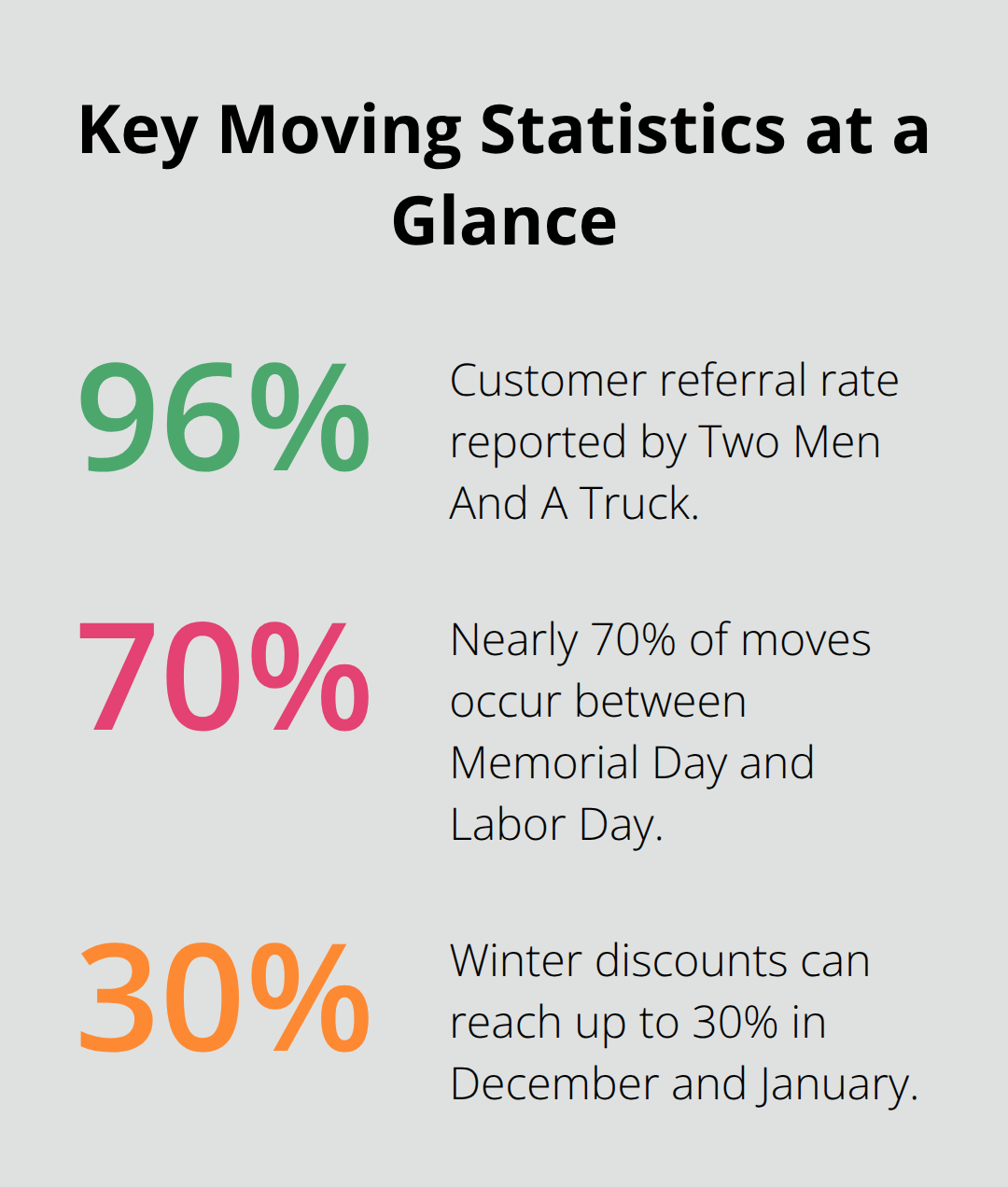
Smart research separates expensive mistakes from budget-friendly success stories. Start with online review platforms like Yelp and Google Reviews, but focus on recent feedback from the past 12 months. Two Men And A Truck reports customer referral rates that reach 96%, which proves that satisfied customers actively recommend quality movers. Look for patterns in complaints rather than isolated incidents.
A company with consistent issues that handle fragile items or miss delivery windows reveals operational problems that cost you money through damages and delays.
Check Multiple Review Sources and Licensing
The Better Business Bureau provides accreditation ratings and complaint resolution records that reveal how companies handle problems. Moving companies must hold valid Department of Transportation numbers for interstate moves and state licenses for local relocations. Verify these credentials directly through government websites rather than trust company claims. Request written estimates from at least three companies, as professional moves vary significantly in pricing structure. Compare line-item prices for packing materials, labor, and transportation separately. Companies that offer significantly lower quotes often add hidden fees for stairs, long carries, or fuel surcharges that inflate final costs by 20-40%. Insurance coverage varies dramatically between providers (with basic coverage that offers only 60 cents per pound for damaged items).
Get Detailed Written Estimates
Schedule in-home estimates for accurate prices based on your actual belongings and property challenges. Phone quotes consistently underestimate costs because representatives cannot assess heavy furniture, narrow hallways, or parking restrictions that increase labor time. Local moves cost anywhere from $301 to $3,512 depending on the size of the move. Request estimates that bind maximum costs rather than non-binding quotes that serve as rough guidelines. Compare not just total prices but also what services each estimate includes (as some companies bundle packing materials while others charge separately).
Verify Insurance and Equipment Standards
Professional movers should carry both liability insurance and workers’ compensation coverage to protect your belongings and their employees. Ask for proof of insurance certificates and check coverage limits before you sign any contracts. Quality companies invest in proper equipment like furniture dollies, moving blankets, and specialized tools that prevent damage during transport. Companies that arrive with inadequate equipment often cause scratches, dents, or breaks that cost you hundreds in replacement fees. When researching moving companies, focus on reliable reviews to verify their track record. The timing strategies you choose next can slash these verified companies’ rates even further.
When Should You Schedule Your Move
Peak moving season runs from Memorial Day through Labor Day when nearly 70% of all moves occur, which drives prices up compared to off-season rates. Moving companies charge premium rates during this period because demand far exceeds supply, with some companies that book solid for weeks in advance.
Schedule Mid-Month and Mid-Week Moves
Most leases start and end at month beginnings and endings, which creates artificial demand spikes that inflate prices. Moving mid-month cuts costs by 15-25% because fewer people compete for moving trucks and crews. Tuesday through Thursday moves cost significantly less than weekend relocations, with some companies that offer 20% discounts for weekday bookings. The combination of mid-month and mid-week scheduling can reduce your total moving bill by $200-500 on average moves. Professional movers charge between $80-100 per hour according to Consumer Affairs (which makes time-based savings substantial).
Target Off-Season Months for Maximum Savings
October through April represents the moving industry’s slow season when companies slash rates to maintain steady business. Winter moves offer the steepest discounts, with companies reducing prices by up to 30% during December and January. Weather concerns make some homeowners avoid winter relocations, but professional moving companies operate year-round with proper equipment and experience. Spring moves in March and April provide moderate savings while they avoid harsh weather conditions that complicate relocations.
Book Early for Better Rates
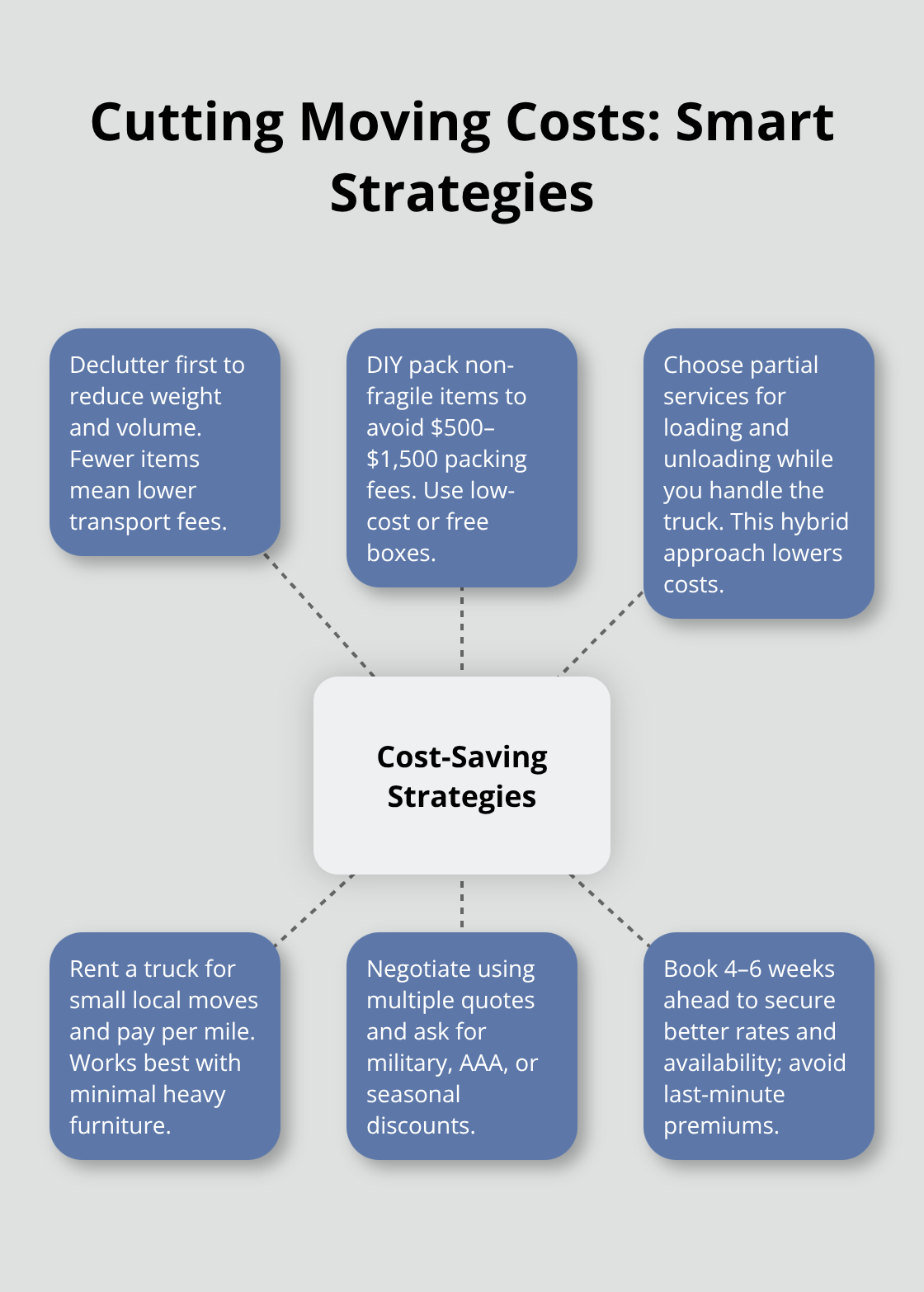
Companies reward customers who book 4-6 weeks in advance with lower rates and better crew availability. Last-minute bookings (within two weeks) often carry premium charges because companies must adjust schedules and potentially pay overtime to crews. Early booking also gives you more negotiation power since companies prefer guaranteed business over uncertain prospects. The savings from advance booking can reach 10-15% on your total moving costs.

Smart timing strategies work best when you combine them with cost-reduction techniques that further slash your moving expenses.
How Can You Cut Moving Costs by Half
Declutter before your move to achieve immediate savings that compound throughout the process. Professional movers charge by weight and volume, so every unnecessary item costs you money during transport. The average household accumulates 300,000 items (with most families that use only 20% of their possessions regularly). Donate furniture, appliances, and clothing to local charities for tax deductions that offset moving expenses. Sell valuable items through Facebook Marketplace or estate sales to generate cash that covers moving costs. Long-distance moving costs anywhere from $2,700 to $10,000, so removing unwanted items creates substantial savings on transport fees.
Pack Your Own Belongings for Major Savings
Professional packing services cost $500-1,500 for average homes, while DIY packing materials cost under $200 for the same move. Moving companies charge $25-40 per hour per packer, which adds up quickly for multi-room homes. Purchase moving boxes for approximately $2 each from home improvement stores or collect free boxes from liquor stores and grocery chains.
Use your existing suitcases, laundry baskets, and storage containers to pack belongings without additional material costs. Focus your energy on packing non-fragile items like clothing, books, and linens while you leave delicate items like artwork and electronics for professional handling.
Choose Partial Service Options Strategically
Full-service moves include packing, loading, transport, and unpacking for $2,500-5,000 on average relocations. Labor-only services charge $38-75 per mover per hour and handle only loading and unloading while you provide the truck and packing. Hybrid approaches let you pack and rent your own truck while you hire professionals for heavy lifting of appliances and furniture. This combination reduces total costs by 40-60% compared to full-service options while it protects your back and your belongings from damage during the most physically demanding portions of the move.
Compare DIY Truck Rental Options
Truck rental companies charge $29-40 per day for local moves plus $1.29-1.99 per mile for fuel costs. A typical local move requires 6-8 hours of truck rental time (which costs $200-400 total including gas and mileage). Long-distance truck rentals range from $1,200-2,100 for cross-country moves depending on truck size and distance. Add insurance coverage for $14-28 per day to protect against damage claims that could cost thousands. DIY moves work best for smaller households with fewer than 2 bedrooms and minimal heavy furniture.
Negotiate with Multiple Companies
Request quotes from at least three companies and use competing offers to negotiate better rates. Many companies match competitor prices or offer additional services at no extra charge to win your business. Ask about military discounts, AAA member rates, or seasonal promotions that reduce standard pricing. Some companies waive fuel surcharges or provide free packing materials when you book during slow periods. Negotiate payment terms that allow you to pay after delivery rather than requiring full payment upfront.
Final Thoughts
Strategic research and smart timing help you locate an inexpensive moving company that delivers quality service. The research phase protects you from hidden fees and unreliable operators, while off-peak scheduling cuts expenses by 30-50%. Professional movers with proper licenses and insurance prevent costly mistakes that often plague DIY moves.
The cheapest option rarely provides the best value when damage claims exceed initial savings. Companies with 96% referral rates prove that quality service matters more than rock-bottom prices. Professional equipment and trained crews protect your belongings better than amateur approaches (which often result in expensive repairs or replacements).
We at Southbay Moving Systems provide competitive rates with transparent pricing. Start your search 4-6 weeks before your move date and gather multiple written estimates. The right inexpensive moving company delivers professional results without exceeding your budget.