

Picking the right long distance moving company can make or break your relocation. Most people focus only on price, but that’s where costly mistakes happen.
We at Southbay Moving Systems know what separates a best rated long distance moving company from the rest. This guide walks you through the exact credentials, red flags, and evaluation steps that protect your move.
What to Look for in a Best Rated Moving Company
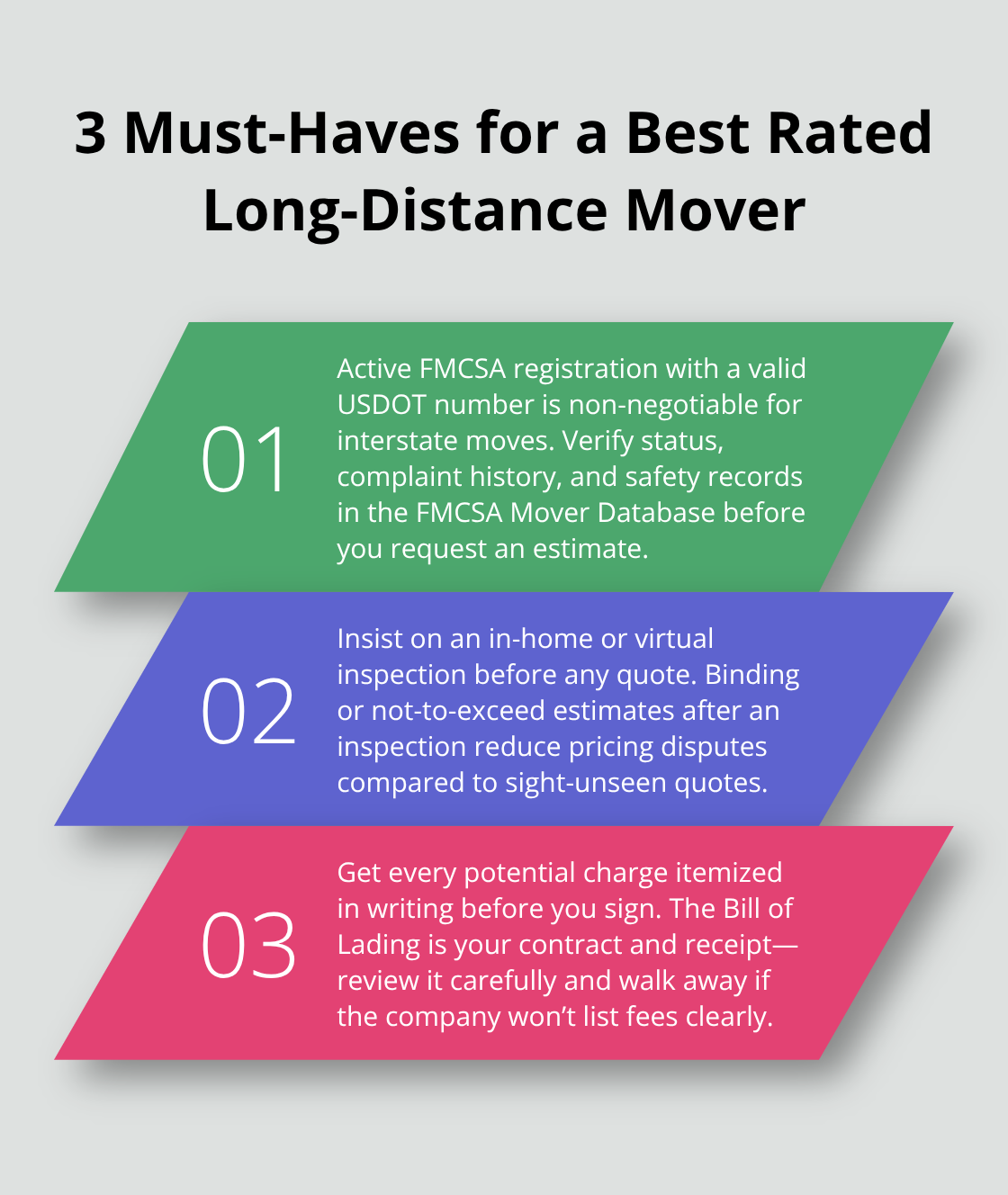
The difference between a trustworthy long distance mover and one that leaves you stranded comes down to three verifiable factors. First, confirm the company holds an active FMCSA registration with a valid USDOT number. You can verify this instantly through the FMCSA Mover Database, which shows registration status, complaint history, and safety records. An authorized operating status is non-negotiable for interstate moves-it’s the legal requirement that separates legitimate carriers from unlicensed operators. Second, demand an in-home or virtual inspection before any quote. Companies that provide estimates without seeing your belongings are guessing, and their guesses almost always change when the truck arrives. Moves booked with binding estimates after inspections have significantly fewer pricing disputes than sight-unseen quotes. Third, ask explicitly about every potential charge: stairs, long carries, elevator fees, fuel surcharges, and storage. Read the Bill of Lading carefully-this is your contract and receipt combined. If a company won’t itemize charges in writing before you sign, walk away.
Transparent Pricing Without Surprises
Full-service long distance movers typically charge between $7,500 and $14,000 for a 3,000-mile move, depending on weight and service level. The industry standard is weight-based pricing, but top-rated movers offer price caps-a maximum amount you’ll pay regardless of weight fluctuations. This protects you from the 110% rule trap, where movers can legally charge up to 10% above a nonbinding estimate. Ask whether your quote is binding, not-to-exceed binding, or nonbinding. Binding quotes lock the price; nonbinding estimates are starting points that can climb. When evaluating options, look for companies with transparent pricing that clearly outline all costs upfront before choosing price alone.
Verify Registration and Operating Status
Check the FMCSA database to confirm the company operates as an authorized carrier. The database reveals whether the mover holds an active USDOT number and shows any complaints filed against them. Look for patterns in complaint data-one complaint is normal, but repeated issues with damage, pricing, or late delivery signal systemic problems. An authorized operating status means the company meets federal safety and insurance standards for interstate relocations. Companies without this status cannot legally move your household goods across state lines, no matter what they claim.
Evaluate Crew Structure and Employee Standards
Determine whether the company uses in-house crews or outsources to subcontractors. Carriers operate their own trucks and staff, while brokers arrange moves through third parties-brokers can undercut prices but often sacrifice consistency. Ask about background checks on employees and whether the same crew handles loading and unloading. Request references from customers who moved similar distances and household sizes, not just the company’s handpicked testimonials. Confirm the mover carries liability coverage and understand what it covers-basic coverage pays 60 cents per pound per item for interstate moves, which won’t replace a damaged sofa. Full Value Protection is included in your moving quote and replaces items at actual cash value or replacement cost.
These three verification steps-FMCSA registration, transparent pricing, and crew credentials-form the foundation of your decision. The next chapter examines the red flags that should stop you from hiring a mover, even if the price seems unbeatable.
Red Flags That Stop You From Hiring the Wrong Mover
Unusually Low Quotes Without Inspection
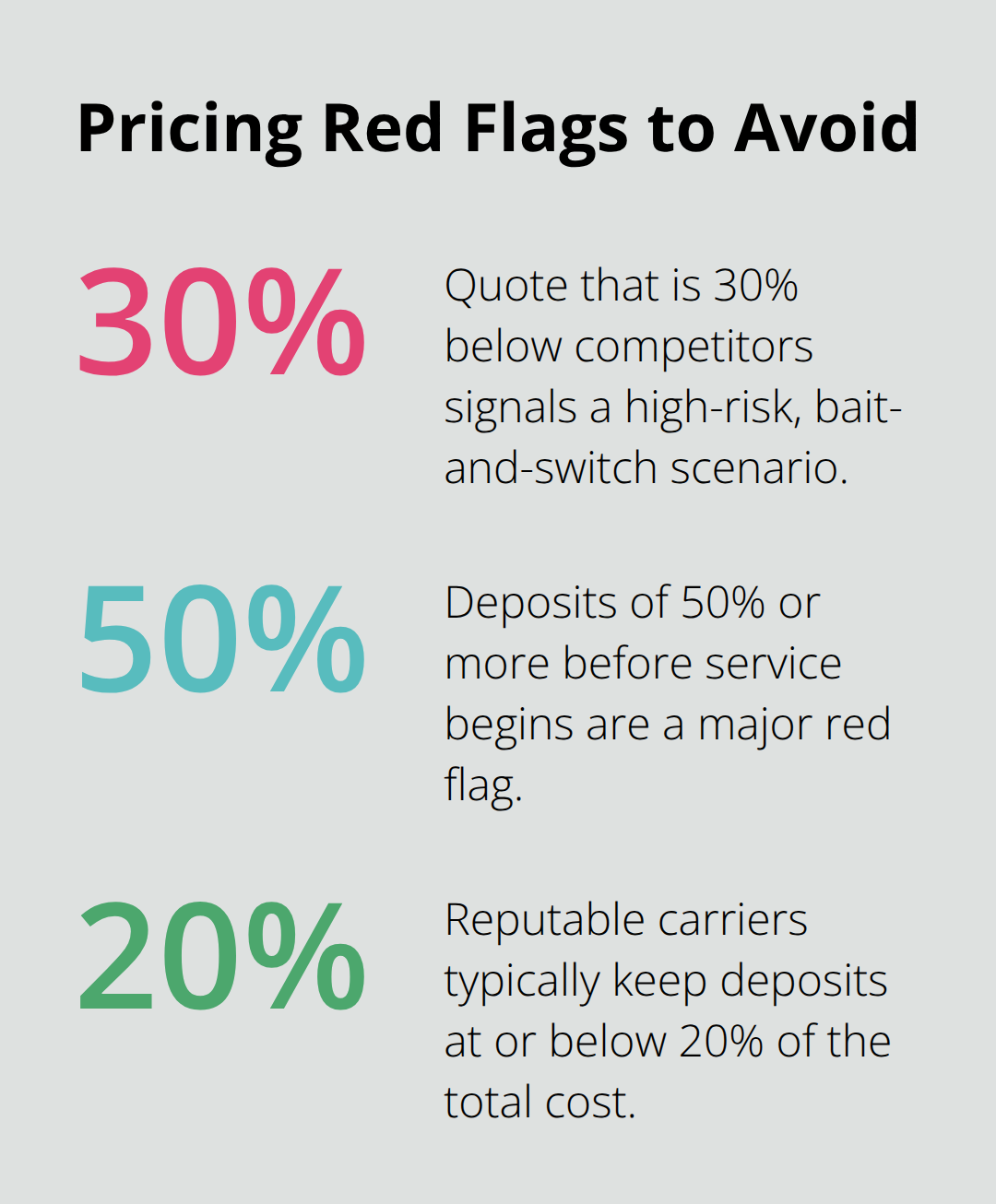
A price quote 30% below competitors isn’t a deal-it’s a warning. Movers who submit estimates without inspecting your home set a trap. They quote $5,000, arrive on moving day, see 15,000 pounds of furniture, and suddenly demand $7,500 cash before loading a single box. The FMCSA’s Red Flags of Moving Fraud guidance identifies sight-unseen quotes as a primary indicator of predatory pricing. Legitimate interstate movers conduct in-home or virtual surveys because accurate estimates protect both parties.
If a company provides a binding quote without seeing your belongings, that binding estimate loses all value the moment they discover the actual scope of your move. Ask directly: will they visit your home or conduct a video walkthrough before finalizing the quote? If they refuse, cross them off your list.
The same applies to companies that pressure you to pay a large deposit upfront before your move date. Federal regulations allow deposits, but red flags emerge when a mover demands 50% or more before service begins. Reputable carriers ask for deposits closer to 10-20% of the total cost, with the remainder due upon delivery.
Companies requesting substantial prepayment often disappear or hold your belongings hostage if disputes arise.
Lack of Physical Office Address
Check the mover’s physical office address through Google Maps or visit in person. Legitimate long-distance carriers maintain staffed headquarters, not virtual offices hidden behind a PO box. A company operating from a residential address or providing only a phone number with no traceable business location violates industry standards. The FMCSA Mover Database lists headquarters locations for all authorized carriers-verify the address matches what they provided you.
Poor Communication and Responsiveness
Communication breakdowns predict moving disasters. A company that takes three days to answer your email or transfers your call five times before reaching someone who understands your questions lacks operational discipline. Professional movers respond within 24 hours and assign a dedicated coordinator to your move.
Ask how they handle issues during transit: do they provide a direct contact number, a mobile app for tracking, or only email support? Top-rated carriers offer real-time GPS tracking and a phone line you can call if problems arise. If a representative becomes defensive when you ask about their subcontractors, complaint history, or damage claims process, that defensiveness signals they hide problems. Transparent companies answer every question without hesitation.
Request written answers to your key questions (crew composition, liability coverage details, delivery date guarantees, and cancellation policies) before committing. If they won’t provide written confirmation, they avoid accountability. When you call to follow up on a quote, note whether the same person remembers your move details or whether you repeat everything to different staff members. Disorganized communication at the sales stage predicts disorganized service on moving day.
Verify Status Before Your Move Date
Companies with strong systems track customer information, answer questions consistently, and follow up proactively. The FMCSA database updates regularly, and a company’s authorized status can shift if they fail safety inspections or accumulate serious complaints. Search the database again two weeks before your scheduled move to confirm nothing changed since you hired them. These red flags form your defense against predatory movers-but knowing what to avoid isn’t enough. The next chapter shows you exactly how to verify a mover’s credentials and confirm they meet the standards that separate best-rated companies from the rest.
How to Evaluate Moving Company Credentials
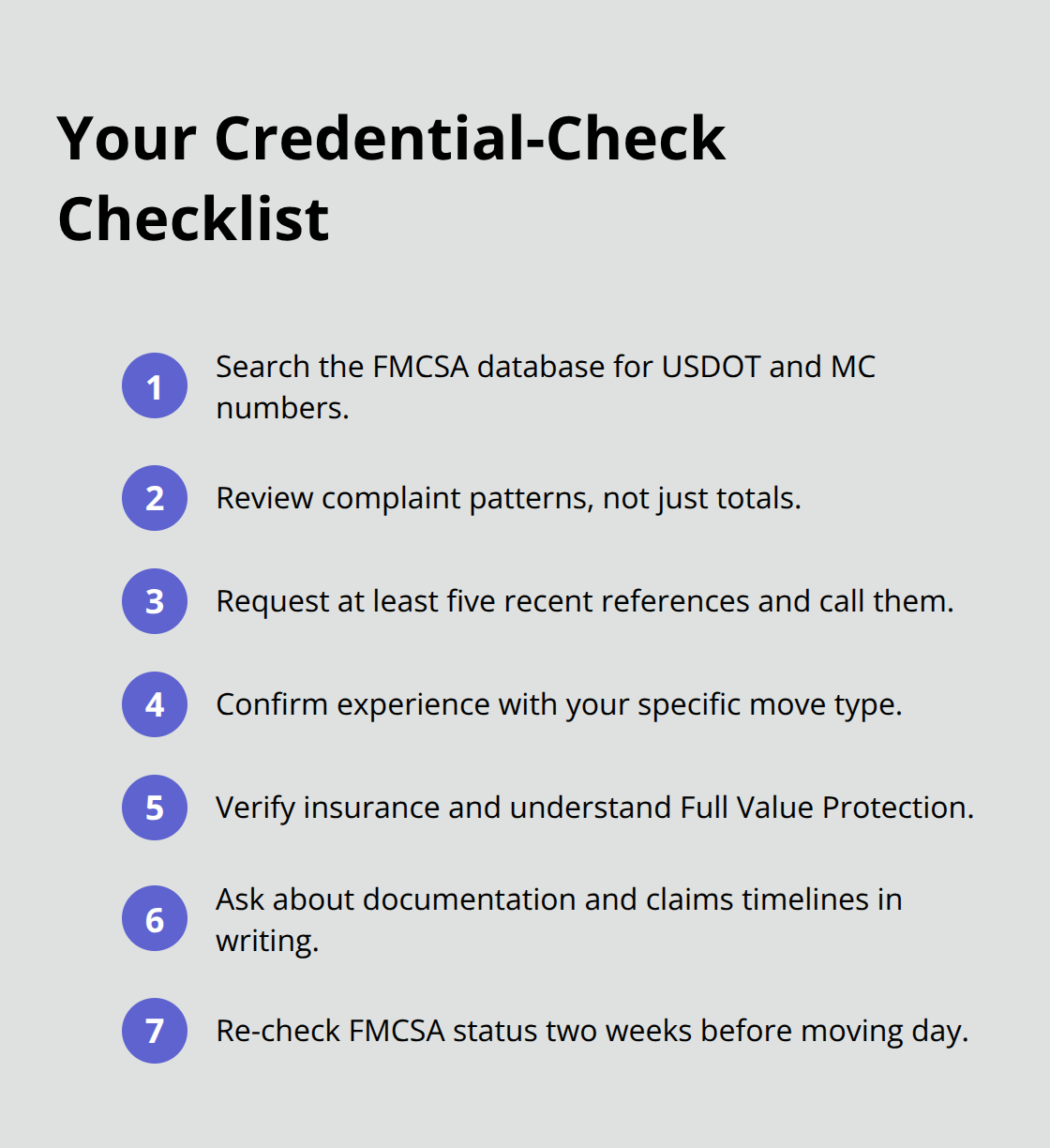
Search the FMCSA Database for Registration and Complaint History
The FMCSA Mover Database serves as your single most important verification tool, and using it correctly separates informed decisions from expensive mistakes. Visit the FMCSA website and search for the company’s USDOT number and MC number. You’ll see their registration status, operating authority, and complaint history all in one place. An authorized operating status is non-negotiable for interstate moves-if the database shows anything other than authorized, do not hire them.
Complaint data matters more than most people realize. One or two complaints across several years falls within normal range, but patterns reveal systemic problems. If you see five complaints about damage in twelve months, that company damages freight regularly. Look at the specifics: are complaints about pricing disputes, late delivery, or damaged goods? Pricing disputes suggest the company quotes low then demands more on moving day. Damage complaints indicate poor crew training or careless handling. The FMCSA updates this data regularly and provides free access to all consumers. Take fifteen minutes to review the database before scheduling an estimate.
Companies operating without proper FMCSA authorization often operate under different names or change their business entity when complaints accumulate. Always verify that your chosen company has proper licensing and insurance to confirm you’re researching the correct entity.
Request References from Recent Customers
Customer testimonials and references tell you what actually happens on moving day, not what the company promises in marketing materials. Ask the mover for references from customers who completed moves within the last six months and moved distances similar to yours. Do not accept their top three handpicked references. Request at least five references and contact them directly by phone, not email.
Ask specific questions during these calls: Did the crew arrive on the promised date? Were items damaged during transit? Did the final bill match the estimate? Did communication stay consistent throughout the move? References who moved short distances or years ago won’t predict your experience. A customer who moved 200 miles last year tells you nothing about how this company handles your 2,000-mile cross-country relocation.
Read online reviews on Google and the Better Business Bureau, but understand that reviews reflect recent experiences. A company with 4.8 stars from 200 reviews completed consistent quality moves. A company with 4.9 stars from three reviews tells you almost nothing. Look for patterns across multiple platforms. If Google shows five-star reviews but the FMCSA database shows three damage complaints in six months, the negative data carries more weight because it’s verified and specific.
Confirm Experience with Your Specific Move Type
Ask the mover about their experience with your specific type of relocation. If you’re moving a piano, ask how many pianos they’ve moved in the past year and request references from piano move customers. If you’re relocating a household with high-value art or antiques, ask about their experience protecting valuable items and whether they offer full value protection as standard.
Experience matters because long-distance movers develop systems for different challenges. A company experienced with military moves understands compressed timelines and specific regulations. A company experienced with senior relocations knows how to communicate clearly with older adults and handle items with emotional significance. Ask whether the same crew handles your loading and unloading or whether different teams manage each end. Crews that handle both stages develop accountability and move your items with the same care from start to finish. Crews split between locations often don’t communicate about fragile items or special instructions, leading to damage or mishandling.
Verify Insurance Coverage and Documentation Practices
Confirm the mover carries liability insurance and ask about their coverage limits. Basic coverage pays 60 cents per pound per item for interstate moves through the FMCSA, which means a 100-pound sofa is worth six dollars under basic protection. Full value protection replaces items at replacement cost or actual cash value. For moves involving valuable furniture or electronics, full value protection is essential.
Ask the mover how they document your items during the move. Professional movers photograph high-value pieces before loading and after unloading, creating a record if damage occurs. Companies that skip documentation make damage claims nearly impossible to prove. Request their claims process in writing and understand their timeline for processing damage reports. Reputable movers handle claims within thirty days. Companies that delay or deny legitimate claims show their true priorities.
Final Thoughts
Choosing a best rated long distance moving company requires verification, not guesswork. The three pillars that separate trustworthy movers from predatory operators are FMCSA registration status, transparent pricing with written itemization, and crew credentials backed by verifiable references. You now possess the tools to search the FMCSA database, identify red flags before they cost you thousands, and evaluate credentials that actually predict moving day performance.
Due diligence before hiring takes time, but it prevents the costly mistakes that happen when you skip verification steps. A company with an authorized USDOT number, clean complaint history, binding estimates after in-home inspection, and references from recent customers of similar moves has already proven reliability. We at Southbay Moving Systems understand that long distance moves demand expertise and accountability, and we invite you to contact us to schedule an in-home inspection and receive a binding estimate that protects both of us.
Your next step is straightforward: search the FMCSA database for any mover you consider, request written answers to your questions about crew composition and liability coverage, and contact their references directly. Book your move at least two months in advance, especially during peak season. The time you invest in verification now eliminates stress and surprises on moving day.