

Moving across the country from San Francisco is a major decision, and picking the right cross country movers in San Francisco CA makes all the difference.
At Southbay Moving Systems, we’ve seen firsthand how the wrong choice can lead to stress, unexpected costs, and damaged belongings. This guide walks you through what matters most when evaluating moving companies.
What to Look for in a Cross Country Moving Company
Verify the mover’s legal credentials
Start by checking the mover’s Federal Motor Carrier Safety Administration license. Visit the FMCSA database and search for both the MC number and USDOT number to confirm the company operates legally for interstate moves. Many scams use fake or expired credentials, so this step stops you from booking with an illegitimate operator.
Once you verify the license, confirm the mover carries adequate insurance. Interstate movers are required by law to offer valuation coverage, which includes two different liability options: Full Value Protection and Released Value. Ask the mover what full-value protection costs and whether it covers your high-value belongings. Insurance matters more than most people realize because cross-country moves expose your items to weeks of transit risk.
Read reviews from actual customers
Online reviews alone won’t tell you the whole story. Google reviews are helpful, but watch for patterns of fake accounts. If most reviews come from first-time reviewers with minimal profile history, the company may be padding its ratings.
Read the one-star and two-star reviews carefully, not just the five-star ones. Look for repeated complaints about hidden fees, late arrivals, or damaged goods. These patterns reveal systemic problems. Also check the Better Business Bureau for unresolved complaints and how the company responds to criticism. A company that ignores complaints or refuses to address legitimate damage claims is a red flag.
Ask the mover directly for references from customers who completed moves similar to yours within the last six months, then call those references. A legitimate company will provide them without hesitation.
Request binding written estimates
Request binding written estimates from at least three movers. A binding estimate locks in the price if you stick with the agreed scope of work. Non-binding estimates can climb thousands of dollars once the truck arrives.
During the in-home survey, the estimator should note stairs, long carries, elevator requirements, and specialty items like pianos. Ask explicitly which extra charges apply: stairs fees ($50–$300 per flight), long-carry charges ($10–$25 per item), fuel surcharges, and storage costs. Many movers hide these fees in fine print.
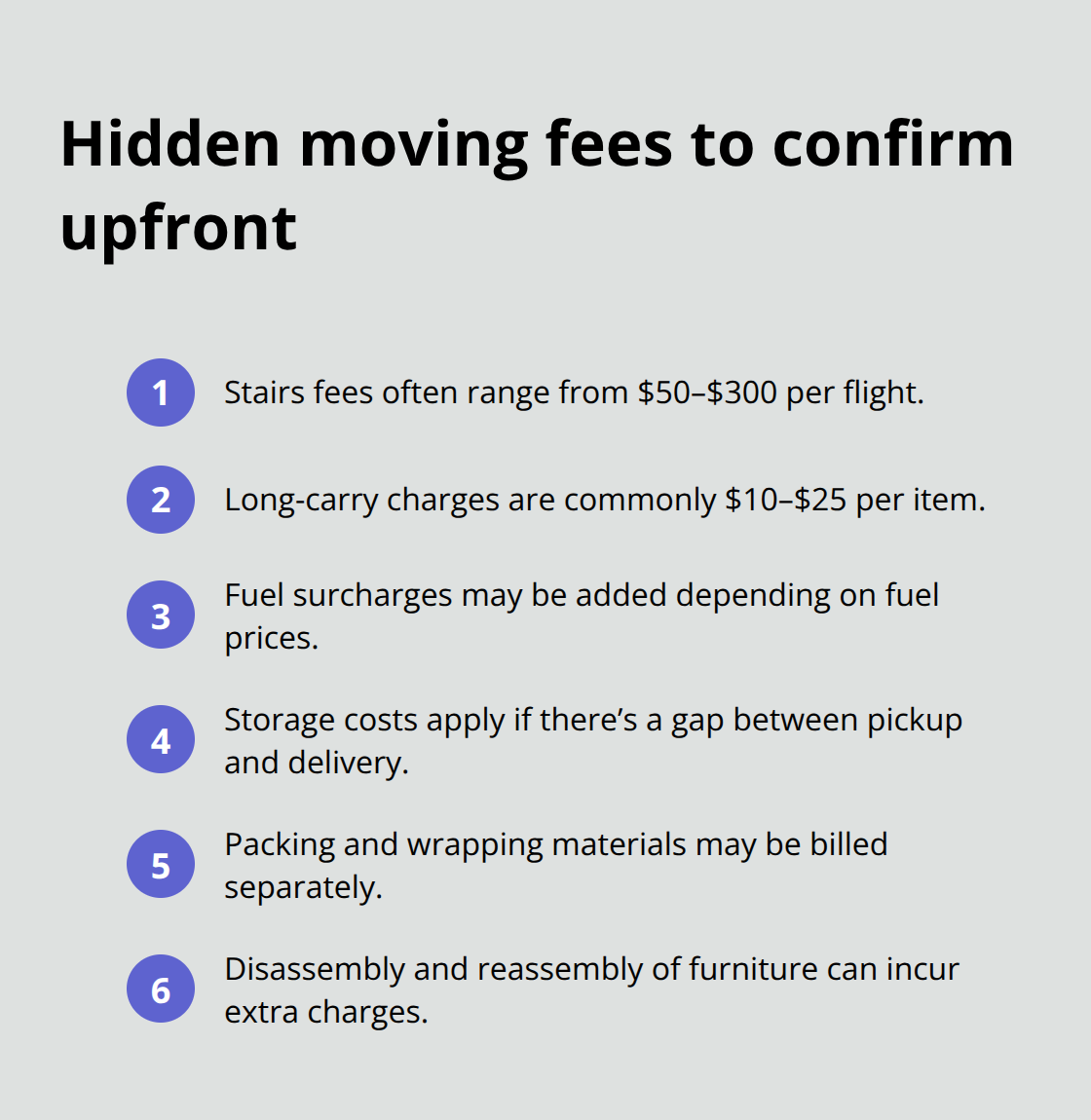
Compare the total cost across companies, not just the base price. One mover might quote $6,500 but add $1,800 in fees, while another quotes $7,200 all-inclusive. The lower base price is worthless if hidden charges push the final bill higher. With your estimates in hand, you’re ready to ask the right questions that separate reliable operators from those cutting corners.
Common Mistakes When Selecting Cross Country Movers
Price alone won’t protect your wallet
The biggest mistake families make is fixating on the lowest quote without understanding what that price actually covers. A mover quoting $5,200 might be $1,500 cheaper than competitors, but that figure often excludes stairs fees ($50–$300 per flight), long-carry charges ($10–$25 per item), fuel surcharges, and equipment fees. When the truck arrives in San Francisco, you discover the estimate was binding only on labor-not on extras. The final bill lands at $7,100, and you’re stuck paying it or delaying your move.
Families lose thousands this way because they compared base prices instead of total costs. Request detailed written breakdowns from every mover and ask which fees apply to your specific situation: How many stairs? How far from the truck to your front door? Do you have elevators? These details transform a $5,200 estimate into an accurate $6,800 total.
Fine print hides expensive surprises
Hidden fees hide in the fine print of contracts that most people skim or ignore entirely. Storage charges, if you need a delay between pickup and delivery, can run $100–$300 per month. Some movers charge extra for disassembly and reassembly of furniture. Others tack on fuel surcharges if gas prices spike. The contract should spell out every possible charge upfront-not buried in section 7, subsection C.
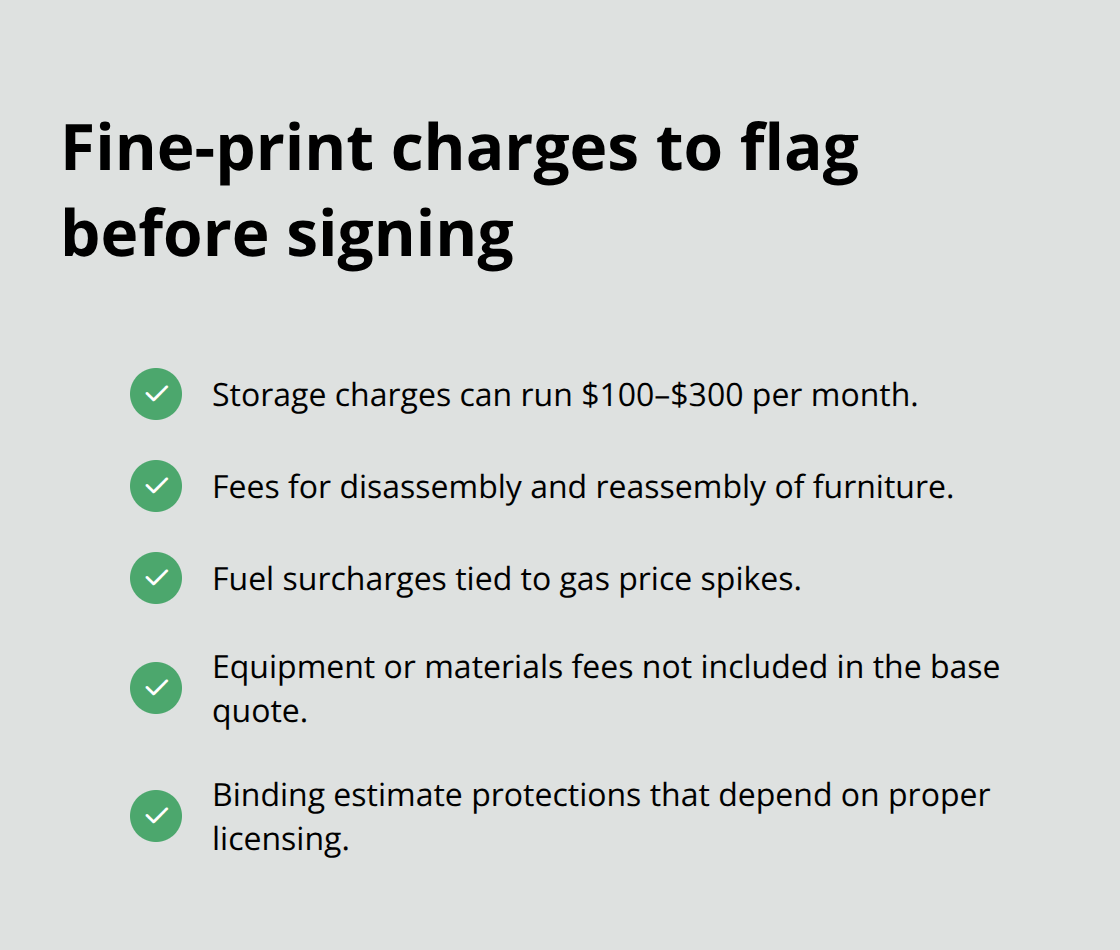
Read every page of the contract before signing. Ask the mover to highlight all potential charges in writing. A binding estimate protects you only if the company is actually licensed to operate.
Skipping credential verification opens the door to scams
Many families fail to verify that the mover holds a valid DOT license and MC number before signing anything. Scam operators use expired credentials or operate under multiple company names to evade accountability. Visit the FMCSA database and verify both numbers match the company name on your quote. Legitimate movers expect this verification; those who resist or become evasive are telling you something important.
An unlicensed mover offering a great price is offering nothing but risk. This verification step takes 10 minutes and stops you from booking with an illegitimate operator. Once you confirm the credentials, you’re ready to ask the questions that separate reliable operators from those cutting corners.
Critical Questions to Ask Before Booking
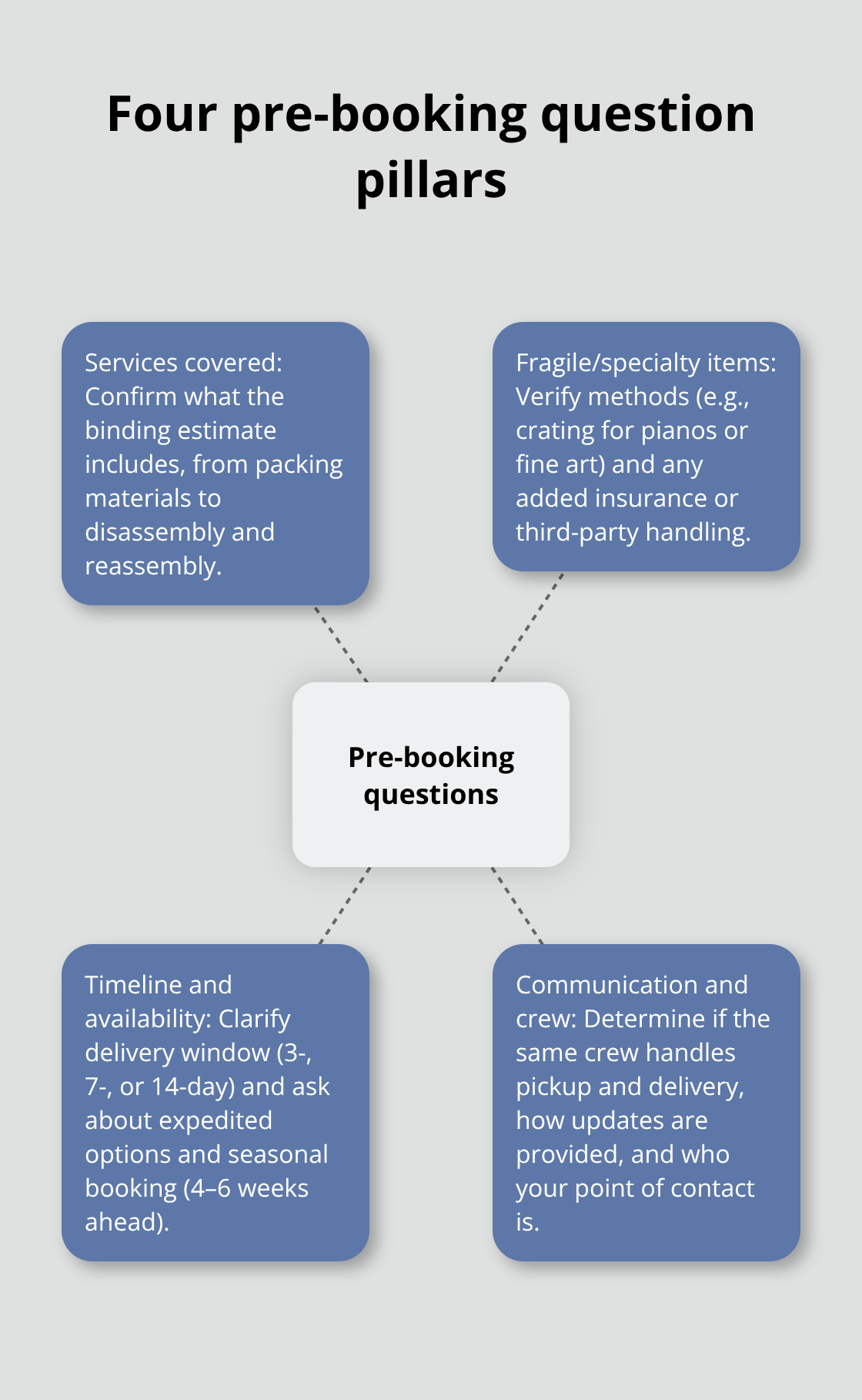
The difference between a smooth cross-country move and a financial disaster often comes down to asking the right questions before you sign anything. Many families assume that once they’ve verified credentials and compared prices, they’re done vetting. That’s a mistake. The questions you ask now determine whether the mover will surprise you with $2,000 in undisclosed charges or deliver exactly what you paid for.
Confirm What Services the Estimate Actually Covers
Start by asking which services the binding estimate actually covers. Does it include packing materials, or do you buy those separately? Does the quote cover disassembly and reassembly of furniture, or will that cost extra? Some movers include basic wrapping and padding, while others charge $50 to $100 per item for this service.
Ask explicitly whether the estimate covers loading at your San Francisco location, transit, unloading at your destination, and any stairs or long carries. If the estimator didn’t measure your hallways, stairs, or elevator dimensions during the in-home survey, the quote is incomplete. Request a written confirmation of exactly which services are included and which ones cost extra.
Understand How the Mover Handles Fragile and Specialty Items
For fragile and specialty items, ask how the mover handles pianos, artwork, antiques, and electronics. Standard liability coverage for interstate moves covers only $0.60 per pound, which means a damaged $4,000 sofa might net you only $180 in compensation.
Ask whether the mover uses specialized crating for high-value items and what that costs. Request photos or examples of how they pack pianos or fine art. If they can’t show you specific methods or experience with your items, they’re not the right choice. Also ask whether they carry additional insurance for specialty items or recommend third-party coverage. Many movers subcontract specialty moves to other companies, which can delay your timeline or introduce additional costs. Ask who specifically will handle your specialty items and whether they have direct experience with those items.
Lock Down Timeline and Availability Details
Timeline and availability matter more than most people realize, especially for cross-country moves. Ask for a specific delivery window, not just a date range. Some movers will guarantee delivery within a 3-day window, while others only promise delivery sometime within a 7-day or 14-day range. A vague delivery estimate can mean you’re in a hotel with your family for two weeks instead of three days.
Ask whether the mover offers expedited service if you need faster delivery, and what that costs. For summer moves, which run May through September, many movers book 4 to 6 weeks in advance, so availability shrinks quickly. Ask the mover how far in advance they’re booking and whether your preferred dates are still available. Also ask what happens if the mover misses the guaranteed delivery date. Don’t hesitate to ask questions about unclear items or discrepancies between quotes, and request this in writing.
Establish Clear Communication and Crew Assignment
Finally, ask about the crew assignment and communication process. Will the same crew handle your entire move, or will different teams manage pickup and delivery? Ask how you’ll receive updates during transit. Some movers provide real-time GPS tracking, while others only call when they’re a day away. This matters when you need to coordinate with your new landlord or schedule utility installations.
Get the direct contact information for the crew foreman or the mover’s customer service line so you can reach someone if problems arise during the move. Ask whether the mover assigns a dedicated point of contact who stays with your move from start to finish, or whether you’ll speak with different representatives at each stage. Clarity on communication prevents frustration and keeps your move on track.
Final Thoughts
Finding the right cross country movers in San Francisco CA requires you to verify credentials, compare total costs, and ask detailed questions before you sign anything. Skipping any of these steps costs families thousands in hidden fees, delays, or damage claims. The mover with the lowest base price often becomes the most expensive once stairs fees, fuel surcharges, and storage charges appear on your final invoice.
Your next step is straightforward: gather three to five binding written estimates from licensed movers, verify their FMCSA credentials, and call their references. Ask each mover the questions outlined in this guide and compare not just price but total cost, timeline guarantees, and insurance options. A mover with decades of experience knows how to handle San Francisco’s steep stairs, narrow hallways, and parking constraints, and they maintain transparent pricing because their track record speaks for itself.
If you’re moving within California or need a partner you can trust with your cross-country relocation, visit Southbay Moving Systems to request a free estimate. The time you invest now in vetting prevents regret later.