

Pianos are delicate instruments that demand specialized care during transport. Moving a piano isn’t like moving furniture-one wrong turn or drop can cause thousands of dollars in damage.
At Southbay Moving Systems, we’ve seen too many piano owners trust their instruments to general movers who lack the expertise needed. The right moving company for piano transport makes all the difference between a successful relocation and a costly disaster.
Who Should You Trust With Your Piano
Avoid General Moving Companies
Hiring a general moving company to transport a piano is a mistake we at Southbay Moving Systems strongly advise against. Most movers lack the specific training, equipment, and insurance required to handle pianos safely. When you evaluate piano movers, ask about their dedicated piano-moving experience, not just general moving experience. A company that moves pianos regularly will have invested in specialized equipment like piano skids, moving boards with E-track slots, and dollies rated for 1,000 lbs or more.
Specialized Equipment and Route Planning
They understand how to transport a piano safely and plan routes to navigate tight spaces without damaging walls, door frames, or the piano itself. Ask potential movers to describe their exact process for your specific piano type, whether it’s an upright or grand piano, since handling differs significantly between them. Request references from at least three recent piano moves, then actually call those clients and ask about the condition of their pianos after transport and whether any unexpected costs arose. A mover with real piano expertise will provide these references without hesitation.
Insurance Coverage Requirements
Insurance coverage separates responsible piano movers from risky ones. Basic released value protection, often included at no extra charge, typically pays only about $0.60 per pound per item, which is grossly insufficient for pianos. A grand piano can cost $10,000 or more to replace, while an upright might run around $3,500. Demand that your chosen mover carries full-value protection or equivalent third-party insurance that covers damage during loading, unloading, and transit, including internal mechanical damage to strings, hammers, and keys. Get the insurance terms in writing and verify coverage limits match your piano’s actual replacement cost.
Pricing Transparency and Comparison
When you request quotes, ask each company to itemize their pricing so you understand base costs, stair surcharges, and any other fees upfront. Pricing varies wildly for identical moves-real quotes for local upright piano moves ranged from $500 to $975 for the same task involving basement and upstairs access. This variation reflects differences in company reliability and expertise, not just market rates. You should compare multiple quotes using the same questions to identify the most credible option. The company you select will determine whether your piano arrives in perfect condition or damaged beyond repair.
What to Look for in a Piano Moving Company
Insurance Coverage That Protects Your Investment
Insurance coverage determines whether you recover your losses if something goes wrong during transport. Under Federal law, interstate movers must offer two different liability options referred to as valuation coverage: Full Value Protection and Released Value. Demand that your mover carries full-value protection or maintains a separate third-party insurance policy that explicitly covers damage during loading, unloading, and transit, including internal mechanical damage to strings, hammers, and keys.
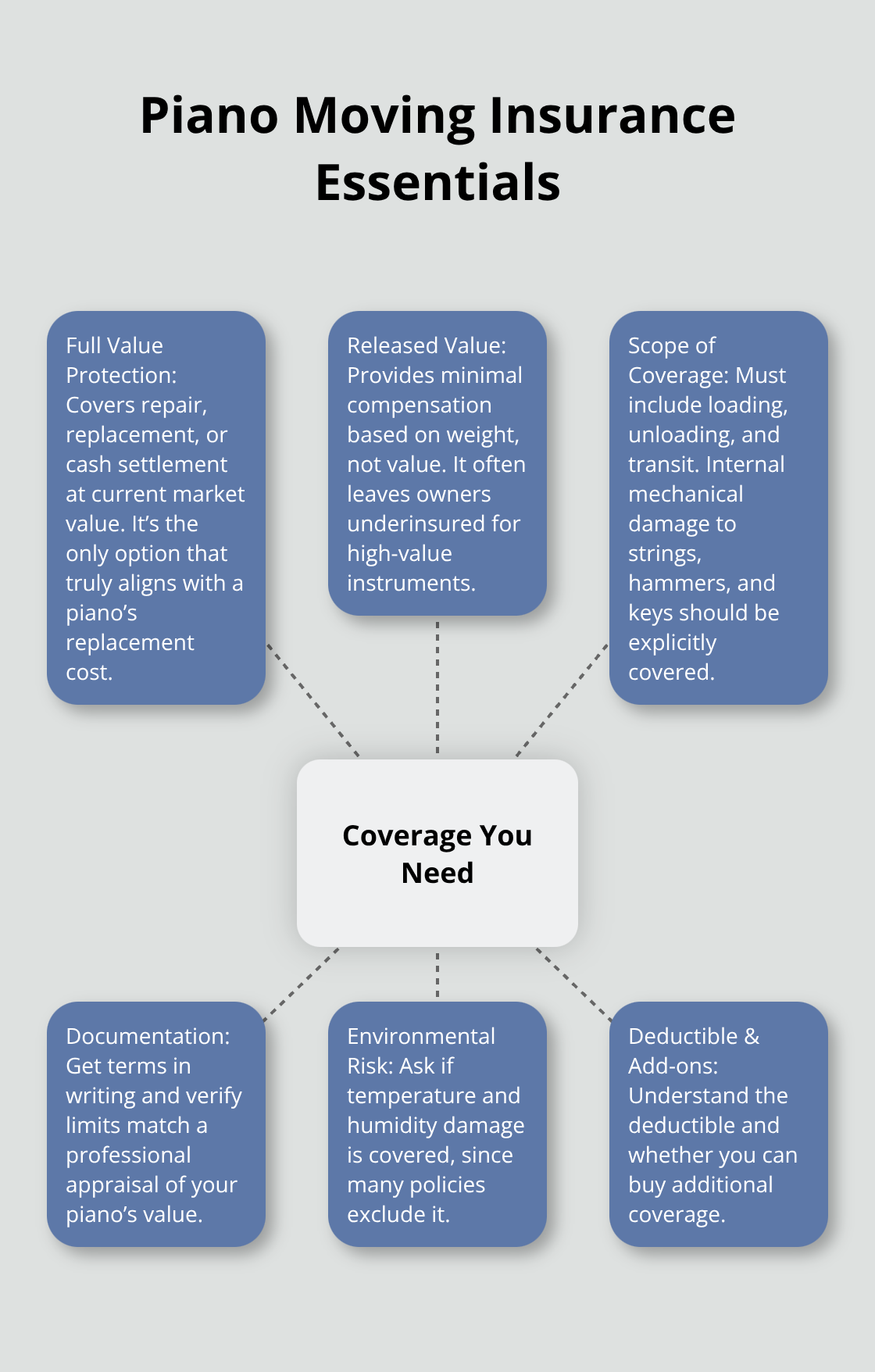
Get the insurance documentation in writing before you sign anything, and verify that coverage limits match your piano’s actual replacement cost based on a professional appraisal. Ask directly whether the mover’s liability covers environmental damage from temperature and humidity changes during transport, since many standard policies exclude this. If your piano has pre-existing damage or structural issues, confirm that the policy won’t use this as grounds to deny a claim. The mover should explain their insurance deductible clearly and whether you can purchase additional coverage if needed.
Equipment Standards That Matter
Specialized equipment separates competent piano movers from amateurs who improvise with standard dollies and blankets. A piano moving board with E-track slots for strap attachment and load capacity of at least 1,000 lbs is mandatory, not optional. The mover should use moving dollies with either carpeted or rubber-capped surfaces to prevent floor damage and provide grip during transport.
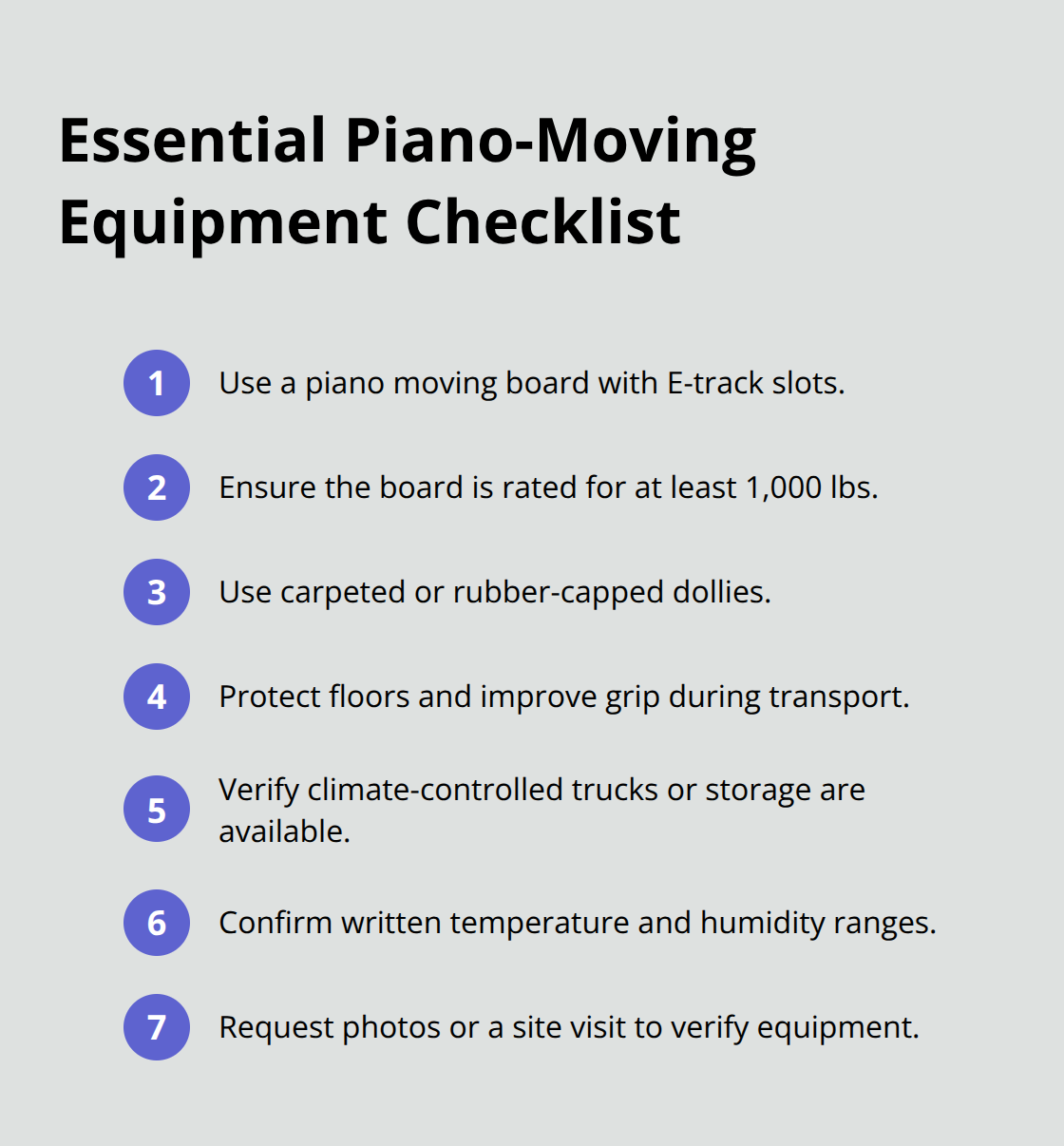
Ask the company what specific equipment they own for piano moves and request photos or a site visit to verify they have it on hand. Climate-controlled vehicles or storage facilities protect your piano from temperature swings and humidity fluctuations that can warp wood, crack finishes, and damage internal mechanisms. Many movers claim climate control but lack proper equipment, so ask for the specific temperature and humidity ranges they maintain. For moves involving storage, confirm that their facility maintains consistent conditions year-round, not just during your move. Request written confirmation of these specifications rather than accepting verbal assurances.
What Questions to Ask About Capabilities
When you contact potential movers, ask them to describe their exact process for your specific piano type, whether it’s an upright or grand piano, since handling differs significantly between them. Request references from at least three recent piano moves, then actually call those clients and ask about the condition of their pianos after transport and whether any unexpected costs arose. A mover with real piano expertise will provide these references without hesitation. The answers you receive will reveal whether the company has invested in the right equipment and training or simply treats pianos like any other furniture.
Questions to Ask Before Hiring a Piano Mover
Pricing Structure and Hidden Fees
Start with pricing structure, but don’t accept vague estimates. Request an itemized quote that breaks down base labor costs, equipment fees, stair surcharges, and any other charges separately. The average cost for moving a piano locally ranges between $150 and $650, demonstrating how dramatically costs vary based on how companies price their services. Ask whether stairs, narrow hallways, or difficult access will trigger additional fees, and get these charges confirmed in writing before moving day. Demand to know if the quote includes piano disassembly and reassembly, since some movers charge extra for this essential service. If the mover hesitates to itemize costs or claims they will calculate fees after arrival, that’s a red flag. Transparent pricing upfront protects you from shock bills later.
Timeline and Scheduling Flexibility
Confirm the mover can accommodate your preferred moving date and ask how far in advance they require booking. Piano moves demand specialized crews, so availability varies significantly between companies. Ask whether they schedule moves on weekends or evenings, since this matters if you need flexibility. Request written confirmation of your scheduled date, time window, and which crew will handle your move. Ask how the company handles weather delays or unexpected complications, and whether they reschedule at no additional cost if issues arise on moving day. Some movers overbook and send unprepared crews, so ask specifically whether the same team that provided your estimate will execute your move. For long-distance moves, clarify transit timelines and whether your piano goes into storage before final delivery. Ask about their contingency plans if equipment fails during transport. The mover’s willingness to answer these questions thoroughly indicates their professionalism and reliability.
References from Previous Piano Moves
Request references from at least three piano moves completed within the last two years, not just general moving jobs. Call these previous clients and ask specific questions about results. Did their piano arrive undamaged and properly tuned afterward? Were there unexpected costs or delays? Did the crew handle the instrument carefully and protect the home from damage?

Ask whether the mover communicated clearly throughout the process and arrived on time. A company with genuine piano expertise provides references without hesitation because satisfied clients validate their work. If a mover refuses references or offers only generic testimonials from their website, move on. Ask references whether they would hire the same company again and why. The answers reveal whether the mover consistently delivers quality service or whether problems are common. For moves involving storage or climate-controlled facilities, ask references how their pianos were treated during storage and whether they noticed any damage from temperature or humidity fluctuations. A mover with strong references demonstrates proven reliability across multiple moves and different piano types.
Final Thoughts
Selecting the right moving company for piano transport requires you to verify three non-negotiable factors: specialized expertise, comprehensive insurance, and transparent communication. A mover with genuine piano experience invests in proper equipment, maintains climate-controlled vehicles, and provides references without hesitation. They understand that pianos demand different handling than standard furniture and price their services accordingly, while insurance coverage that matches your piano’s replacement value protects you from financial disaster if damage occurs during loading, transit, or unloading.
Professional piano transport matters because the alternative proves catastrophic. A grand piano costs $10,000 or more to replace, while an upright runs around $3,500, and one careless move or drop can total that investment. General movers lack the training and equipment to navigate stairs, tight doorways, and narrow hallways without damaging your instrument or home, nor do they understand how temperature and humidity fluctuations affect piano wood and internal mechanisms. A specialized moving company piano service provider mitigates these risks through proper planning, equipment, and insurance.
Start your search by requesting itemized quotes from at least three companies that specialize in piano moves, then call their references and ask direct questions about results. Verify their insurance coverage in writing and confirm equipment specifications before you commit to anything. Contact Southbay Moving Systems to discuss your piano move and receive a transparent quote that protects your investment.