

Long distance moving company prices vary dramatically based on several key factors. Most homeowners pay between $2,500 and $5,000 for interstate moves, but costs can reach $10,000 or more.
We at Southbay Moving Systems see customers surprised by hidden fees and unexpected charges. Understanding the pricing structure helps you budget accurately and avoid costly surprises on moving day.
What Drives Your Long Distance Moving Costs
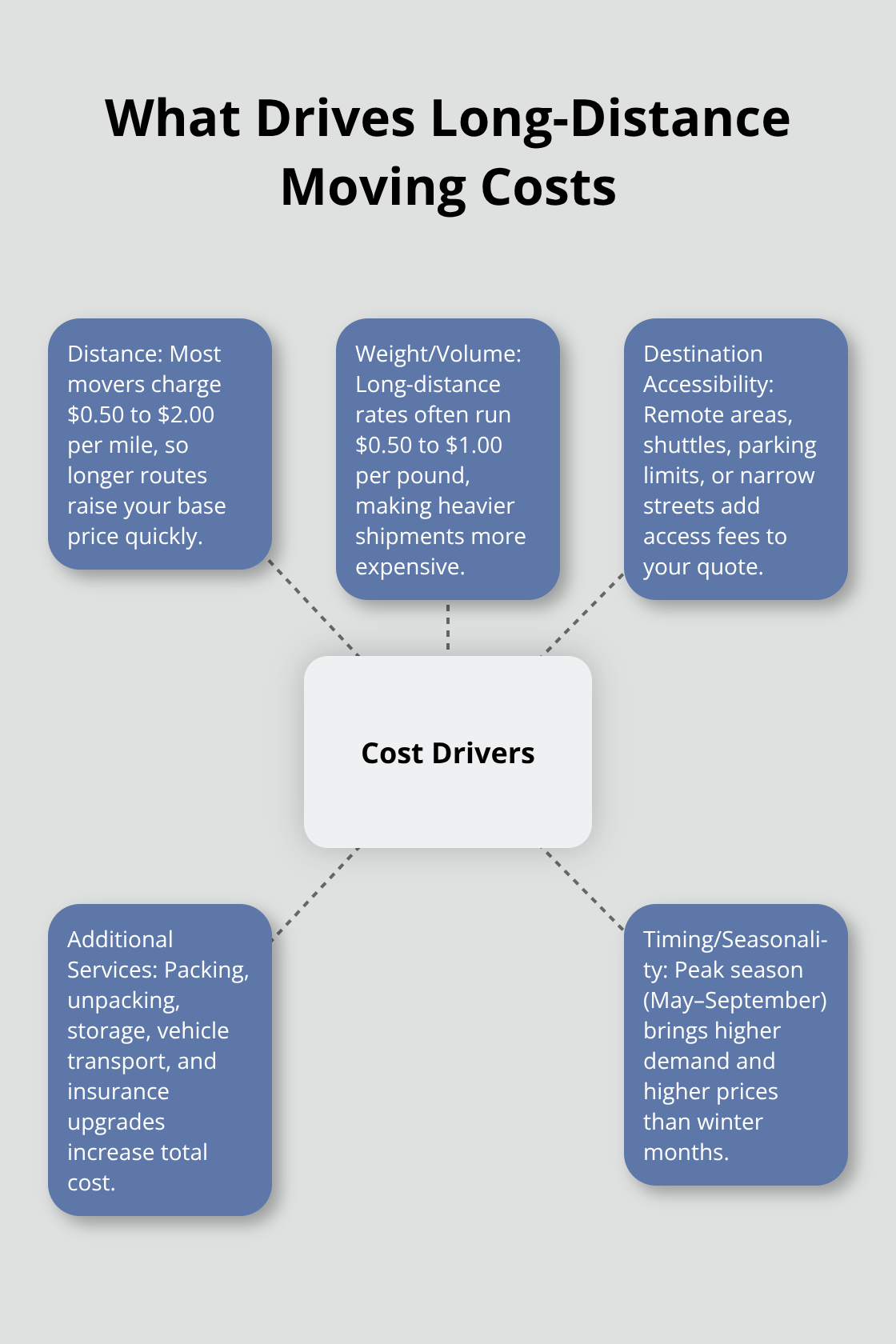
Distance Sets Your Base Rate
Distance drives the primary cost structure for interstate moves. Companies charge $0.50 to $2.00 per mile according to industry data. The American Moving and Storage Association reports that moves covering 1,000 miles average $4,300, while cross-country relocations beyond 2,500 miles often exceed $7,500.
Destination accessibility affects your final bill significantly. Remote locations or areas that require shuttle services add $200 to $800 in extra fees. Urban destinations with parking restrictions or narrow streets create additional challenges that movers factor into their quotes.
Weight and Volume Determine Your Quote
Moving companies calculate prices based on total weight, with charges of approximately $0.50 to $1.00 per pound for long distance relocations. A typical three-bedroom household weighs 9,000 to 12,000 pounds, which directly impacts your quote.
Professional movers conduct in-home surveys to estimate weight accurately. Many customers underestimate their possessions by 20% to 30%, which leads to surprise costs on move day. Bulky items like pianos, hot tubs, or exercise equipment trigger specialty fees that range from $200 to $1,500 per item.
Smart declutter before your move to reduce costs substantially. Donate or sell 1,000 pounds of items and save $500 to $1,000 on your final bill.
Additional Services Multiply Your Expenses
Professional packers increase your bill by $900 to $1,500 (based on home size), while unpackers add another $150 to $500. Full-service moves cost 50% more than basic transportation-only options.
Storage needs during transition periods run $50 to $300 monthly. Vehicle transport ranges from $605 for shorter distances to $2,305 for coast-to-coast moves. Insurance upgrades beyond basic liability coverage add $100 to $500, though standard coverage only pays $0.60 per pound for damaged items.
These cost factors combine to create your total quote, but smart shoppers can find significant savings through strategic choices and proper preparation.
What Do Long Distance Moves Actually Cost
Moving Company Rate Structures Exposed
Long distance moving companies use two primary models that directly impact your wallet. Weight-based rates charge $0.50 to $1.00 per pound, while mileage-based systems add $0.50 to $2.00 per mile on top of base rates. Most reputable movers combine both methods, which creates a base rate of $1,200 to $2,500 plus per-mile charges.
Binding estimates lock in your price but require accurate weight assessments. Non-binding estimates can increase by up to 110% of the original quote on delivery day. Demand written estimates to avoid payment shock when your belongings arrive.
Home Size Determines Your Investment
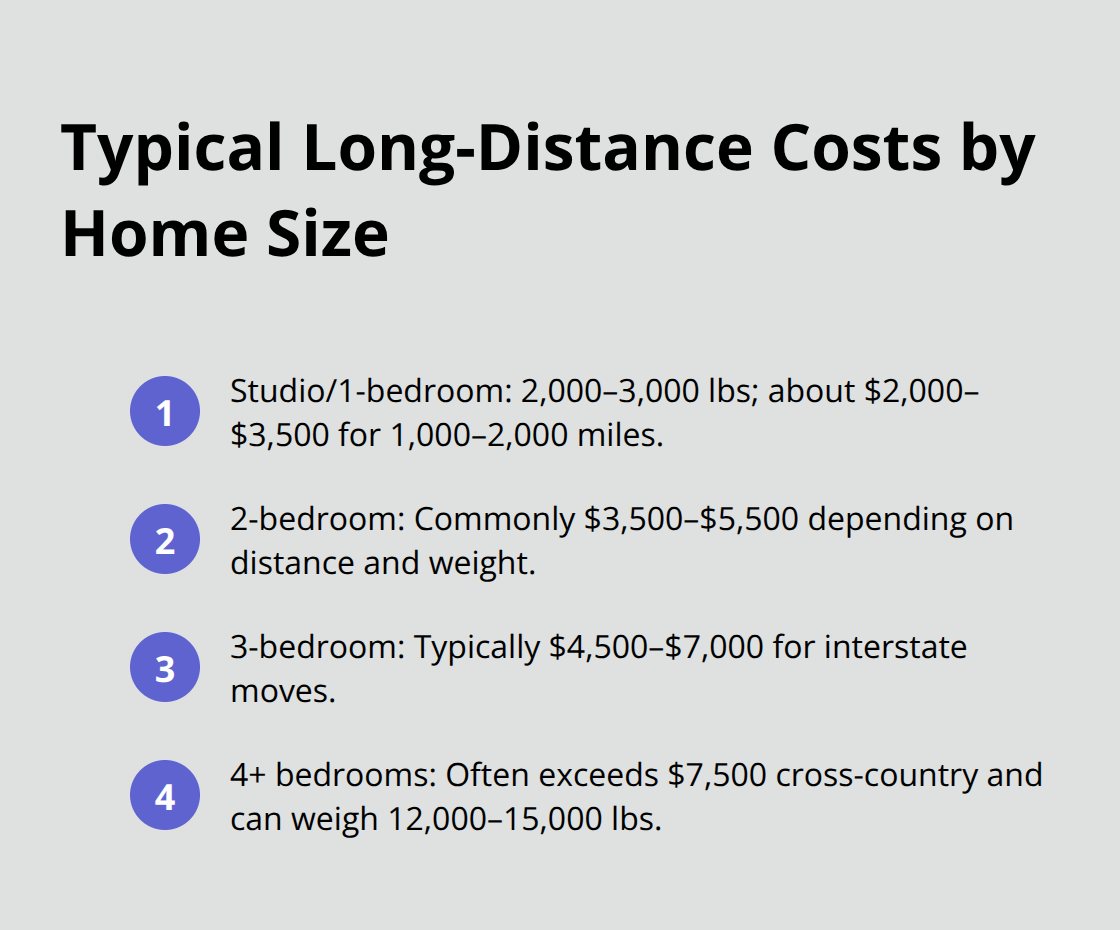
Studio and one-bedroom apartments cost $2,000 to $3,500 for moves between 1,000 to 2,000 miles. Two-bedroom homes jump to $3,500 to $5,500, while three-bedroom houses range from $4,500 to $7,000. Four-bedroom homes and larger properties often exceed $7,500 for cross-country relocations.
Weight calculations drive these ranges significantly. Studio apartments typically weigh 2,000 to 3,000 pounds, while four-bedroom homes can reach 12,000 to 15,000 pounds. Each additional 1,000 pounds adds $500 to $1,000 to your final bill.
Peak Season Price Spikes
Peak season from May through September increases prices by 20% to 30% compared to winter months. Summer weekend moves cost the most, while Tuesday through Thursday relocations during October to April offer maximum savings. Moving companies charge premium rates during the first and last weeks of each month (when lease agreements typically expire).
School calendar transitions drive the highest demand periods. Avoid moves between mid-May and early September if possible. January through March offers the deepest discounts, with some companies reducing rates by up to 25% during these slower months.
These price structures and seasonal factors create the foundation for your quote, but smart strategies can help you reduce these expenses significantly.
How to Cut Long Distance Moving Costs
Strip Down Your Belongings for Maximum Savings
Decluttering before your move delivers the fastest cost reduction strategy available. Every 1,000 pounds you eliminate saves $700 to $1,000 on your final bill based on standard industry rates. Professional organizers report that most families can reduce their household weight by 25% to 40% through strategic downsizing.
Start your decluttering process 8 weeks before move day. Sell furniture, appliances, and electronics through Facebook Marketplace or Craigslist to generate cash while you reduce weight. Donate clothes, books, and household items to receive tax deductions that offset move expenses. The IRS allows deductions for donated goods at fair market value, which typically saves $200 to $800 in tax liability for average households.
Shop Multiple Companies for Competitive Rates
Collect quotes from at least three companies to reduce your costs by 15% to 25% according to Better Business Bureau data. Price differences between companies often exceed $2,000 for identical moves due to different overhead costs and price strategies. Request written estimates to lock in your rate and avoid surprise charges on delivery day.
Schedule in-home estimates rather than phone quotes to get accurate prices. Companies that provide detailed written estimates typically offer more competitive rates than those that give quick verbal quotes. Compare services that each quote includes carefully since basic transportation differs significantly from full-service packages. Companies often match competitor prices when you present lower written estimates from licensed movers.

Time Your Move for Deeper Discounts
Move during off-peak periods from October through April to cut costs by 20% to 30% compared to summer rates. Tuesday through Thursday moves cost less than weekend relocations, while mid-month dates avoid the premium prices that occur during the first and last weeks when lease agreements expire.
January through March offers the steepest discounts as companies compete for limited business during slow winter months. Some companies reduce rates by up to 25% during these months to maintain steady revenue. Avoid moves between mid-May and early September when demand peaks and companies charge premium rates for their services.
Negotiate Additional Savings
Contact companies directly to negotiate better rates after you receive initial quotes. Many movers offer price matching or additional discounts when you mention competitor quotes (especially during slow seasons). Ask about military, senior, or student discounts that can reduce your bill by 5% to 15%.
Request itemized quotes that break down all charges to identify areas where you can save money. Some companies waive fuel surcharges or reduce packing fees when you negotiate effectively. Cash payments sometimes earn additional discounts of 2% to 5% since companies avoid credit card processing fees.
Final Thoughts
Long distance moving company prices fluctuate based on distance, weight, services, and season. Companies charge $0.50 to $2.00 per mile for distance and $0.50 to $1.00 per pound for weight. Peak season moves cost 20% to 30% more than winter relocations.
Written estimates from multiple companies protect you from unexpected charges and allow accurate service comparisons. Binding estimates lock your price, while non-binding quotes can jump 110% on delivery day. Itemized breakdowns reveal where you can negotiate lower rates.
Strategic choices cut thousands from your bill. Declutter before you move to reduce weight charges, schedule moves during slow months, and use competitor quotes to negotiate better rates (especially during winter). We at Southbay Moving Systems provide transparent quotes and detailed estimates for long distance relocations throughout Central California.