

Reading California movers reviews is one of the smartest moves you can make before hiring a moving company. Most people spend more time researching a restaurant than vetting their mover, which is a mistake that costs thousands of dollars in damage claims and hidden fees every year.
At Southbay Moving Systems, we’ve seen firsthand how a few hours of careful review research saves families from the worst moving disasters. This guide walks you through exactly what to look for, what red flags to avoid, and how to verify that any moving company you hire is legitimate and trustworthy.
What Makes a Moving Company Review Trustworthy
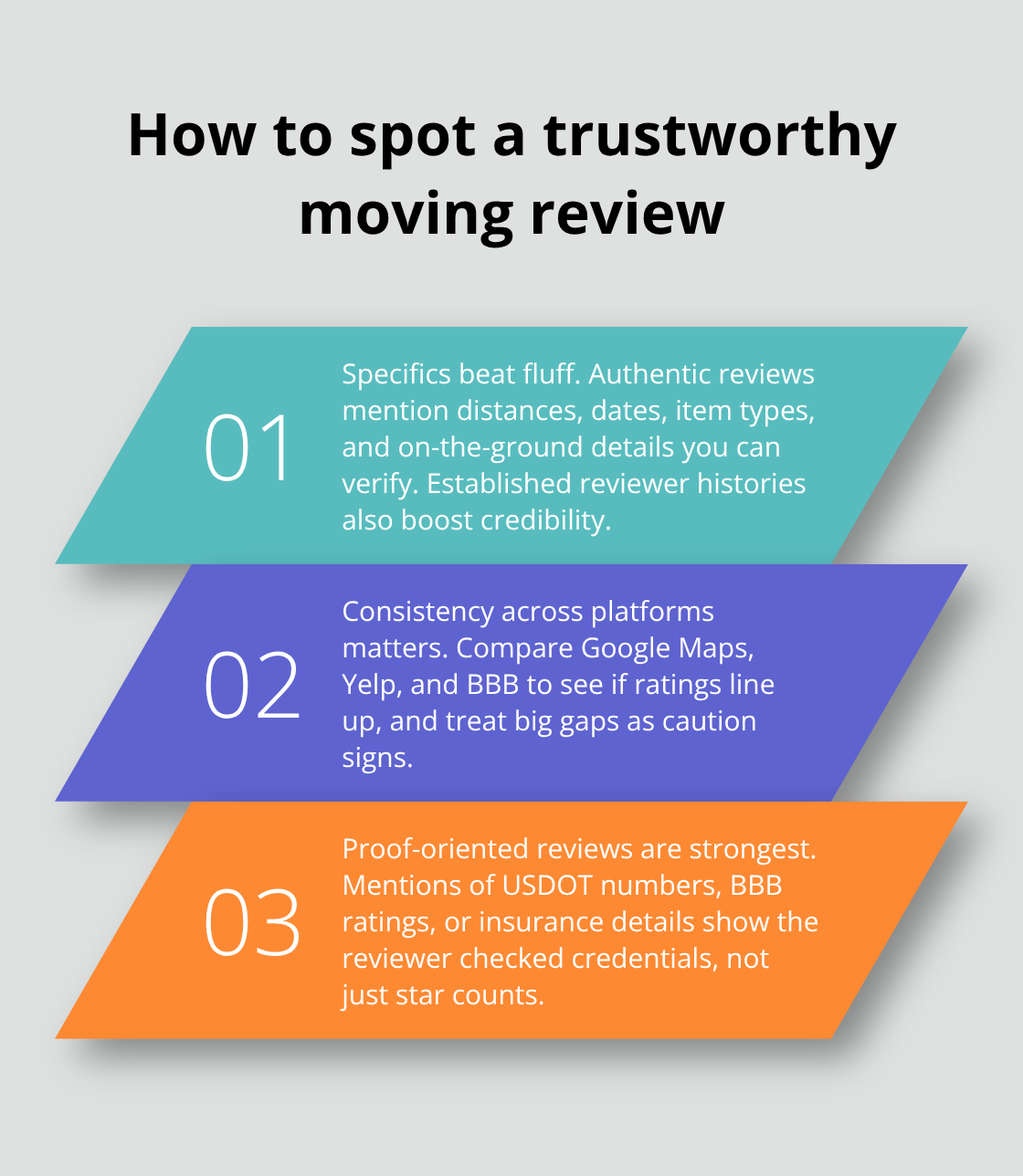
The reviews you read matter far more than you might think. According to Forbes Home’s evaluation of 67 California moving companies, affordability and strong customer reviews were the top two decision drivers for people choosing a mover, accounting for 54% and 50% of decisions respectively. But not all reviews are created equal. A company with hundreds of five-star reviews where most reviewers post for the first time or have only a single review on that platform is a warning sign. Legitimate moving companies attract repeat customers and established reviewers with verifiable histories. Look for reviews that mention specific details about the move, like distance traveled, items moved, and actual dates. Generic praise without context suggests fake reviews. Cross-reference the same company across multiple platforms-Google Maps, Yelp, and the Better Business Bureau-because legitimate movers maintain consistent ratings across sources. If a company has a 4.8-star rating on their own website but only 2.1 stars on Yelp, that gap tells you something important about how they treat customers in real-world conditions.
Licensing and Insurance Matter More Than You Think
A California moving company must have active USDOT registration for interstate moves and state registration through California’s Bureau of Household Goods and Services for intrastate moves. The FMCSA warns against hiring movers or brokers that demand cash or large deposits before the move, as this is a common red flag for fraud. When reading reviews, look for customers who mention that the company provided proof of licensing and insurance upfront. If a review says the mover was hesitant to share credentials or gave vague answers about coverage limits, that’s a serious problem. Reviews that specifically reference a company’s BBB rating or USDOT number indicate the reviewer did their homework and found legitimate credentials worth mentioning.
Price Consistency Across Reviews Reveals Hidden Fee Patterns
Hidden charges added after loading-sometimes exceeding $5,000 on cross-country moves-are one of the most common complaints in moving company reviews. Allied Van Lines showed that about 67% of customers said their final bill matched the original quote, which is strong but means roughly one-third experienced price surprises. When reading reviews, watch for patterns in complaints about unexpected charges. If multiple reviewers mention surprise fees for stairs, long carries, or elevator access, that company likely doesn’t explain these costs upfront.
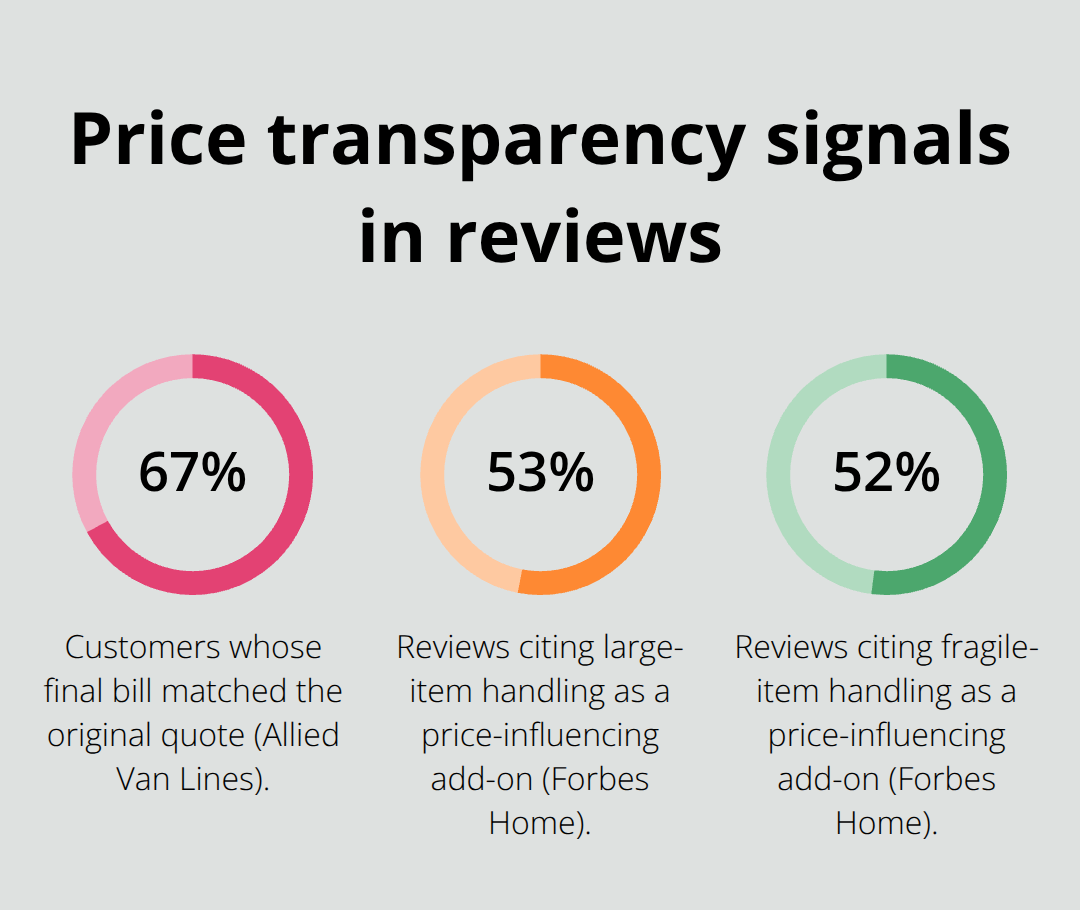
Forbes Home found that moving large items (53%) and fragile items (52%) were popular add-ons that influenced price, so reviews should clarify whether these costs were disclosed during the quote. Demand a written, itemized estimate before hiring, and compare it against what actual customers paid according to reviews. A review that praises transparent pricing or specifically mentions no hidden fees is worth more than generic praise about affordability.
Customer Service Speed Separates Good Movers From Mediocre Ones
A mover’s responsiveness during the quote and booking process predicts how they’ll communicate during your actual move. If a company doesn’t return your call within 24 hours or avoids answering specific questions about their process, reviews from other customers will reflect that same pattern. Forbes Home found that roughly 87% of customers rated staff as helpful across top movers, but inconsistency appears in reviews when some customers praise communication while others complain about being ignored. Look for reviews that mention how quickly the company responded to questions, whether they provided clear timelines, and if they kept customers updated during the move. If a review mentions the mover gave vague delivery windows or changed dates without explanation, that reflects poor communication standards. Try to verify in reviews whether customers actually received real-time truck tracking updates and had a dedicated crew assigned to their move. A company that requires an on-site inspection before quoting rather than offering sight-unseen estimates demonstrates commitment to accuracy and clear communication from the start.
Red Flags Hidden in Review Language
The way customers describe their experience reveals problems that star ratings alone won’t show. If reviewers use words like “eventually,” “finally,” or “after multiple calls,” they’re describing a company that made them work hard for basic service. Reviews that mention the mover arrived late, changed the crew mid-move, or provided conflicting information about costs indicate systemic communication failures. Look for reviews where customers had to follow up repeatedly to get answers about their move date, pricing, or what services were included. A review that says “the company was vague about what was covered” or “we weren’t sure what we were paying for” signals that the mover didn’t provide the written, itemized estimate that FMCSA requires. These patterns matter because they show how a company treats customers when problems arise. The next section covers the specific red flags you should watch for when reading reviews, so you can identify problem movers before they handle your belongings.
Red Flags When Reading Moving Company Reviews
Damage Claims Reveal How Movers Handle Problems
Damage complaints in reviews tell you exactly how a mover responds when things go wrong. If a review mentions the company refused to file an insurance claim or delayed the process for months, that reflects their actual claims procedure under pressure. When reading reviews, look for specific descriptions of what broke and how the company responded. A customer who writes that the mover replaced a damaged item immediately carries more weight than vague praise about safety. The FMCSA requires movers to explain their liability options and claims process upfront, so reviews mentioning this conversation indicate a legitimate company. Conversely, if multiple reviewers say they were unsure about coverage limits or felt pressured to accept low settlement offers, that company likely doesn’t explain insurance clearly during quotes.
Watch for reviews where customers mention the mover arrived without proper padding materials or used cheap blankets instead of professional protection. These details predict damage risk because they show corner-cutting on protection costs. A review stating the company provided detailed inventory documentation and photographed items before loading suggests they take accountability seriously. If reviews lack any mention of how damage was handled, that absence itself is telling because satisfied customers typically praise quick resolution.
Specialty Items Expose Expertise Gaps
Specialty items like pianos, artwork, and antiques require movers with specific expertise that standard companies lack. A review praising careful artwork handling or mentioning furniture was disassembled and reassembled correctly demonstrates the mover invested in trained crews for complex tasks. When reading reviews for your move, search for customers who moved similar high-value or fragile items and assess how the company performed.
If a review mentions the mover was hesitant about moving a piano or suggested you hire a specialist instead, that’s actually a positive sign of honesty about limitations. Conversely, if reviews show a company confidently accepted a piano move but then damaged it, that reflects dangerous overconfidence. Look for reviews mentioning white-glove service, meticulous packing, or custom crating because these terms indicate the company invests in specialized handling. A mover charging extra for specialty items isn’t a red flag if reviews confirm the service quality justified the cost.
Surprise Charges Expose Inspection Failures
Pricing surprises on moving day often stem from the mover discovering more items than estimated or finding unexpected access challenges. Reviews mentioning the company provided a revised estimate when circumstances changed show transparency, while reviews stating the company simply added charges without explanation indicate aggressive billing practices. If multiple reviews mention surprise fees for stairs, narrow hallways, or floor protection, that company likely didn’t conduct thorough on-site inspections or explain potential costs during quotes. These patterns matter because they show whether a mover treats customers fairly when complications arise-and complications almost always arise. The next section covers how to verify that any moving company you hire actually holds the licenses and credentials they claim to have.
How to Verify a Moving Company’s Credentials in California
Checking licenses and insurance paperwork is not optional-it’s your primary defense against fraud and unqualified operators. The FMCSA requires interstate movers to hold active USDOT registration, which you can verify instantly using the FMCSA’s Search for a Registered Mover tool. Enter the company name or USDOT number and confirm the operating authority status shows active. For intrastate California moves, the company must hold registration through California’s Bureau of Household Goods and Services. Many movers claim credentials they don’t actually hold, so this step separates legitimate operators from illegal ones.
Request Proof Before You Share Details
When you contact a moving company for a quote, ask them to provide their USDOT number and proof of insurance before you share any details about your move. If they hesitate, refuse, or give vague answers about coverage limits, hang up and call someone else. A legitimate company will email you copies of their license and insurance certificate within hours. Verify the insurance policy actually covers household goods in transit-not just general liability. Check the coverage limits too; some movers carry minimal coverage that won’t adequately protect your belongings if damage occurs.
National Van Lines Partnerships Signal Operational Legitimacy
Membership in National Van Lines or similar established networks indicates a mover meets specific operational and financial standards. These partnerships require companies to maintain certain service levels, carry adequate insurance, and follow standardized procedures. When you evaluate any California mover, ask whether they hold affiliation with a major van line network and request proof. This distinction matters because independent movers vary wildly in reliability, while network members face accountability mechanisms. Check the mover’s standing with the Better Business Bureau separately from their network affiliation; a company can hold a USDOT number and still have an F rating with the BBB if customers filed unresolved complaints. Look for a company with a BBB A+ rating combined with network membership-that combination shows both compliance and customer satisfaction.
Complaint History Reveals Patterns, Not Isolated Incidents
The FMCSA maintains complaint records for every registered mover, and you can access this data before hiring. A single complaint doesn’t disqualify a company, but patterns do. If a mover has five complaints about damage claims and consistently refused to file insurance paperwork, that’s a systemic problem. Search the FMCSA database for the company name and review what customers complained about and whether complaints were resolved. Pay attention to whether the mover responded to complaints or ignored them entirely. Companies that actively resolve disputes show accountability, while companies with unresolved complaints for months indicate they don’t take customer problems seriously.
Cross-Reference Multiple Sources to Spot Patterns
Cross-reference the FMCSA database with BBB records and Google Maps reviews to spot patterns across platforms. If the FMCSA shows three damage complaints, the BBB mentions poor communication, and Google reviews mention surprise charges, you’re seeing a consistent pattern of problematic behavior. That’s the company to avoid. Conversely, if a mover has one old complaint that was resolved to the customer’s satisfaction, that shows a company that handles problems correctly when they occur.
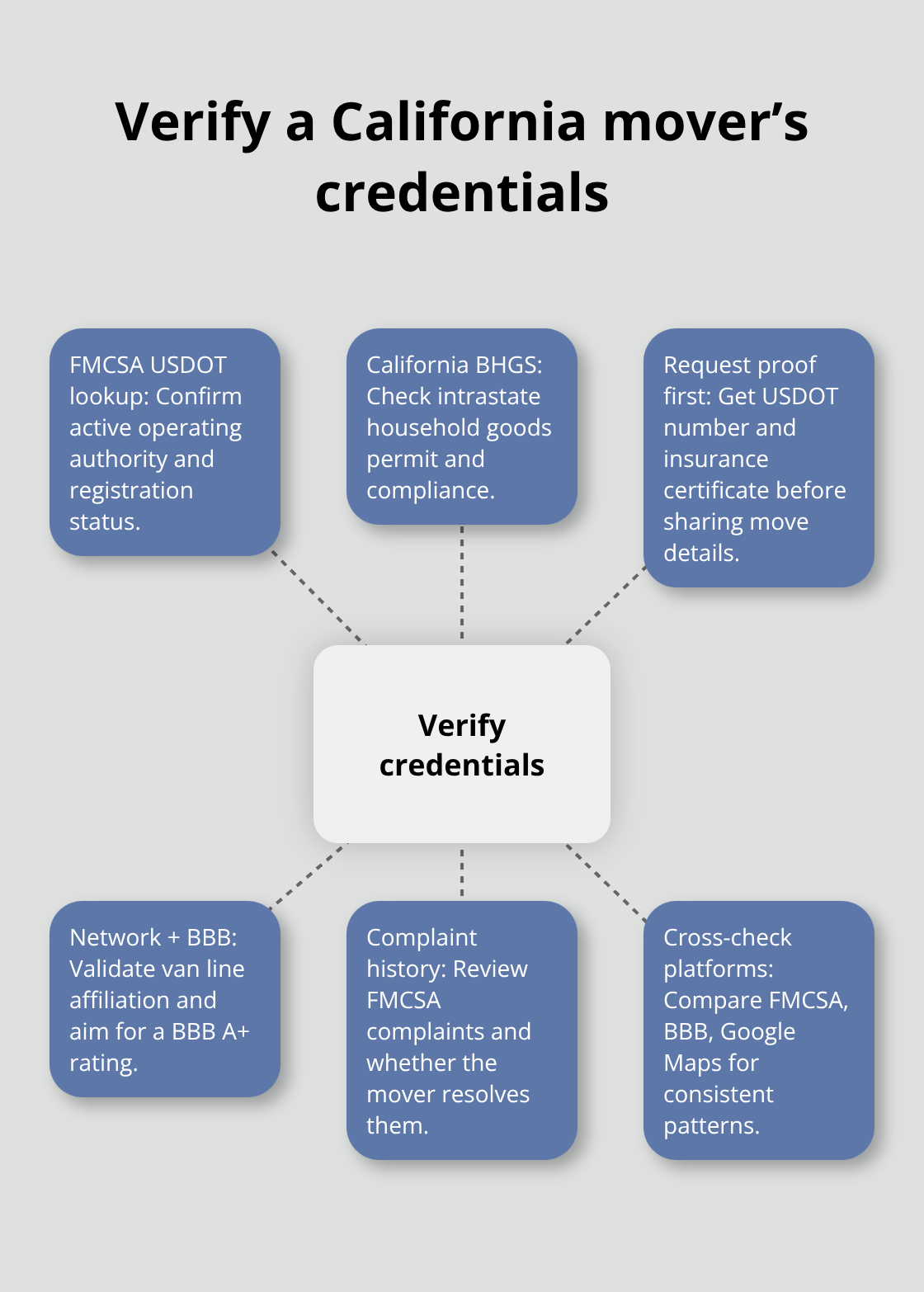
Companies that hold active USDOT registration, maintain BBB A+ ratings, and partner with established van line networks demonstrate the legitimacy and accountability you need before hiring.
Final Thoughts
Reading California movers reviews protects you from hiring the wrong company and prevents costly mistakes that plague unprepared customers. You now understand what separates legitimate reviews from fake ones, which red flags signal serious problems, and how to verify that any mover holds the licenses and credentials they claim. This knowledge matters because moving fraud costs families thousands of dollars annually, and most victims skip the verification step that would have saved them.
Contact at least three moving companies and request their USDOT numbers and proof of insurance before sharing details about your move. Compare their written estimates side by side, checking for itemized charges and clarity about what services are included. Search the FMCSA database and BBB for complaint history, then cross-reference their ratings across Google Maps and Yelp to spot patterns that reveal how each company actually treats customers.
We at Southbay Moving Systems meet every credential standard outlined in this guide, with full licensing, partnership with National Van Lines, and transparent pricing that matches our written estimates. Our 4,600-plus positive reviews across all locations reflect our commitment to the verification process you just learned. Contact Southbay Moving Systems for a free quote and experience the difference that accountability and expertise make.