

Moving across California doesn’t have to be stressful. Finding the best California movers means knowing what separates reliable companies from unreliable ones.
At Southbay Moving Systems, we’ve helped thousands of people navigate their relocations. This guide walks you through what matters when choosing a mover, the mistakes to avoid, and how to prepare your home for moving day.
What Separates Quality Movers from the Rest
Licensing and Insurance Protect Your Move
Licensing stands as your first line of defense. California moves require specific credentials that matter. For in-state relocations, verify the mover holds a Bureau of Household Goods and Services license. For interstate moves, confirm they display a USDOT number registered with the FMCSA. These aren’t optional paperwork-they’re legal requirements that protect your belongings and your money. Red flags include movers who can’t provide license numbers or those with missing California registration.
Insurance is equally non-negotiable. A legitimate California mover carries both general liability and cargo insurance. Full-value protection costs roughly 1% of your total shipment value and covers replacement costs if items are damaged or lost. Released-value protection is cheaper but only pays 60 cents per pound per item, which rarely covers actual losses.
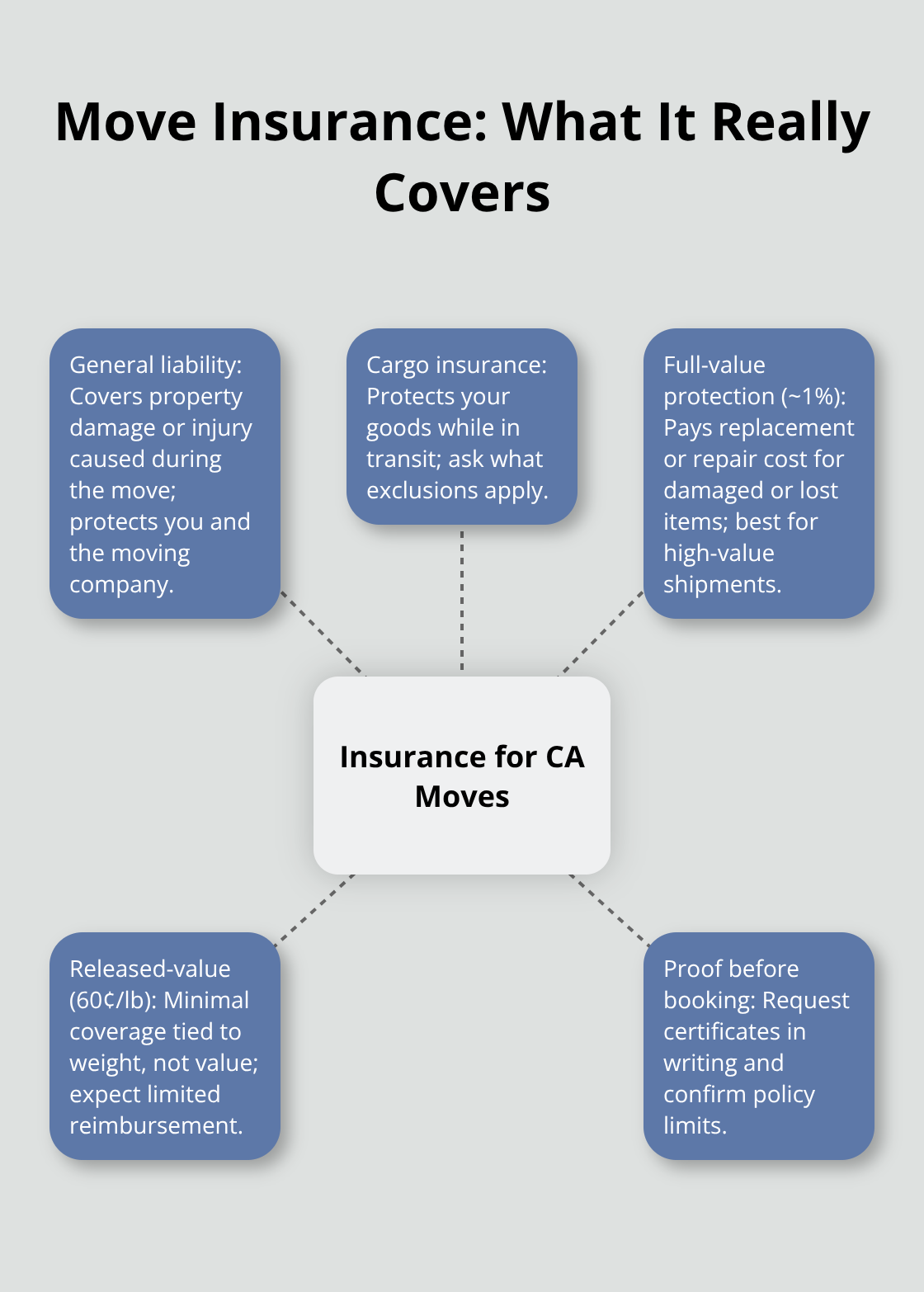
Ask for proof of insurance before booking, not after.
Experience Handles Real-World Complications
Track record matters far more than marketing claims. Forbes Home evaluated 67 California moving companies across 89 attributes using 1,400 real customer quotes, and the pattern is clear: experienced movers handle complications smoothly. A company with genuine California experience knows that a 3-bedroom home costs between $1,200 and $4,000 for a 100-mile local move, not $800. They understand May through October is peak season when costs spike and availability tightens. They anticipate problems like narrow stairwells in older San Francisco buildings or the logistics of Irvine’s gated communities.
Read reviews across multiple platforms, not just one source. The company with 4,900 five-star reviews across platforms demonstrates consistency. Look for specific feedback about punctuality, care with fragile items, and furniture disassembly-these details indicate whether movers actually performed the work or just collected money.
Transparent Pricing Locks Your Costs
Transparent pricing means binding estimates, not ballpark figures. A binding quote locks your price regardless of minor weight fluctuations, protecting you from surprise fees. Local California movers typically charge $120 to $150 per hour, with a 2 to 3 hour minimum. For a 2-bedroom apartment move within California, expect $1,030 to $3,300 depending on distance and services. Long-distance moves from California range from $3,000 to $18,000 coast-to-coast based on weight and destination.
Demand itemized breakdowns that separate truck rental, labor, packing materials, furniture disassembly, stairs, and equipment fees. Hidden fee territory includes unmarked charges for stairs, elevators, long carries, or specialty items. The mover who provides everything upfront in writing protects both of you. West Coast moving spend averages $1,955, slightly lower than the national average of $2,043, so if a quote seems unreasonably low, it probably is.
Now that you understand what separates quality movers from unreliable ones, the next step involves recognizing the mistakes that trip up most California residents during their moves.
Common Moving Mistakes That Cost Time and Money
Booking Too Late Locks You Into Peak Pricing
Most California residents make one critical error: they book a mover without understanding what preparation actually requires. Waiting until two weeks before moving day to call movers means accepting whatever availability remains, paying premium rates during peak season, and scrambling to pack properly. Peak moving season in California runs May through October, when costs are highest and reliable movers book solid weeks in advance. Starting your planning in January or February for a summer move gives you access to better pricing and more experienced crews.
The cost difference is substantial. Booking during off-season winter months can save hundreds of dollars compared to peak-season rates. This isn’t just about finding a mover; it’s about controlling your moving costs through timing.

Underestimating Packing Materials and Time
Underestimating packing materials and time creates a cascade of problems that most people don’t anticipate until they’re standing in their living room surrounded by unpacked boxes. A 3-bedroom home typically requires 60 to 80 boxes, plus specialty materials like packing paper, bubble wrap, and dish pack boxes for fragile items.
Most people pack far slower than they expect-roughly 5 to 10 boxes per day when doing it alone, meaning a 3-bedroom home takes two to three weeks of part-time work. Running short on materials mid-packing forces expensive last-minute purchases from local stores at inflated prices. Experienced movers know this problem intimately and can provide accurate material estimates during your consultation. Packing supplies included in your quote prevents the scramble and hidden costs that derail budgets.
Choosing Movers Based on Price Alone Backfires
Choosing movers based purely on the lowest price is the mistake that creates all the others. A quote of $800 for a 3-bedroom local move signals either inexperience or hidden fees, since a realistic price range for a 100-mile California move is $1,200 to $4,000. Movers with suspiciously low prices often cut corners on insurance, skip proper equipment, or add undisclosed charges once they arrive at your home.
The mover who provides a transparent, binding estimate with itemized costs protects you far better than the one offering the cheapest number. A company with consistent issues that handle fragile items or miss delivery windows reveals operational problems that cost you money through damages and delays. Understanding how to prepare your home properly prevents all three from derailing your move.
How to Prepare Your Home for a Move
Sort Your Belongings Before You Pack
The difference between a smooth move and a chaotic one starts with what you actually move. Most people pack first and sort later, which wastes money on transporting unnecessary items. The One-Year Rule works here: if you haven’t used something in the past year (excluding seasonal items), it goes. This single decision reduces moving volume dramatically.
A 3-bedroom home typically requires 60 to 80 boxes, but that number drops to 40 to 50 when you’ve actually decluttered. Fewer boxes mean lower labor costs, smaller truck requirements, and faster loading and unloading. Start decluttering 4 to 6 weeks before moving day using a room-by-room approach. Begin with storage areas like closets and garages where decisions are easiest, then move to kitchens, bedrooms, and living areas.
Preserve Memories Without Physical Clutter
Digitizing memories changes the game here: scan letters, photos, and documents to preserve sentiment without physical clutter. Keep one meaningful item per memory rather than entire collections. Once you’ve sorted what stays, classify everything else into four categories.
Donate to organizations like Goodwill, The Salvation Army, or Habitat for Humanity ReStores (keep receipts for tax purposes). Sell via Facebook Marketplace, Craigslist, eBay, or OfferUp with clear photos and honest descriptions. Toss broken or unsafe items through bulk pickup or municipal recycling centers. Keep what actually belongs in your new home. Involve a friend or family member during this process because they provide perspective and often take items off your hands.
Document Everything That Moves
Create an accurate inventory of what’s moving to prevent disasters at delivery. Write down every item’s category, condition, and destination room in your new home. This inventory becomes your protection against damage claims and helps your mover understand the scope of work.
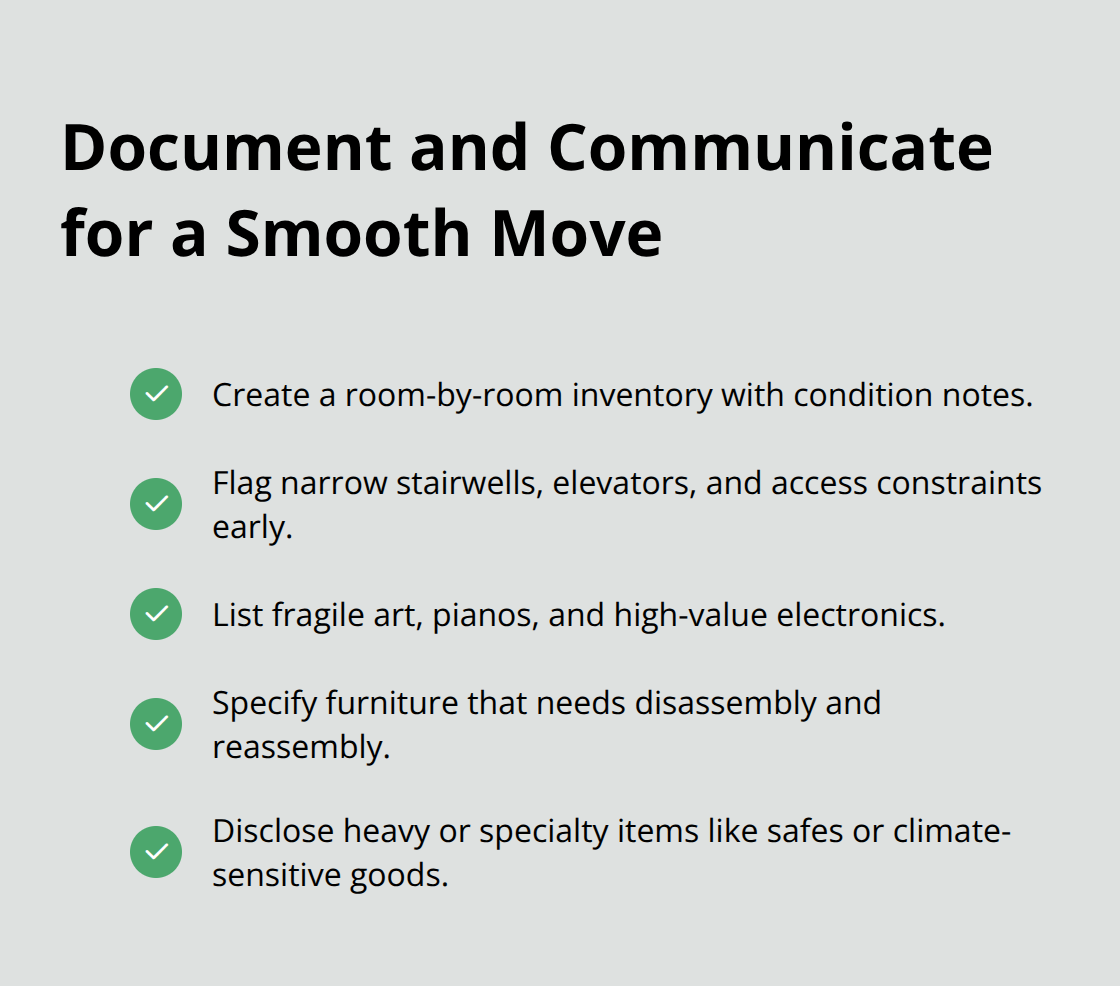
When you communicate with your mover during the consultation, mention specific complications upfront: narrow stairwells, fragile art collections, pianos, high-value electronics, or items requiring climate-controlled storage. Tell them which furniture needs disassembly and reassembly, whether stairs or elevators create challenges, and if you have heavy items like safes or specialty equipment. Don’t hold back on these details during your initial conversation because hidden complications discovered on moving day create delays, additional charges, and frustration.
Alert Your Mover to Special Circumstances
Experienced movers anticipate these issues and adjust their approach accordingly. If you’re downsizing significantly, mention this because movers can often provide guidance on what fits in your new space. The mover who asks detailed questions about your belongings and your new home is the one who prevents surprises. Transparent communication during your consultation protects both you and your moving company from unexpected problems on moving day.
Final Thoughts
Choosing the best California movers comes down to three non-negotiable factors: verified licensing and insurance, transparent pricing with binding estimates, and a genuine track record of handling real moves. These elements separate movers who protect your belongings from those who create headaches. Start planning at least 4 to 6 weeks out, especially if your move falls between May and October when peak season pricing applies, and declutter using the One-Year Rule to reduce what you actually move.
Request binding estimates from multiple movers and compare itemized breakdowns, not just bottom-line numbers. Verify licensing through the Bureau of Household Goods and Services for in-state moves or USDOT registration for interstate relocations. Read reviews across multiple platforms to spot patterns in how movers handle punctuality, fragile items, and customer service, then create a detailed inventory of your belongings and communicate any special circumstances to your mover upfront.
We at Southbay Moving Systems understand that moving represents one of life’s major transitions. Our fully licensed team handles everything from local moves to long-distance relocations across California, and we maintain strong customer satisfaction because we prioritize your peace of mind. Contact Southbay Moving Systems for a transparent quote and expert guidance tailored to your specific move.