
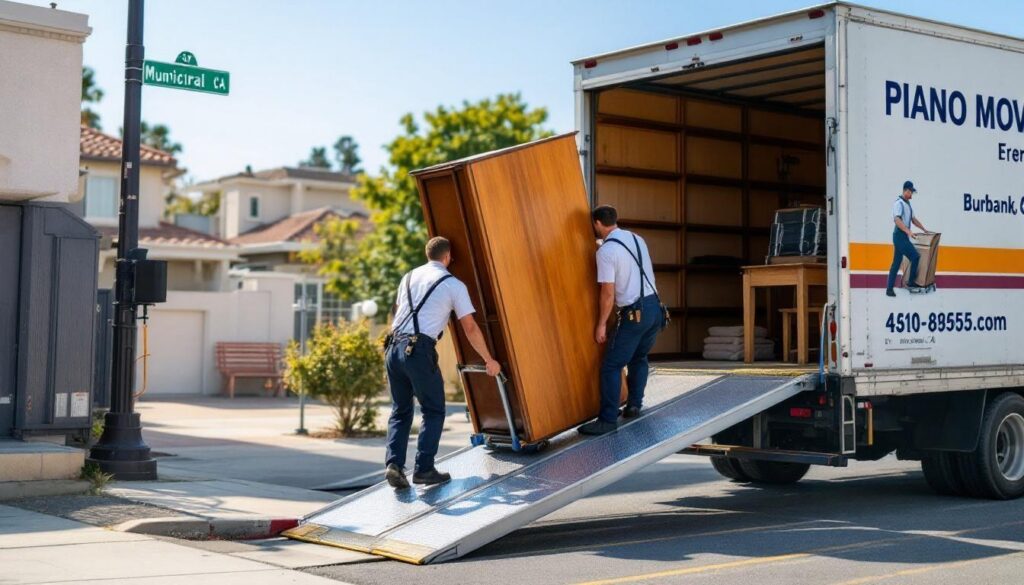
Moving a piano isn’t like moving a couch. These instruments demand specialized knowledge, equipment, and care that standard movers simply don’t have.
At Southbay Moving Systems, we’ve seen too many pianos damaged by movers who didn’t understand what they were doing. If you’re searching for piano movers in Burbank, CA, you need to know exactly what separates qualified professionals from amateurs.
Why Pianos Need Specialists, Not General Movers
A piano weighs between 400 and 1,200 pounds depending on the type, and every pound sits in a precise mechanical arrangement that determines sound quality. Standard movers treat weight as the only variable. Specialized piano movers understand that a grand piano’s legs must be removed and secured separately, that the instrument sits on a skid board during transport, and that even minor shifts during loading can misalign the action or damage the soundboard. The American Moving & Storage Association lists piano moving as a distinct specialty precisely because the risks differ fundamentally. An upright piano requires two movers on flat surfaces but three on stairs. A grand piano demands three to four trained personnel regardless of terrain.
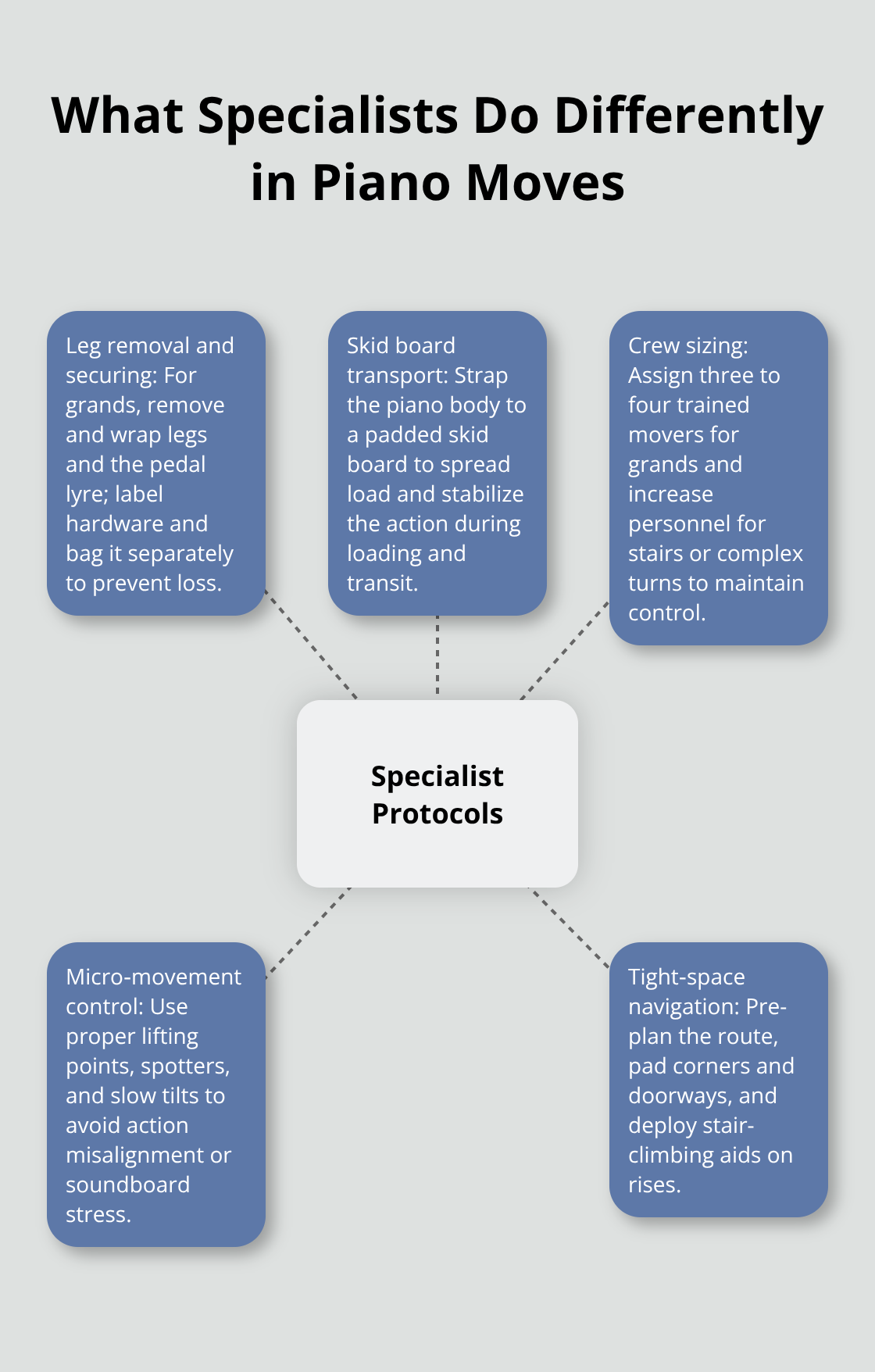
General moving companies often send crews without piano-specific training, which means they lack the muscle memory and technique needed to navigate tight corners, doorways, and stairwells without scraping veneer or cracking the case.
Equipment Separates Professionals from Amateurs
Piano dollies are not standard hand trucks. They feature wide platforms with felt surfaces, securing straps rated for the instrument’s weight, and brakes that hold on inclines. Skid boards distribute load across the piano’s base rather than concentrate pressure on legs. Moving blankets designed for pianos are thicker and shaped to protect corners and the lid. General movers typically lack this equipment or use inferior alternatives, treating a piano move like any other furniture job. Without these tools, movers resort to improvisation-using regular blankets, undersized dollies, or hand-carrying methods that increase damage risk exponentially. The cost difference between a proper piano dolly and a standard hand truck is minimal, but the protection difference is absolute.
Damage Claims Expose the Real Cost of Hiring Wrong
When pianos suffer damage during moves by unqualified movers, standard liability coverage often fails to apply or covers only a fraction of repair costs. The American Moving & Storage Association and the Federal Motor Carrier Safety Administration both recommend verifying that a mover carries insurance specifically addressing piano transport. Damage to the soundboard, action, or case can cost $1,000 to $8,000 to repair, far exceeding typical mover liability limits of $0.60 per pound under federal minimums. A 700-pound upright piano would have only $420 in coverage under released value liability. Your piano’s actual value demands full value protection, which specialized movers can arrange. General moving companies often resist higher liability coverage because piano moves fall outside their normal operations. Insurance gaps exist not because the mover is dishonest but because they lack the expertise to assess and manage piano-specific risks, leaving you financially exposed.
What Qualified Piano Movers Bring to Your Move
Trained piano movers possess knowledge that protects your instrument at every stage. They understand how temperature and humidity affect wood and felt components during transport. They know which pianos require leg removal and which do not. They recognize when a staircase demands additional equipment or personnel. They document the piano’s condition before and after the move, protecting both you and themselves. This expertise translates directly into lower damage rates and faster, safer moves. When you contact potential movers in Burbank, ask about their specific experience with your piano type and the exact steps they will take from pickup to delivery. The answers you receive will reveal whether you’re speaking with a specialist or a generalist hoping to add piano work to their standard roster.
How to Vet Piano Movers in Burbank
Verify Licensing and Safety Records
Start with the Federal Motor Carrier Safety Administration’s Safer System database and the mover’s USDOT number to confirm their safety record and licensing status. Verify Licensing and Safety Records reveals compliance violations, accident history, and whether they hold proper interstate or intrastate authority. The Better Business Bureau profile shows accreditation status and complaint patterns. A mover with an A or A+ rating combined with AMSA ProMover certification from the American Moving & Storage Association demonstrates adherence to industry standards and ethics.

Ask the mover directly if they hold AMSA ProMover status and request written confirmation.
Confirm Insurance Coverage for Pianos
Insurance verification is non-negotiable. Demand proof of liability coverage that explicitly includes piano moves and confirms minimum FMCSA standards of $0.60 per pound. Many general movers carry only standard furniture liability, which leaves your piano dangerously underfunded if damage occurs. Request their insurance certificate and contact their carrier to confirm coverage limits for piano-specific damage. Ask whether they offer full value protection beyond the federal minimum, and get pricing for additional coverage in writing.
Assess Experience with Your Piano Type
Experience with your specific piano type matters more than years in business generally. A mover claiming 20 years of experience but only five years with pianos represents a different risk profile than one with 15 years of dedicated piano work. Ask how many pianos they move annually and request references from moves completed in the past six months. Contact at least two references personally and ask specifically about how the mover handled difficult access, communication during the move, and whether the piano required tuning after delivery.
Research Reviews and Local Familiarity
Online reviews on Google and Facebook provide broader perspective, but prioritize recent reviews over older ones since crew training and equipment standards change. Look for patterns in feedback rather than isolated complaints. Read negative reviews carefully: complaints about late arrivals or communication issues differ fundamentally from complaints about damage or unprofessional behavior. Compare at least two local Burbank movers with options from nearby areas like Glendale and Pasadena to understand who has specific familiarity with local building codes, common staircase configurations, and access challenges unique to the area. This geographic knowledge directly impacts move efficiency and damage risk.
Move Forward with Confidence
Once you’ve verified licensing, insurance, experience, and local knowledge, you’re ready to request detailed written estimates and ask the specific questions that separate professionals from amateurs.
Questions to Ask Piano Movers Before Hiring
Assess Annual Piano Experience and Process
The questions you ask during your initial contact reveal whether a mover truly specializes in pianos or simply accepts piano jobs as occasional side work. Start by asking how many pianos they move each year, not just how long they’ve been in business. A mover handling 50 pianos annually has fundamentally different expertise than one handling five. Ask them to describe their exact process for your specific piano type-whether it’s an upright, baby grand, or concert grand-and request they explain which components they remove, how they secure the instrument during transport, and what equipment they use at each stage. Vague answers indicate they haven’t developed a standardized protocol, which means they’re improvising on your instrument.
Request Detailed Written Estimates
Demand a written, itemized estimate that breaks down the base moving fee, charges for stairs or difficult access, equipment surcharges, insurance costs, and any fuel or mileage fees. Burbank buildings often have unique access challenges-narrow stairwells, limited elevator space, tight loading zones-so ask directly whether they’ve moved pianos in your building or similar structures in the area. Request they confirm in writing that the quoted price is locked in and won’t increase unless you request additional services. This written documentation protects you from surprise charges and establishes clear expectations before the move begins.
Verify Climate Control and Transport Conditions
Climate control during transport matters far more than most Burbank movers acknowledge. Ask whether their truck maintains stable temperature and humidity or if it’s simply an enclosed cargo space. Preventing major humidity shifts safeguards the moisture sensitive wood, felt, glue, and leather components of your piano. Understanding their transport conditions helps you assess whether your piano will arrive in the same condition it left your home.
Understand Liability Coverage and Claims Process
For damage scenarios, demand they explain their liability coverage limits in plain language, show you their insurance certificate, and walk through their actual claims process step by step. Ask how quickly they respond to damage claims and whether they handle repairs directly or require you to hire a third party. Get their answer in writing. Clarify whether damage claims are covered under their standard liability or require additional paid coverage, and confirm the dollar limits for different damage types. This clarity prevents disputes if damage occurs and ensures you know exactly what protection your piano has.
Verify References from Recent Moves
Ask for references from piano moves completed within the last three months and contact those references specifically about how the mover communicated during the move, whether they arrived on time, and whether the piano required professional tuning afterward. A mover confident in their work provides references without hesitation and encourages you to call them. Speaking directly with past customers reveals patterns in professionalism, reliability, and care that no marketing material can convey.
Final Thoughts
Hiring piano movers in Burbank, CA requires more diligence than standard furniture relocation because the stakes are higher and the risks are real. Verify licensing through the FMCSA database, confirm insurance explicitly covers piano damage, and assess annual piano experience rather than years in business. Contact recent references directly and request itemized written estimates that lock in pricing before you commit to any mover.
The cost of hiring wrong extends far beyond the moving fee-soundboard damage, action misalignment, or case cracking can cost thousands to repair and may never fully restore your piano’s original sound quality. Full value protection and specialized equipment aren’t luxuries but the baseline for protecting an instrument that holds both financial and emotional value. Climate-controlled transport and a clear liability claims process separate specialists from general movers who lack piano-specific expertise.
We at Southbay Moving Systems have handled piano moves across Central California for years, and we’ve seen firsthand how proper expertise prevents damage that careless movers create. When you’re ready to book your move, contact Southbay Moving Systems to discuss your piano move and receive a detailed estimate from movers who understand exactly what they’re doing.