

Commercial office moves demand careful planning to avoid costly mistakes and operational disruptions. We at Southbay Moving Systems have guided hundreds of companies through relocations, and we know the difference between a chaotic move and a seamless one comes down to preparation.
This guide walks you through the essential steps: assessing your needs, coordinating logistics, and keeping your team aligned. Follow these strategies and your transition will protect your business continuity while minimizing downtime.
Assess Your Current Situation and Set a Realistic Timeline
Start by auditing what you actually have in your office right now. Most companies move far more than necessary. Count your desks, chairs, filing cabinets, and equipment. Measure your current square footage and document which departments occupy which spaces. This isn’t busywork-it directly impacts your moving costs and timeline. Inventory their assets before moving helps reduce office costs through smaller spaces, lower energy use, better tech, and smarter design that supports business growth. Next, assess what stays and what goes. Old furniture, outdated equipment, and duplicate items should be removed months before moving day. This decision matters because hauling unnecessary weight costs money, takes up space in your new office, and slows down the setup process.
Plan Your Timeline Around Business Impact
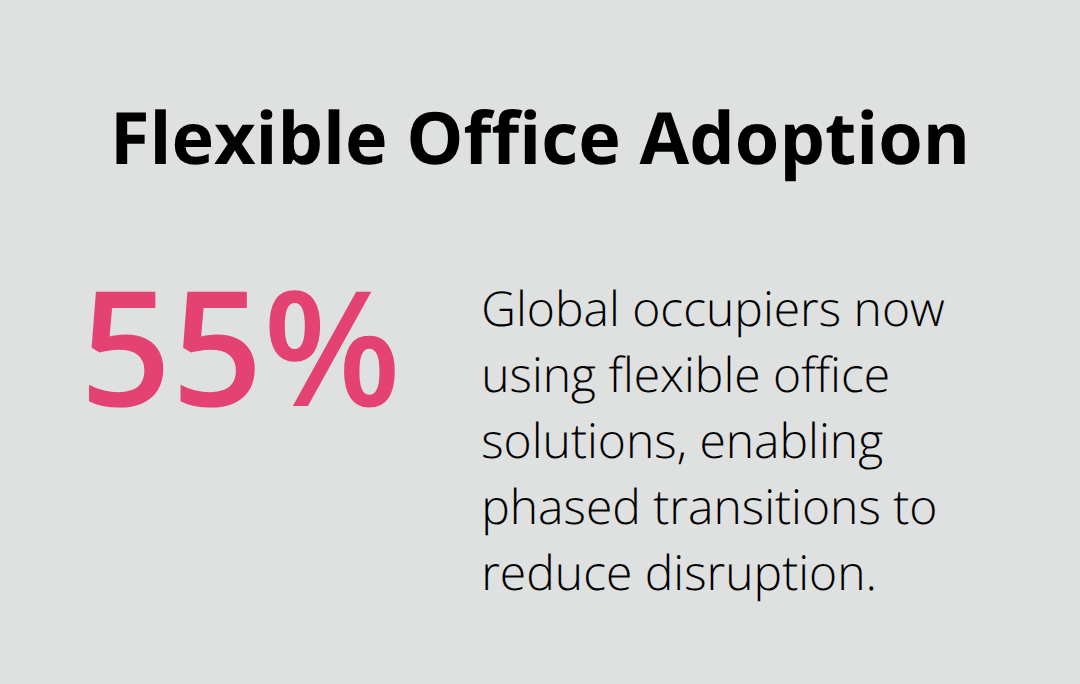
Build your moving timeline backward from your target move date. The Cushman & Wakefield Global Flexible Office Trends 2025 report shows that 55 percent of global occupiers now use flexible office solutions, which means you have options for phased transitions if a single moving day creates too much disruption. Start planning 6 to 12 months before your move date, not 6 weeks.
Three to six months out, finalize your budget and secure your new space. One to three months before, take a complete inventory and order new furniture and equipment so it arrives before moving day. Two to four weeks before, implement a strategic packing system with color-coded labels by department. This approach prevents the chaos of unpacking random boxes on day one. Identify your highest-risk periods: if your business depends on customer-facing operations, avoid moving during peak seasons. If your team relies on specific software or systems, coordinate IT setup to begin weeks before the physical move. Document every deadline, assign owners to each task, and build in buffer time for unexpected delays.
Spot the Operational Landmines
Some disruptions are predictable, others blindside you. Meeting room bookings have surged globally-APAC saw a 24.5 percent increase according to Cushman & Wakefield-meaning your team likely depends on collaboration spaces more than ever. Maintain some meeting capacity during the transition, whether through a temporary coworking space or staggered department moves. Data security poses another serious risk. If you move servers, backup systems, or files without a solid plan, you risk losing critical information or exposing sensitive data. Start your data security plan three months before moving day by consulting with IT specialists to ensure data security protocols are followed during the transition. Identify which equipment needs secure deletion or destruction, which systems require special handling, and how you’ll verify data integrity after the move. Employee productivity will dip during the transition-plan for it. The more your staff understands their role in the move, the faster they adapt. Assign clear responsibilities: who packs their desk, who labels boxes, who coordinates with movers. Confusion breeds delays and frustration. Finally, don’t underestimate the time needed to restore your old office to lease-required condition. Review your lease early to understand what restoration means (painting, carpet repair, wall patching) and factor that work into your timeline. A walkthrough with your property manager weeks before move-out prevents expensive surprises and sets the stage for coordinating with your moving partner.
Hire the Right Moving Partner and Manage Your Assets
Selecting a commercial moving company makes or breaks your transition. Don’t call the first mover you find or assume your residential moving company can handle office equipment. Commercial moves require specialized knowledge: heavy furniture handling, IT equipment protocols, floor protection in occupied buildings, and coordination across multiple departments simultaneously.
Vet Your Moving Company on Three Critical Factors
First, verify the mover holds proper licensing and insurance for commercial work, particularly cargo insurance that covers your equipment during transit. Ask for client references from companies similar to yours in size and industry, then call those references and ask about their experience with timelines and damage rates. Second, request detailed quotes from at least three companies that break down labor costs, equipment fees, packing supplies, and any surcharges for stairs, elevators, or difficult access.
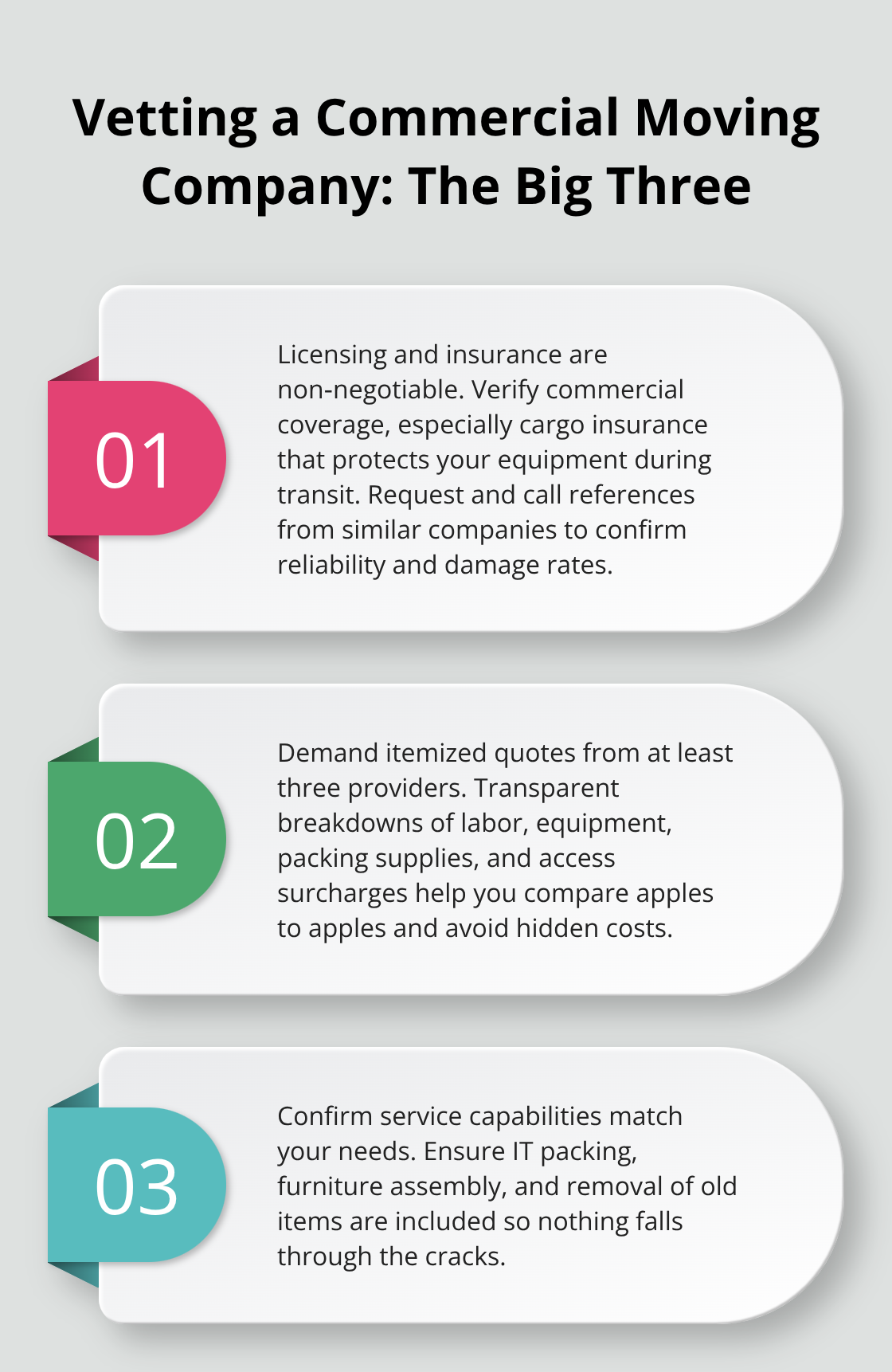
The cheapest quote often signals corner-cutting that costs more in damage and delays. Third, confirm they offer the specific services you need: do they provide packing for IT equipment, can they handle furniture assembly, will they remove old items from your current space?
Schedule a walkthrough of both your current and new offices with your mover at least four weeks before moving day. This visit reveals logistical challenges you haven’t considered: narrow stairwells, limited elevator access, parking constraints, or floor load limits that affect how equipment moves through the building.
Create a Detailed Asset Inventory System
Your inventory system determines how smoothly unpacking happens and whether items actually reach their intended departments. Create a detailed asset list that identifies every piece of furniture and equipment by department, condition, and destination. Assign each item a code (like DEPT-FLOOR-ITEM) and photograph items in poor condition to document their pre-move state for insurance purposes. This matters because disputes over damage claims often hinge on whether damage occurred before or during the move.
Separate items into three categories: what goes to the new office, what gets donated or sold, and what requires secure disposal. For IT equipment specifically, coordinate with your technology team at least three months before moving day. Equipment like servers, backup systems, network switches, and phones need special handling beyond standard moving protocols.
Coordinate IT Equipment and Data Security
Create a detailed IT asset inventory including model numbers, serial numbers, and purchase dates so you know exactly what moves and can verify it arrives intact. Establish clear protocols with your IT team about what requires backup before moving, which systems need secure data deletion, and how you’ll test connectivity after setup in the new location. Document which equipment moves first to ensure your new office has basic network and phone capability on day one.
Assign one person as the IT move coordinator to serve as the single point of contact between your moving company and technology team, preventing miscommunication that could leave your office without internet or phone service for days. This coordinator tracks equipment through each stage of the move and confirms all systems function properly once installed at your new location.
With your moving partner selected and your assets organized, the next critical step involves keeping your employees informed and engaged throughout the transition.
Keep Employees in the Loop Throughout the Move
Your team needs to know what’s happening, when it’s happening, and what you expect from them. Vague announcements breed anxiety and speculation that tanks productivity weeks before moving day. Keep employees in the loop at least three months before the transition. Share the new office address, the moving date, parking information, and what the new layout will look like. Employees who understand the bigger picture adapt faster and actually help rather than resist.
Establish a Clear Communication Channel
Create a dedicated Slack channel, email distribution list, or intranet page where you post weekly updates about move progress, logistical changes, and answers to frequently asked questions. One company experienced IT issues on moving day simply because employees didn’t understand that their desk phones would be offline for four hours while technicians rewired the new space. That four-hour window caused panic calls to the help desk. Clear communication prevents that chaos.
Assign Specific Roles and Responsibilities
Assign specific roles to employees based on their strengths and proximity to departments. Some staff pack their own desks under your packing guidelines, others coordinate with movers, and a few handle setup tasks in the new office. Give people ownership of their piece of the move rather than treating them as passive cargo. Employees who helped pack and organize their own items unpack faster and know exactly where everything belongs.
Establish clear protocols: what time does packing start, how should items be labeled, what goes in the essentials box that arrives first. Create a simple one-page instruction sheet and distribute it two weeks before moving day. This removes guesswork and keeps everyone synchronized.
Protect Business Continuity During the Transition
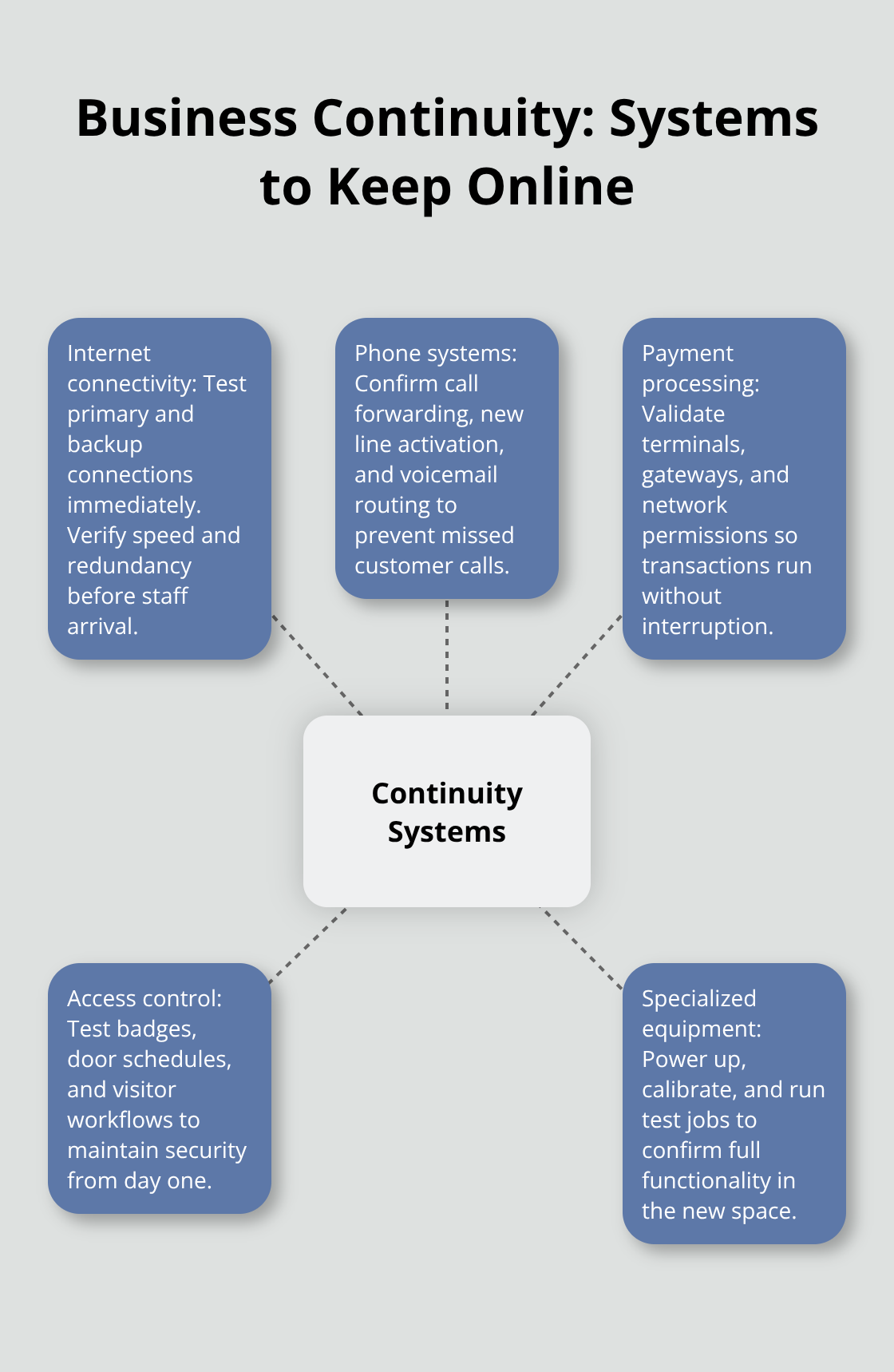
Protecting business continuity requires tactical decisions about which services stay online and which can tolerate brief interruptions. If your business depends on customer calls, phone service must transition seamlessly. Coordinate with IT team and phone provider at least six weeks before the move to test call forwarding, confirm new line activation, and verify that your phone system works in the new space before moving day.
If you operate a customer-facing office, stagger your move so some staff remains available to handle walk-ins and calls. Alternatively, brief your customers in advance that you’re relocating and provide them with a temporary phone number or email for urgent matters during the transition window. Document every system that must stay operational and assign responsibility for testing it in the new location within the first two hours after arrival. This includes internet connectivity, phone systems, payment processing terminals, access control systems, and any specialized equipment your business requires.
Update External Stakeholders and Online Presence
Notify all external stakeholders-vendors, clients, partners, and service providers-of your new address and any temporary contact changes at least four weeks before moving day. Update your website, Google Business Profile, social media listings, and anywhere else your address appears online. The data accuracy matters because customers who find outdated information may assume you’re closed.
Schedule a brief all-hands meeting one week before moving day to review roles, answer last-minute questions, and build excitement rather than dread. Celebrate the move as progress for your company, not as an ordeal everyone must survive. Acknowledge the extra effort people are putting in and explain how the new space benefits them specifically-better collaboration areas, improved parking, shorter commutes for some staff, or more modern facilities. That positive framing shifts the emotional tenor from burden to opportunity.
Final Thoughts
A successful commercial office move hinges on three fundamentals: thorough planning, the right moving partner, and transparent communication with your team. Assessing your needs early prevents costly mistakes, selecting an experienced mover protects your equipment and timeline, and keeping employees informed transforms them from anxious bystanders into active participants in the transition. The difference between a move that disrupts your business for weeks and one that barely registers comes down to execution.
Start your planning six to twelve months before moving day and build your timeline backward from your target date, accounting for IT setup, furniture delivery, lease restoration, and employee onboarding. Identify your operational risks-data security, phone systems, customer-facing services-and address them explicitly rather than hoping they work out. When you hire a moving company, demand references, verify insurance, and request detailed quotes that break down every cost.
Your team deserves clarity about what’s happening and why, and weekly communication with assigned roles keeps morale high and productivity steady. Test every critical system in your new space before your team arrives, and celebrate the milestone once you’re settled. Contact Southbay Moving Systems to discuss how we can handle your commercial office moves with the expertise and care your business deserves.