
Picking the right California long-distance mover can make or break your relocation experience. The difference between a smooth transition and a stressful nightmare often comes down to asking the right questions upfront.
At Southbay Moving Systems, we’ve seen firsthand how proper vetting saves time, money, and headaches. This guide walks you through exactly what to evaluate before signing any contract.
What Makes a Moving Company Trustworthy
Licensing and insurance form the absolute foundation of any legitimate long-distance mover. Interstate movers must carry a USDOT number issued by the Federal Motor Carrier Safety Administration, and you can verify this number directly in the FMCSA SAFER database. This step takes five minutes and eliminates fly-by-night operators immediately.
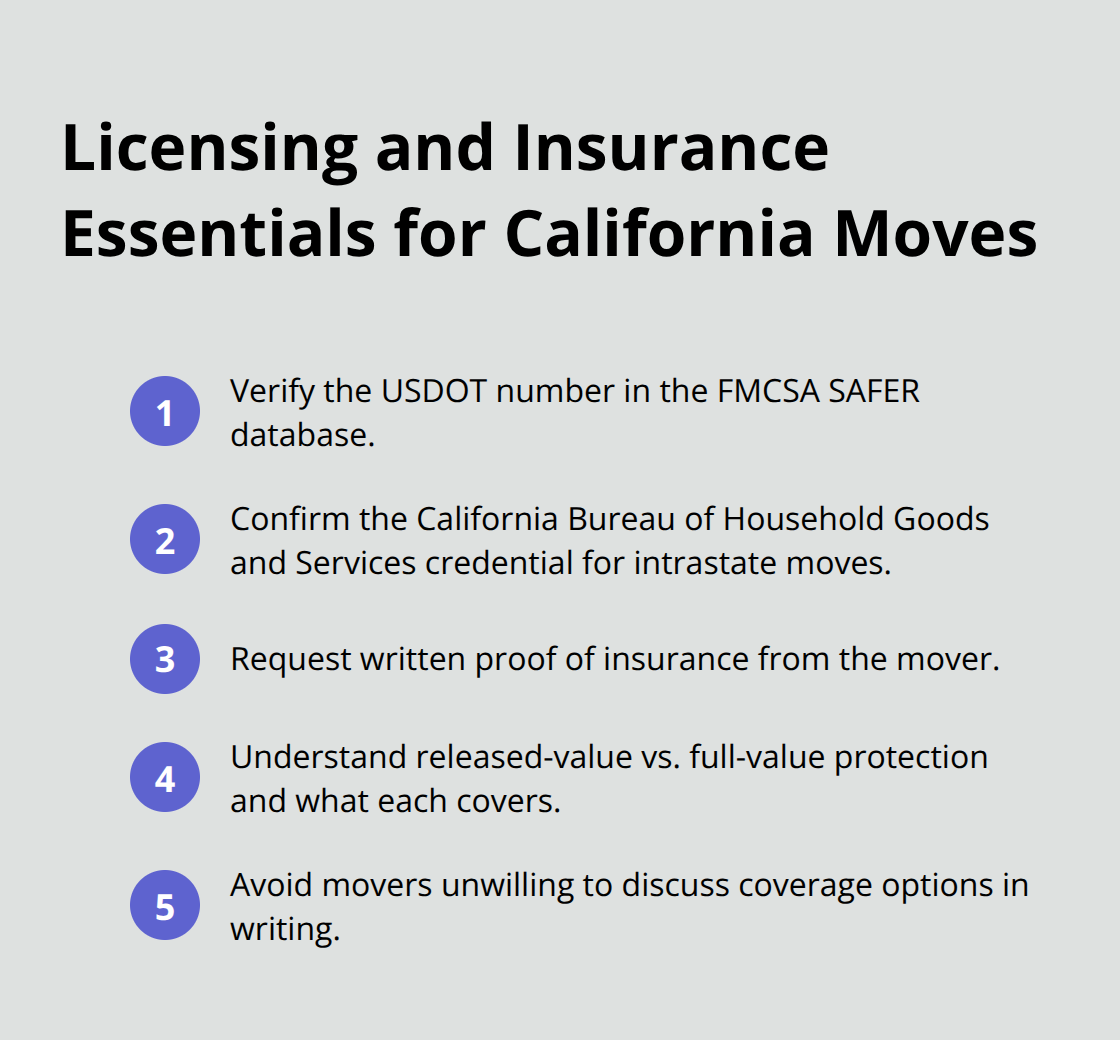
California intrastate moves fall under the Bureau of Household Goods and Services, so confirm the appropriate credential applies to your specific move. Insurance matters equally-ask whether the company offers both released-value protection (typically included at no cost, covering 60 cents per pound per item) and full-value protection as an optional upgrade. Companies that hesitate to discuss coverage options or won’t provide written documentation of their insurance should be crossed off your list entirely.
Online Reviews Reveal Actual Performance
Read trusted moving company reviews on independent platforms like Google, the Better Business Bureau, and Trustpilot rather than relying solely on testimonials on a company’s own website. Look specifically for patterns-one complaint about a scratched table might be an outlier, but five complaints about missed delivery dates signal a systemic problem. Negative reviews that receive professional responses indicate management takes accountability seriously.
Binding Estimates Protect Your Budget
Binding not-to-exceed estimates provide the most protection because your final bill cannot exceed the quoted price, though actual charges may be lower if your shipment weighs less. A binding estimate requires an in-home or detailed video walkthrough-companies that quote you over the phone without assessing your belongings are guessing, not estimating. Long-distance moves commonly cost between $4,000 and $10,000, with West Coast averages running lower than the national average at approximately $1,955 for local moves.
Itemized Pricing Stops Hidden Charges
Request itemized breakdowns that specify charges for packing materials, crating, heavy items, long carries, and stairs separately from the base rate. Hidden fees destroy budgets-ask directly whether stairs, elevator usage, or narrow street access might trigger additional charges specific to your pickup or delivery location. Companies that provide transparent line-item pricing (rather than vague lump-sum quotes) demonstrate confidence in their operations and respect for your financial planning.
The next step involves asking the right questions directly to the moving company before you commit to anything.
Questions That Separate Professional Movers from Amateurs
Experience with Your Specific Move Type
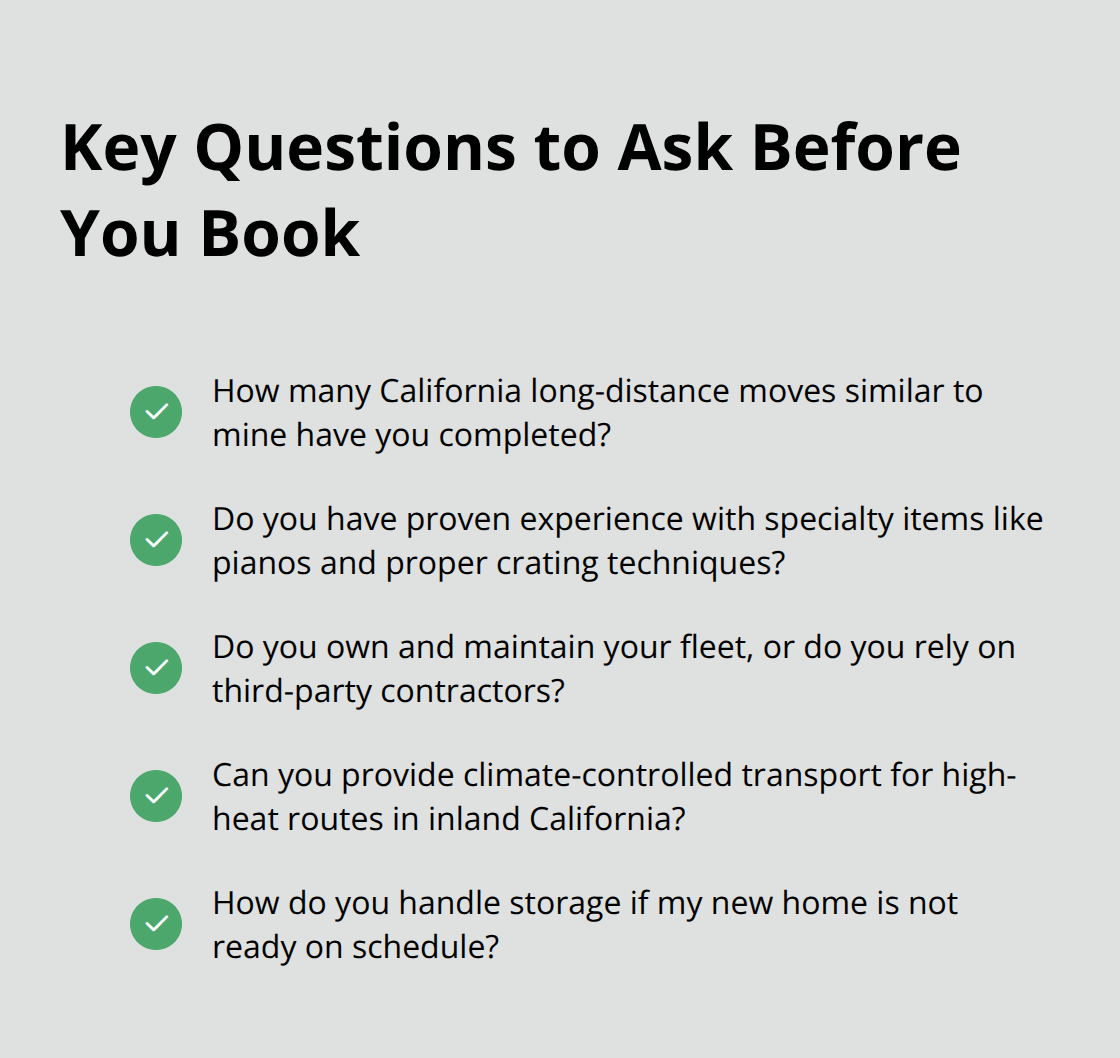
Ask how many long-distance moves the company has completed within California and whether they’ve handled relocations similar to yours in terms of distance, volume, and complexity. A company that has moved hundreds of families from the Bay Area to Southern California will navigate routing, timing, and regional logistics differently than one primarily handling local moves. If you’re relocating a piano, ask whether they have experience with specialty items and whether they use proper crating techniques-pianos require climate-controlled transport and specialized equipment, and most general movers lack both. For commercial relocations, inquire about their experience minimizing business downtime and coordinating with multiple departments. Companies with substantial long-distance experience will discuss specific challenges like mountain passes in winter, desert heat affecting certain routes, or urban delivery constraints in dense areas like San Francisco and Los Angeles.
Fleet Ownership and Equipment Matching
Ask whether the company owns its fleet or contracts with third parties, since ownership typically means better maintenance and reliability. Inquire about truck sizes available-California’s diverse geography means a 26-foot truck works differently in mountain terrain than in coastal plains, and the company should match equipment to your route and belongings rather than forcing everything into one standard size. Request specific details about climate-controlled options if you’re shipping during peak summer months when temperatures in inland California regularly exceed 100 degrees, risking damage to wood furniture and electronics. Ask how they handle storage between pickup and delivery, particularly if your new home isn’t ready on schedule.
Packing and Storage Flexibility
Packing and storage options vary dramatically across providers. Some companies offer full-service packing with professional materials, while others charge per box and expect you to source supplies. Clarify whether packing costs are included in your binding estimate or charged separately as accessorials, and ask about storage rates-daily, weekly, and monthly pricing structures differ significantly. A company that can discuss these specifics without hesitation demonstrates operational depth rather than generic service delivery. Storage solutions matter especially when move timelines don’t align perfectly with your new home’s availability.
These operational details form the foundation of your decision, but red flags during the vetting process demand equal attention.
Red Flags That Signal Problem Movers
Unusually Low Estimates Demand Skepticism
Treat quotes that fall 30-40% below competitors with immediate suspicion, not excitement. When a company quotes substantially lower than others, it either severely underestimates your shipment weight or plans to hit you with surprise charges on moving day. Request binding not-to-exceed estimates from at least three movers and treat any outlier quote as a warning sign rather than a bargain.
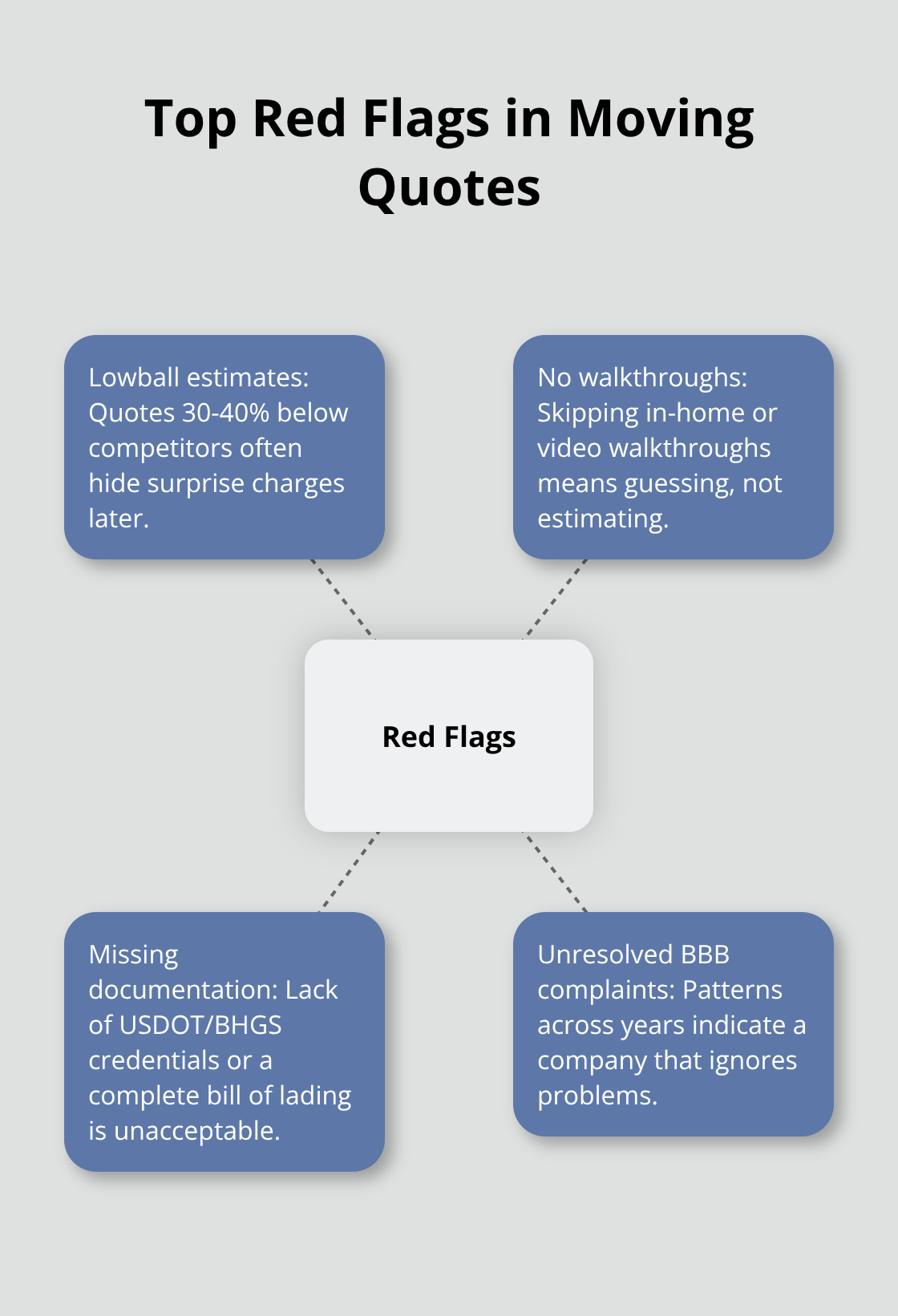
Companies that skip in-home or video walkthroughs before quoting are essentially guessing, and those guesses almost always favor the mover’s bottom line, not yours. The typical long-distance move costs between $4,000 and $10,000 in California, so quotes substantially below $3,500 for a full-service move warrant direct questions about what the price excludes.
Missing Documentation Signals Illegitimate Operations
Verify the USDOT number in the FMCSA SAFER database yourself rather than accepting the company’s word, and confirm it matches exactly on all written materials. Request the bill of lading before moving day and review it thoroughly-this is the legally binding contract that specifies services, liability, pickup and delivery dates, and itemized costs. Companies that pressure you to sign incomplete paperwork or resist providing written estimates in advance operate outside standard industry practice.
California intrastate movers must hold credentials from the Bureau of Household Goods and Services, so verify this separately from interstate licensing. Movers lacking proper documentation or hesitant to share credentials are either unlicensed or operating with minimal accountability, both of which put your belongings at serious risk during transport.
Better Business Bureau Complaints Reveal Patterns
Check the Better Business Bureau specifically for patterns in complaints rather than isolated incidents. A company with one complaint resolved professionally differs dramatically from one with ten unresolved complaints spanning years. The BBB rating matters less than the actual complaint history and whether management responds constructively to customer concerns. Unresolved complaints that stretch across multiple years indicate a company that ignores problems rather than fixing them.
Final Thoughts
Choosing the right California long-distance mover comes down to three core principles: verify credentials through official databases, demand transparent pricing with itemized breakdowns, and research actual customer experiences on independent platforms. A company’s willingness to provide binding estimates, discuss insurance options openly, and answer detailed questions about equipment and experience separates legitimate operators from those cutting corners. The USDOT number, bill of lading, and written contract protect your belongings and prove accountability.
Reputable movers eliminate stress through predictable costs, proper equipment, and trained personnel who stand behind their work with documented claims processes. When you hire a company with verifiable licensing, positive customer feedback, and transparent operations, you purchase peace of mind alongside transportation. The difference between a smooth relocation and a costly disaster often hinges on asking the right questions upfront and trusting your instincts when something feels off.
We at Southbay Moving Systems understand that relocating across California requires expertise specific to the state’s unique geography and logistics. With over 30 years of experience, we’ve completed hundreds of long-distance moves while maintaining transparent pricing and personalized service, and our 20,000 square foot climate-controlled storage facility accommodates moves with timing mismatches. Contact Southbay Moving Systems for a customized quote when you’re ready to work with California long-distance movers who prioritize your move’s success.