

A moving company estimate can make or break your relocation budget. The difference between an accurate quote and a wildly inaccurate one often comes down to the information you provide upfront.
We at Southbay Moving Systems have seen countless moves derailed by estimates that didn’t match reality. This guide walks you through exactly what movers need to know and how to spot red flags before you sign anything.
What Moving Companies Need From You
Movers can only quote what they can see and measure. When you withhold details or downplay your inventory, estimates become fiction. The most accurate estimates come from companies that ask hard questions about your space, your stuff, and your logistics.
Your Home or Office Layout Matters More Than Square Footage
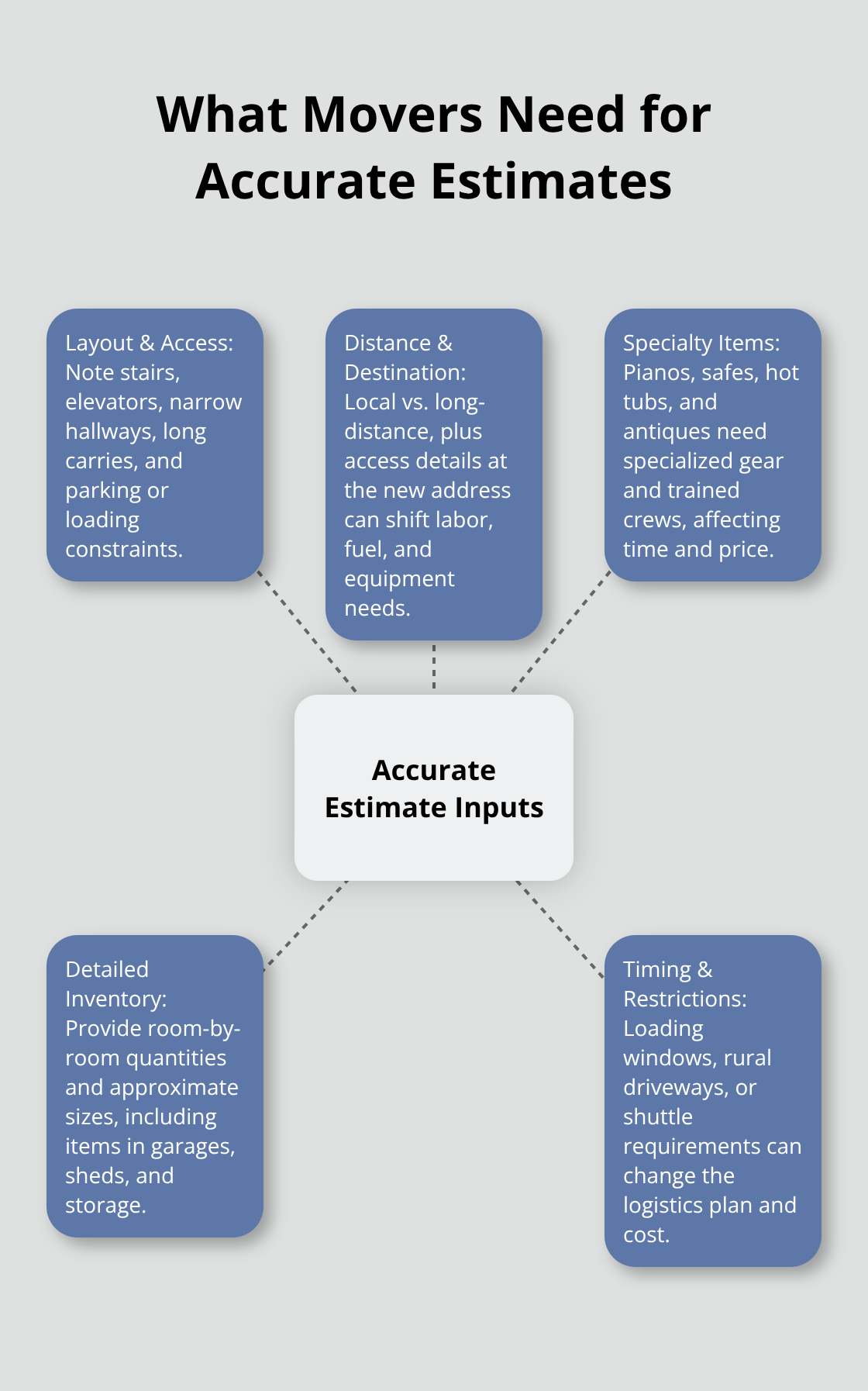
Start with your home or office dimensions. Most moving companies ask for square footage, but what matters more is access. Tell them about narrow hallways, tight staircases, basement doors, and parking constraints. A 2,000-square-foot apartment on the fifth floor with one elevator costs more to move than a 3,000-square-foot ground-level house.
Disclose whether you have outdoor items in storage sheds or garages. Non-binding estimates are approximations of your final cost that are based on the mover’s estimate of the weight of your belongings and the services you need. If your home has limited access-say, a long carry from the truck to your door, or a narrow stairwell-the moving company needs to account for extra labor and time. This information is not optional.
Distance and Destination Shape Your Costs
Local moves under 50 miles cost significantly less than long-distance relocations because fuel, labor hours, and truck wear differ dramatically. Interstate moves require DOT and FMCSA authorization, which affects pricing structure and regulatory compliance. You must provide your destination address and disclose any access issues at the new location. A move to a high-rise with restricted loading times or a rural property with a long driveway changes the estimate substantially.
Special Items Require Immediate Disclosure
Weight drives most long-distance pricing. The average household moves around 10,000 to 12,000 pounds according to industry data. If you have a piano, safe, hot tub, or antique furniture requiring specialized handling, mention it immediately. These items require specialized equipment and trained personnel, typically adding $500 to $3,000 per item. Do not wait until moving day to reveal a baby grand piano.
Create a Detailed Room-by-Room Inventory
Provide a detailed inventory room by room, including quantities and approximate sizes. Movers who conduct in-home surveys can assess this directly, but if you receive a virtual or phone estimate, be thorough. Underestimating your belongings is the most common mistake that leads to binding estimates that explode into non-binding charges on move day. The next section covers the mistakes that trip up most people-and how to avoid them.
Where Most People Slip Up on Moving Estimates
Underestimating Your Belongings Costs Thousands
The gap between what you think you own and what actually gets loaded onto the truck is where estimates fall apart. Many factors impact mover pricing, and if you miscalculate your inventory, the mover recalculates the price when the truck arrives. This is not a negotiation-it’s a contract adjustment based on actual weight.
Count everything. Walk through every room, every closet, and every storage space, then list items with approximate dimensions. Specify a queen bed frame, dresser, nightstands, and mattress rather than saying bedroom furniture.
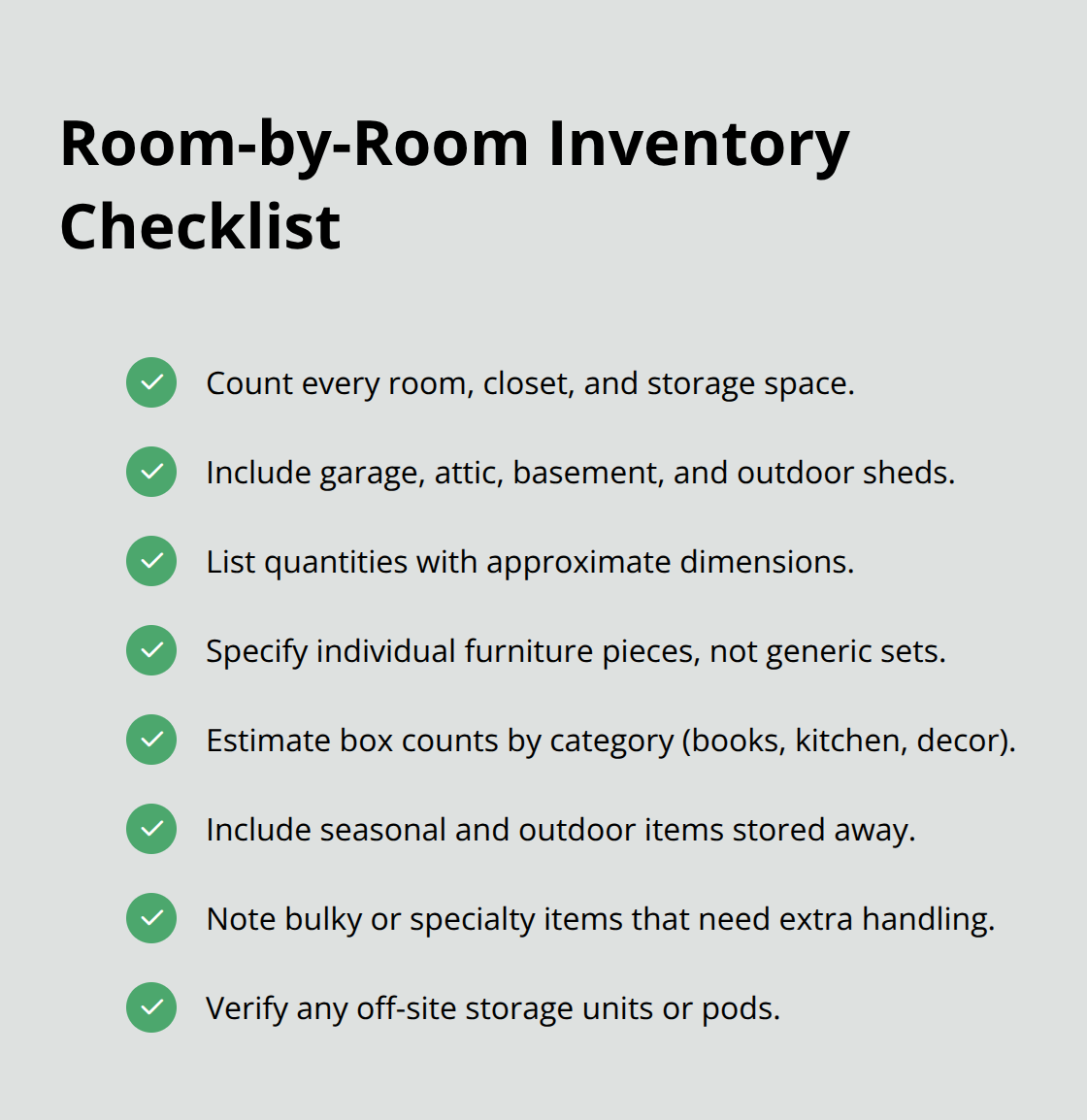
Estimate how many boxes you have for books. Count plates, glasses, pots, and small appliances in your kitchen. Movers who conduct in-home surveys do this work for you, but if you receive a phone or virtual estimate, precision falls on your shoulders. One oversight we’ve seen cost clients dearly: a storage shed containing lawn equipment, seasonal decorations, and old furniture added two hours of labor and nearly $800 to the final bill.
Specialty Items Demand Upfront Disclosure
Pianos, safes, hot tubs, and antique furniture do not move like standard household goods. The average cost for moving a piano locally ranges between $150 and $650. A safe weighing 500 pounds needs reinforced equipment and extra labor. Mention these items upfront, and the estimate reflects reality. Hide them, and the mover either refuses to transport them on moving day or charges an emergency accessorial fee that blindsides your budget.
Access Issues Change Everything
Access issues at your current location or destination are equally critical and equally overlooked. A fifth-floor walk-up apartment with no elevator, narrow hallways, and street parking requires a long carry from the truck to your door. That adds labor hours and sometimes requires a shuttle service, which costs extra. A rural destination with a half-mile driveway or a high-rise with restricted loading windows changes the entire logistics picture.
Disclose stairs, elevators, basement access, outdoor storage, parking restrictions, and any structural limitations at both locations. An honest conversation about access prevents estimate shock later. Movers need this information before they quote, not after. The next section shows you how to evaluate the estimates you receive and identify which ones actually protect your budget.
How to Compare Moving Estimates and Spot Red Flags
Understand Binding vs. Non-Binding Estimates
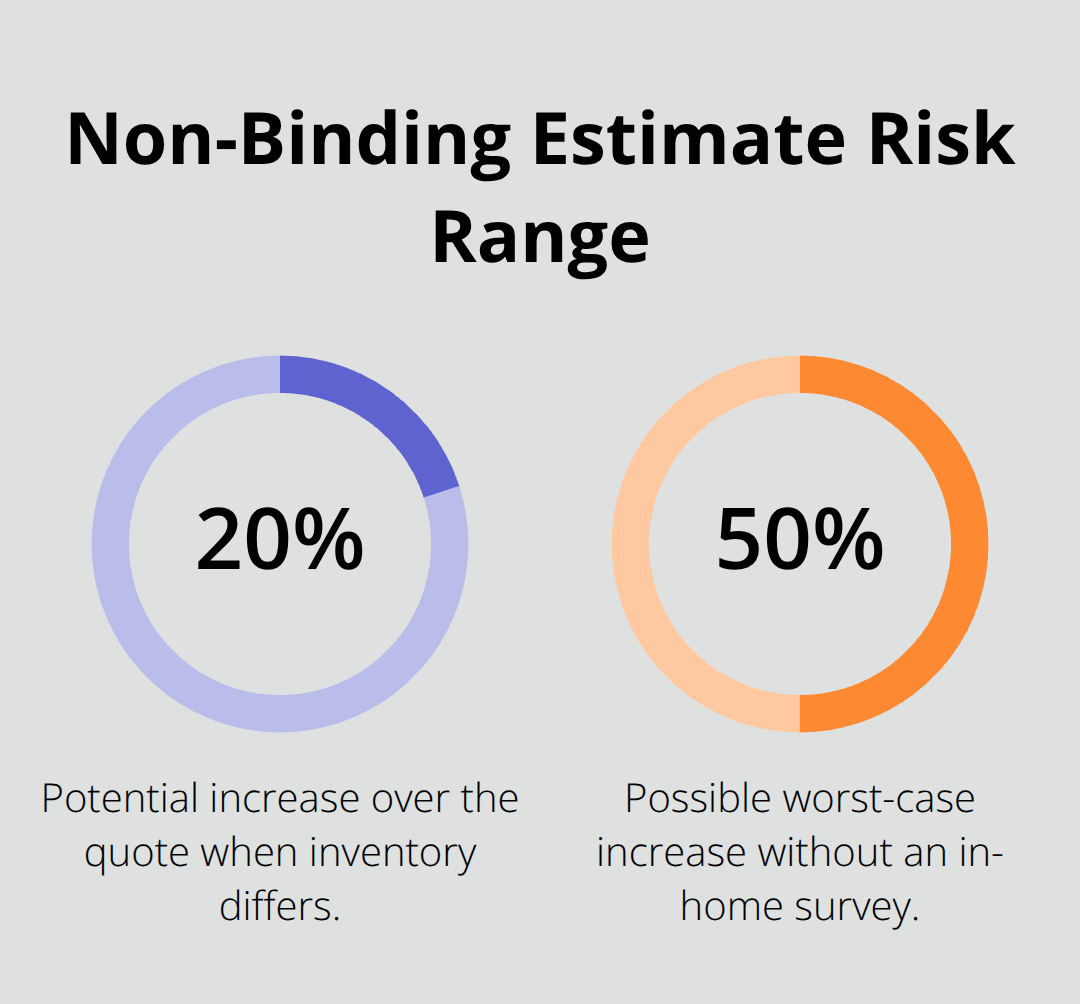
Three written estimates are non-negotiable, but comparing them requires understanding what you’re actually looking at. A binding estimate locks in price regardless of weight; a non-binding estimate is an approximation that can change on move day if your inventory differs. Most movers offer non-binding estimates for long-distance moves because weight varies until items are actually loaded. Insist on a binding estimate only if the mover has conducted an in-home survey and you’ve provided a detailed, verified inventory. If a mover refuses an in-home estimate and quotes you over the phone, that estimate is almost certainly non-binding, which means the final bill could be 20 to 50 percent higher.
Demand Itemized Breakdowns
When you compare estimates, look for itemized breakdowns that list labor, equipment, materials, fuel surcharges, and accessorial fees separately. A quote that says $5,000 without itemization is a red flag. Legitimate movers show you how they arrived at the number. Call the company back and ask how they calculated the price. If they cannot explain it clearly, move on.
Investigate Unusually Low or High Bids
If one estimate is dramatically lower than the others, investigate immediately. The Federal Motor Carrier Safety Administration reports that unusually low bids often signal brokers rather than actual moving companies, incomplete scope of work, or hidden fees buried in fine print. Conversely, an estimate that is 30 to 40 percent higher than competitors deserves scrutiny too. Ask what services or equipment justify the premium. Sometimes the answer is legitimate: better insurance coverage, specialized equipment for your piano, or experienced crews in your region. Other times it reflects inflated pricing.
Verify Licensing, Insurance, and Company Credentials
Verify licensing and insurance before you hand over a deposit. Interstate movers must display a USDOT number and MC number. Look these up on the FMCSA website to confirm the company is registered and check for complaints. In-state movers must be licensed with your state’s Public Utilities Commission or equivalent regulatory body. Call the company directly and ask for proof of insurance, specifically general liability and cargo coverage limits. Do not accept verbal assurances; request a certificate of insurance. Basic Valuation Coverage is federally required, but that barely covers damage to most belongings. Ask whether the mover offers full-value protection and what the upgrade costs. A piano worth $15,000 needs better coverage than the baseline.
Check Reviews and Read Contracts Thoroughly
Check independent reviews on Google, the Better Business Bureau, and moving-specific platforms, but take them in context. One bad review among hundreds of five-star reviews differs from a pattern of complaints about overcharging or damage. Pay attention to reviews that mention estimate accuracy and whether the final bill matched the quote. That tells you whether this company’s estimates are trustworthy. Before you sign, read the contract completely. Look for cancellation policies, payment schedules, and what happens if the mover is delayed. Confirm the move date window, whether the mover charges for waiting time, and what constitutes a completed move. A contract that is vague about these details protects the mover, not you. Get everything in writing and keep copies.
Final Thoughts
An accurate moving company estimate protects your budget and prevents surprises on moving day. The foundation of that accuracy rests entirely on the information you provide upfront-disclose your inventory completely, mention specialty items, and explain access challenges at both locations so movers can quote with confidence. When you hide details or downplay what you own, estimates become worthless.
The estimates you receive are only as good as the transparency behind them. A mover who asks hard questions about your space, your belongings, and your logistics does the work required to protect both of you. Itemized breakdowns, binding estimates backed by in-home surveys, and clear explanations of how the price was calculated separate trustworthy movers from those cutting corners. Verify licensing and insurance, check independent reviews for patterns of estimate accuracy, and read contracts completely before you sign anything.
Three written estimates matter more than one. Compare them side by side, investigate any that seem unusually low or high, and ask questions until you understand exactly what each company charges and why. Contact us at Southbay Moving Systems for a moving company estimate, and we conduct in-home surveys, provide itemized quotes, and explain every charge so your move matches the estimate on moving day.